

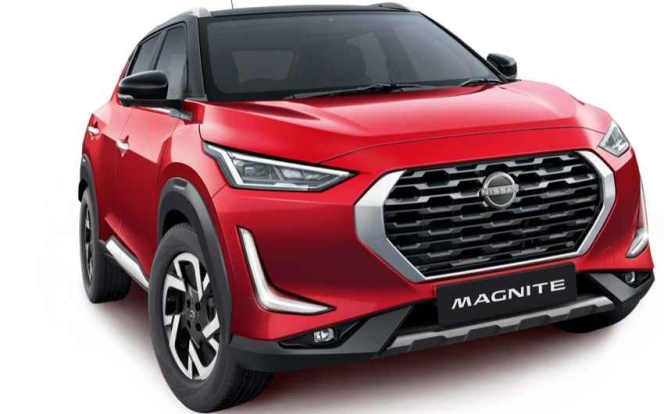
The SUV has been tested at Nissan’s world-class testing facility, the Nissan Tochigi Proving Ground, where other models such as the Nissan GT-R and Nissan Ariya, have been tested.
With its stylish design, robust and dynamic road presence and an evolutionary leap in global Sports Utility Vehicle DNA, Nissan hopes that the Magnite will redefine the B-SUV segment in India. Developed as a model under Datsun brand, the Magnite will be competing with the likes of Tata Nexon, Ford EcoSport and Mahindra XUV300.
Magnite delivers on all four of Nissan’s fundamental pillars – bold exteriors, interiors, technology and performance. The front is flooded with LEDs with a bi-projector headlamp, indicators, daytime running lamps and fog lamps. The square wheel arches enhance the bold styling along with the integrated sculpted body-side cladding. The chrome beltline moves up to the quarter window in the C-pillar. The 16-inch diamond-cut alloy wheels accentuate the looks. It has a five-metre turning radius to help manoeuvre tight corners and parking.
Takumi Yoneyama, Design Manager, Nissan Motor Corporation, said, “The Nissan Magnite Concept embodies Nissan’s spirit in every way. Our design approach was based on the art of sculpting and not just drawing lines on paper. We sculpted a solid and dynamic feel by carving a shape from a big, overhanging body. We followed the core of Japanese sense and aesthetic by extracting pure dynamism and shedding the unnecessary. We are proud to introduce our newest creation, and we hope that our customers in India will love it.”
 Interiors
The interiors of the car are wide and spacious due to the horizontal instrument panel, followed by the air ventilators that have a distinctive shape and cliff section, which makes it look sporty and enhances the SUV feel. It also includes a sporty mono-form shape seat which enhances comfort, and the rear seats offer robust pattern and rich cushioning adding to the premium-ness of the car.
The sporty 7-inch instrument panel, fully integrated steering wheel and an 8-inch touchscreen that is compatible with Android Auto and Apple CarPlay can be connected through Wi-Fi. It comes with Tech Pack comprising of a wireless charger, air purifier, puddle lamps and ambient mood lighting.
In terms of safety, the Magnite comes with Vehicle Dynamics Control for safe manoeuvring in tight corners and risky situations. In addition, it comes with dual air-bags, Hill-start assist, traction and anti-roll bar to minimise body roll.
Powered by Nissan’s HRA0 turbo engine having mirror-bore technology, it is mated with two gearbox options – manual and Xtronic CVT. The new engine delivers a maximum power of 100PS and maximum torque of 160Nm. It also boasts of appreciable torque to weight ratio which is demonstrated by the efficiency of the engine. The HRA0 engine borrows “mirror bore cylinder coating” technology from world-class sports cars such as the Nissan GT-R. This technology helps in reducing resistance inside the engine, cutting weight, improving heat management and combustion, eventually delivering smooth acceleration and efficient fuel use. The machine is very responsive when revved and provides better acceleration compared to naturally aspirated engines, especially in take-off and overtaking situations. It is evident from smooth acceleration and the revolution of the engine. It does not mean that the engine is over-working with big noise; it is silent, and helps reduce noise, vibration, and harshness.
Xtronic CVT
The conventional CVT has a rubber-band effect thanks to the belt between the two pulleys, which results in a lag between engine RPM and power to the wheels. However, Nissan uses steel belts in its signature Xtronic CVT transmission with the third generation D-Step logic control which is also found in other Global Nissan models such as Altima, Pathfinder, Murano and the sporty Maxima. In Xtronic CVT, the RPM builds as speed increases providing enhanced drivability with a direct, crisp shift feel; there’s no “hunting for a gear” feel or shift shock. After take-off, unlike other CVTs, the Xtronic CVT applies lockup damper; it skips torque converter, resulting in immediate and sustained power delivery.
According to Nissan India, the Magnite with manual gearbox offers 20kmpl while the CVT gets only 18kmpl. To meet demands and redefine the growing SUV segment in the country, the Magnite will cater to multiple aspirants with multiple options. XE (Base) comes with standard 16-inch wheels, skid plates, functional roof rails, 3.5-inch LCD cluster, all-power windows and dual-tone interiors for a real entry into the SUV experience. XL (Mid) comes with six speakers for integrated audio, steering wheel audio control, automatic AC and electrically adjustable & foldable outside mirrors for a comfortable upgrade. XV (High) revamps the technological experience with 16-inch diamond-cut alloys, LED daytime running lamps (DRL) and fog lamps, 8-inch floating touch screen (with Wireless Apple CarPlay and Android Auto), 7-inch TFT meter, voice recognition, rear-view camera and push-button start. XV (Premium) is packed with technologies such as the LED bi-projector headlamps, cruise control, 360-degree around-view monitor, tyre pressure monitor and full sporty interiors.
For the technological savvy customer, Nissan’s optional ‘Tech Pack’ includes wireless charger, air purifier, ambient mood lighting, puddle lamps and high-end speakers from JBL.
“The all-new Nissan Magnite plays a vital role in our Nissan NEXT strategy and represents Nissan’s undeniable commitment to the Indian market as a customer-centric organisation. The car reiterates our brand philosophy of keeping customers at the heart of everything we do to deliver exciting products for enriching experiences. As we continue to prioritise and invest in the Indian consumer, who is aspirational and discerning with vehicles, we aim for the all-new Nissan Magnite to be the first product that will enable sustainable growth. Nissan will continue to be the primary brand in India,” said Sinan Ozkok, President, Nissan Motor India.
“Given the growing popularity of B-SUVs in India, we aim for the all-new Nissan Magnite to redefine the segment and surpass customer expectations in the country. It is the ideal aspirational upgrade for hatchback customers in India who are weighing their options and looking to own a world-class SUV, from a globally renowned brand that has a strong SUV heritage,” said Rakesh Srivastava, Managing Director, Nissan Motor India.
In total, the Nissan Magnite is not only big, bold and beautiful but is also benevolent in offering space, features, comfort and convenience. It is a bold little package for a nifty compact SUV. (MT)
- BMW India
- BMW Motorrad India
- Nurburgring
- BMW M2 Coupé
- BMW M3 Sedan
- BMW M4 Coupé
- BMW M5 Sedan
- BMW M5 Touring
- BMW M 1000 R
BMW And BMW Motorrad Introduce 100 Jahre Nurburgring Limited Edition Vehicles In India
- By MT Bureau
- October 02, 2026
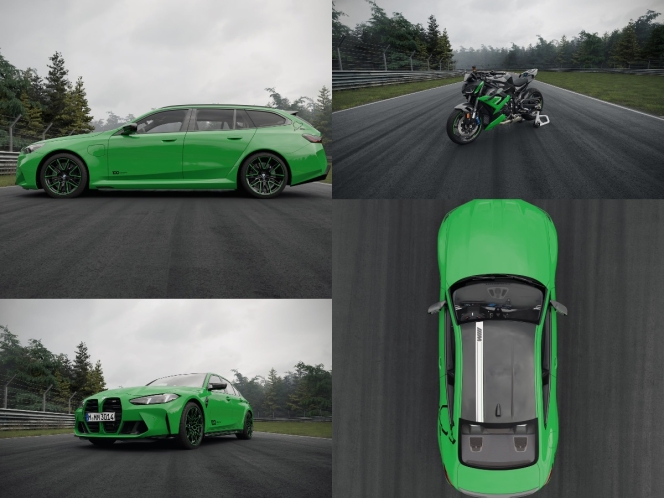
German automotive luxury brand BMW India and BMW Motorrad India have opened pre-orders for the ‘100 Jahre Nurburgring’ edition vehicles to mark the upcoming 100th anniversary of the Nurburgring racetrack in 2027.
The limited collection includes five BMW M car models – the BMW M2 Coupé, BMW M3 Sedan, BMW M4 Coupé, BMW M5 Sedan and the BMW M5 Touring – alongside the BMW M 1000 R motorcycle. The release marks the entry of the BMW M5 Touring into the Indian market.
The edition models feature specific paint finishes in Nurburgring Green and Sapphire Black metallic with green accents, incorporating the ‘100 Years’ logo, Nurburgring since 1927 lettering and the Nurburgring circuit outline.
Exterior details include carbon fibre roofs, model-specific graphics and green wheel accents across select models, while the M5 Touring features a steel roof with custom stripes. Interior specifications across the car lineup include black leather with green and white stitching, door sills, carbon fibre trims, M Carbon bucket seats with individual upholstery, and an M Alcantara steering wheel with a 12 o'clock marker.
The BMW M 1000 R motorcycle features a painted fuel tank with the Nurburgring outline, an airbox cover with ‘one of 100’ numbering, carbon wheels with green accent stripes, an Alcantara seat with embroidered ‘100’ logos and black components for the rear swingarm and frame.
Honda Cars India Sales Decline 19% In September 2026
- By MT Bureau
- October 02, 2026
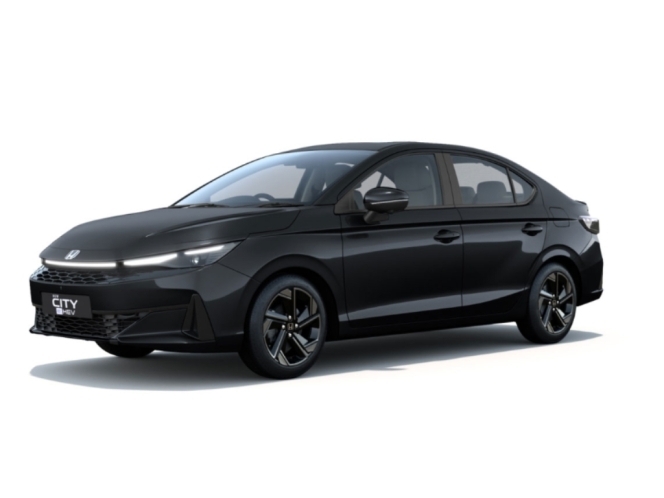
Honda Cars India (HCIL), one of the leading manufacturers of passenger vehicles in the country, has announced its wholesales for September 2026.
The company reported total sales of 6,955 units, down 16 percent YoY, as compared to 8,296 units sold for the same period last year.
In the domestic market, the company sold 4,465 units, down 19 percent YoY, as compared to 5,503 units sold a year ago. On the exports front, the company shipped 2,490 units, down 11 percent YoY, as compared to 2,793 units last year.
Kunal Behl, Vice-President, Marketing & Sales, Honda Cars India, said, We are pleased to see positive sales momentum for the Honda City and Honda Amaze during the month. We are also gearing up for the launch of new Elevate, which will further strengthen our SUV offering with a refreshed and enhanced package. With the festive season underway and an exciting product introduction ahead, we look forward to building stronger momentum in the coming months.”
Kia India Clocks Highest-Ever Monthly Sales Of 32,017 Units In September 2026
- By MT Bureau
- October 01, 2026
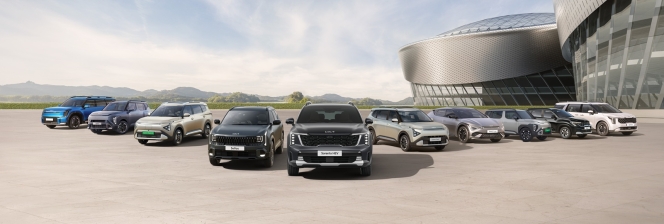
Kia India, one of the leading passenger vehicle manufacturers, has reported its best-ever monthly wholesale performance of 32,017 units in September 2026, representing a 41 percent increase compared to 22,700 units sold last year.
For Q3 of CY2026, the company recorded sales of 89,259 units, reflecting a 38.5 percent growth over 64,443 units for the same period last year.
In terms of YTD (January – September 2026) cumulative sales reached 253,008 units, marking a 22.5 percent increase from 206,582 units reported during the corresponding period in 2025.
Kia India attributed the robust performance to healthy demand across its portfolio incuding Seltos and Sonet models, alongside contributions from the Carens, Carens Clavis, Clavis EV, Syros EV and Sorento, which is offered in diesel and hybrid powertrain options. The company's powertrain options now span petrol, diesel, CNG, hybrid, and electric configurations across its product range.
Atul Sood, Senior Vice-President of Sales and Marketing, Kia India, said, "Our strong performance in September and across the third quarter reflects the continued trust of our customers and the strength of Kia’s evolving portfolio. The Seltos and Sonet continue to be key contributors to our growth, while the strong response to the Sorento and Syros EV reinforces our strategy of expanding into new segments and powertrain categories in line with evolving customer aspirations. As mobility needs become increasingly diverse, we are focused on providing meaningful choice across conventional, CNG, hybrid and electric powertrains, supported by ownership solutions that address real customer needs. We remain committed to building on this momentum through distinctive products, advanced technologies and differentiated experiences designed around the needs of Indian customers."
At present, Kia India operates a retail and service network comprising 915 touchpoints across 425 cities, alongside 137 certified pre-owned outlets across the country.
Toyota Kirloskar Motor Sells 25,027 PVs In September 2026
- By MT Bureau
- October 01, 2026
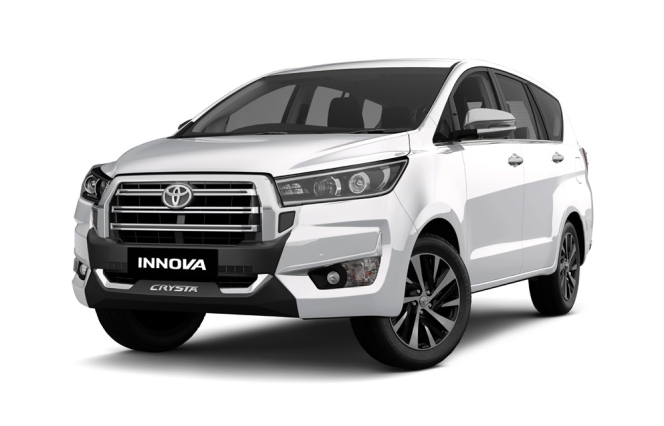
Toyota Kirloskar Motor (TKM), one of the leading passenger vehicle manufacturers, has reported its total wholesales of 28,218 units in September 2026, comprising 25,027 units sold in the domestic market and 3,191 units exported.
For the YTD period (January – September 2026), the automaker reported cumulative total sales of 294,914 units, representing an 8 percent increase compared to 272,824 units sold last year.
Domestic sales for the 9-month period rose 9 percent to 269,619 units, up from 247,081 units in the previous year, while exports reached 25,295 units, compared to 25,743 units a year ago.
Sabari Manohar, Executive Vice-President of Sales-Service-Used Car Business, Toyota Kirloskar Motor, said, "September witnessed continued customer interest across segments, supported by our focus on quality, durability and reliability. As we enter the festive season, we remain committed to strengthening customer engagement and working closely with our dealer partners to deliver enhanced mobility experiences and address evolving customer needs."
Comments (0)
ADD COMMENT