

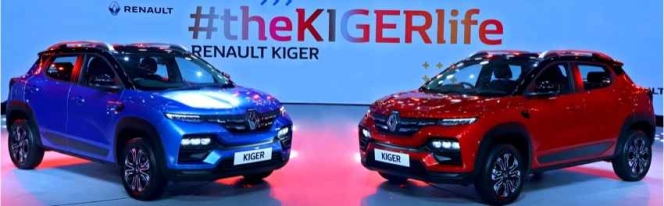
With the Kiger, Renault will demonstrate its commitment to ‘Make in India’ displaying its design, engineering and manufacturing capabilities. Stunning, Smart and Sporty are the core ingredients behind the design philosophy of the Kiger.
The new car carries forward the front facia from the Kwid and the Triber with changes to the headlights and the grille. The upper strip formed by the front grille and the LED daytime running lights gives the car an elevated stance. The bumper has been divided into two areas, each featuring three LED headlights encased in a chrome octagonal unit with Pure Vision and a chrome reflector. At the rear, the vehicle sports an all-new LED taillight with double C-shaped lighting signature and glossy black inserts adding modern and distinctive appeal.
The sculpted bonnet and the black sills, muscular wheel arches and the wings with their pronounced shoulder lines complete the B-SUVs bold look. The high ground clearance (205 mm) and the functional roof bars add to the SUV look.
The Kiger’s large 16-inch wheels on the higher trims have a black diamond-cut finish adding a sporty but stylish look. The wheels on the car have been pushed to the four corners providing increase stability and also a long wheelbase of 2,500 mm that offers optimum comfort for each passenger and boot volume of 405 litres that is the largest in the segment.
The slender windscreen which extends into a floating roof and the steep-sloping rear window give the car a coupe look. The aerodynamic spoiler at the rear and the shark fin antenna and 3D graphic finish to the front grille with honeycomb-shaped chromed effects add to the sporty character of the Kiger.
Customers also have an opportunity to customise the vehicle with a Mystery Black Roof option available with all trim levels and with all body colours.
The interior of the car is a blend of technology, functionality and roominess. The SUV builds on its CMFA+ platform and offers segment-leading roominess, cabin storage and cargo space.
The clearly defined curves of the interior show the impression of the floating cockpit. The piano-styled control dials, suspended air conditioning controls accentuate the floating cockpit feeling. The SUV features a central an 8-inch touch screen system for infotainment and a 7-inch Multi-Skin Reconfigurable TFT colour display for the driver’s cockpit.
The central touch screen offers wireless smartphone replication for Apple CarPlay and Android Auto at higher trim levels. The multi-sense setting available at higher trim levels changes colour and widget of the 7-inch TFT display based on the driving mode selected. Audio is taken care by the Auditorium 3D sound system by Arkamys, with eight onboard speakers that diffuse 3D sound tailor-made to suit the passenger compartment’s materials and shape.
The Kiger offers hands-free door open, close and engine start with the key card. The car also includes a door auto-lock function when drivers walk away from the vehicle adding to the user convenience. Other features on the inside include a radar sensor and reverse camera with guiding lines offering greater visibility and precision when reversing or manoeuvring for parking. Also helping to manoeuvre sharp turns is the 5.02 meters turning radius. Another feature unique to this SUV is the first segment PM2.5 Clean Air Filter fitted into the ventilation system providing good air quality inside the vehicle.
The vehicle is powered by 1.0-litre three-cylinder turbocharged petrol engine delivering 100PS power and 160Nm of torque. It is mated to a five-speed manual gearbox for now with an X-TRONIC CVT automatic expected to arrive soon after the vehicles commercial launch.
Another engine option will be the 72PS, 1.0-liter naturally aspirated petrol engine available with either a five-speed manual or the EASY-R five-speed AMT gearbox.
In terms of safety, the vehicle comes with two front airbags for the driver and passenger and two side airbags. The car also features seatbelt reminder for both the front seats. (MT)
- BMW India
- BMW Motorrad India
- Nurburgring
- BMW M2 Coupé
- BMW M3 Sedan
- BMW M4 Coupé
- BMW M5 Sedan
- BMW M5 Touring
- BMW M 1000 R
BMW And BMW Motorrad Introduce 100 Jahre Nurburgring Limited Edition Vehicles In India
- By MT Bureau
- October 02, 2026
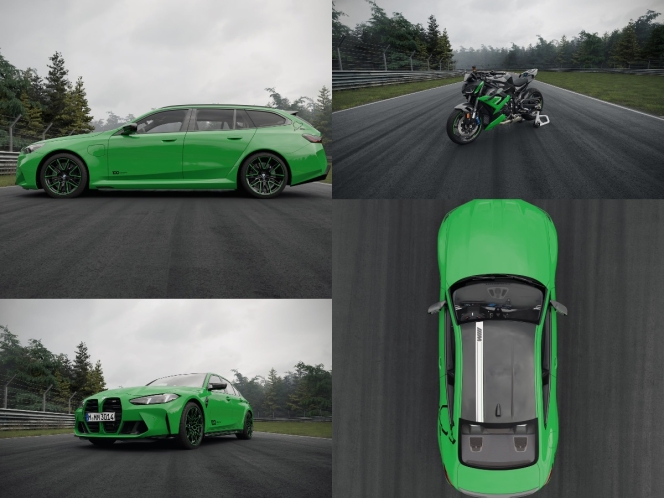
German automotive luxury brand BMW India and BMW Motorrad India have opened pre-orders for the ‘100 Jahre Nurburgring’ edition vehicles to mark the upcoming 100th anniversary of the Nurburgring racetrack in 2027.
The limited collection includes five BMW M car models – the BMW M2 Coupé, BMW M3 Sedan, BMW M4 Coupé, BMW M5 Sedan and the BMW M5 Touring – alongside the BMW M 1000 R motorcycle. The release marks the entry of the BMW M5 Touring into the Indian market.
The edition models feature specific paint finishes in Nurburgring Green and Sapphire Black metallic with green accents, incorporating the ‘100 Years’ logo, Nurburgring since 1927 lettering and the Nurburgring circuit outline.
Exterior details include carbon fibre roofs, model-specific graphics and green wheel accents across select models, while the M5 Touring features a steel roof with custom stripes. Interior specifications across the car lineup include black leather with green and white stitching, door sills, carbon fibre trims, M Carbon bucket seats with individual upholstery, and an M Alcantara steering wheel with a 12 o'clock marker.
The BMW M 1000 R motorcycle features a painted fuel tank with the Nurburgring outline, an airbox cover with ‘one of 100’ numbering, carbon wheels with green accent stripes, an Alcantara seat with embroidered ‘100’ logos and black components for the rear swingarm and frame.
Honda Cars India Sales Decline 19% In September 2026
- By MT Bureau
- October 02, 2026
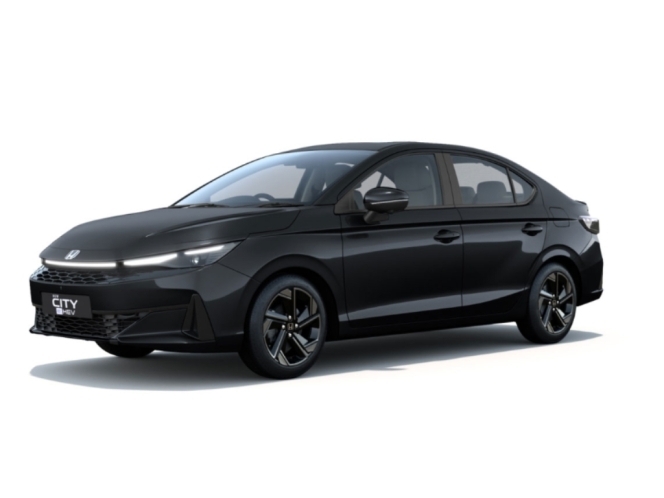
Honda Cars India (HCIL), one of the leading manufacturers of passenger vehicles in the country, has announced its wholesales for September 2026.
The company reported total sales of 6,955 units, down 16 percent YoY, as compared to 8,296 units sold for the same period last year.
In the domestic market, the company sold 4,465 units, down 19 percent YoY, as compared to 5,503 units sold a year ago. On the exports front, the company shipped 2,490 units, down 11 percent YoY, as compared to 2,793 units last year.
Kunal Behl, Vice-President, Marketing & Sales, Honda Cars India, said, We are pleased to see positive sales momentum for the Honda City and Honda Amaze during the month. We are also gearing up for the launch of new Elevate, which will further strengthen our SUV offering with a refreshed and enhanced package. With the festive season underway and an exciting product introduction ahead, we look forward to building stronger momentum in the coming months.”
Kia India Clocks Highest-Ever Monthly Sales Of 32,017 Units In September 2026
- By MT Bureau
- October 01, 2026
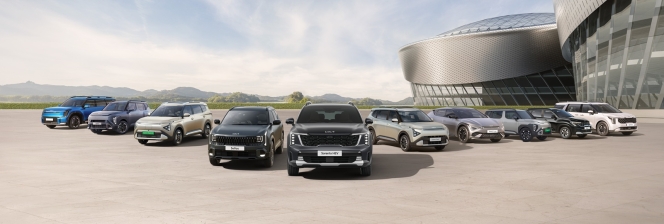
Kia India, one of the leading passenger vehicle manufacturers, has reported its best-ever monthly wholesale performance of 32,017 units in September 2026, representing a 41 percent increase compared to 22,700 units sold last year.
For Q3 of CY2026, the company recorded sales of 89,259 units, reflecting a 38.5 percent growth over 64,443 units for the same period last year.
In terms of YTD (January – September 2026) cumulative sales reached 253,008 units, marking a 22.5 percent increase from 206,582 units reported during the corresponding period in 2025.
Kia India attributed the robust performance to healthy demand across its portfolio incuding Seltos and Sonet models, alongside contributions from the Carens, Carens Clavis, Clavis EV, Syros EV and Sorento, which is offered in diesel and hybrid powertrain options. The company's powertrain options now span petrol, diesel, CNG, hybrid, and electric configurations across its product range.
Atul Sood, Senior Vice-President of Sales and Marketing, Kia India, said, "Our strong performance in September and across the third quarter reflects the continued trust of our customers and the strength of Kia’s evolving portfolio. The Seltos and Sonet continue to be key contributors to our growth, while the strong response to the Sorento and Syros EV reinforces our strategy of expanding into new segments and powertrain categories in line with evolving customer aspirations. As mobility needs become increasingly diverse, we are focused on providing meaningful choice across conventional, CNG, hybrid and electric powertrains, supported by ownership solutions that address real customer needs. We remain committed to building on this momentum through distinctive products, advanced technologies and differentiated experiences designed around the needs of Indian customers."
At present, Kia India operates a retail and service network comprising 915 touchpoints across 425 cities, alongside 137 certified pre-owned outlets across the country.
Toyota Kirloskar Motor Sells 25,027 PVs In September 2026
- By MT Bureau
- October 01, 2026
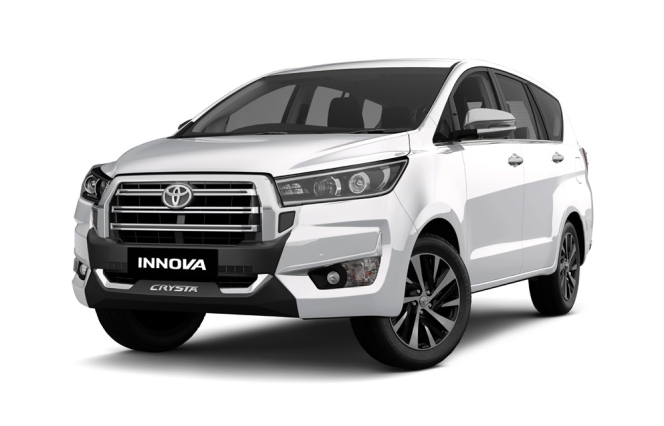
Toyota Kirloskar Motor (TKM), one of the leading passenger vehicle manufacturers, has reported its total wholesales of 28,218 units in September 2026, comprising 25,027 units sold in the domestic market and 3,191 units exported.
For the YTD period (January – September 2026), the automaker reported cumulative total sales of 294,914 units, representing an 8 percent increase compared to 272,824 units sold last year.
Domestic sales for the 9-month period rose 9 percent to 269,619 units, up from 247,081 units in the previous year, while exports reached 25,295 units, compared to 25,743 units a year ago.
Sabari Manohar, Executive Vice-President of Sales-Service-Used Car Business, Toyota Kirloskar Motor, said, "September witnessed continued customer interest across segments, supported by our focus on quality, durability and reliability. As we enter the festive season, we remain committed to strengthening customer engagement and working closely with our dealer partners to deliver enhanced mobility experiences and address evolving customer needs."
Comments (0)
ADD COMMENT