

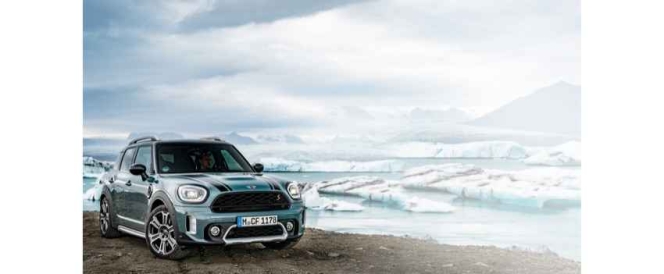
The Countryman, no doubt, is an aspirational five-seater SUV as it beautifully balances the retro looks with state-of-the-art technology. According to Vikram Pawah, President, BMW Group India, “The new MINI Countryman inspires you to take the path to new experiences and new horizons of the mind. This versatile sports activity vehicle (SAV) is just as home in an urban jungle as it is in the great outdoors. Its adrenaline-pumping engine, elegant interior design features, and latest technology blend harmoniously together.”

The Countryman easily stands out in the crowd as it retains MINI’s unique boxy rugged design with signature oval-shaped angular headlights. The LED adaptive headlamps are housed in an external piano black casing. The revised mesh grille is all-black in colours like the lower bumper, which also houses the fog lamps and vertical air dams. To add a sporty flair to its exteriors, the Countryman showcases black racing stripes on the bonnet, contrasting black roof and wheel arches along with silver roof rails. Coming to the rear, the crossover gets the trademark Union Jack LED taillights with vertical reflectors on the bumpers. It also gets silver-coloured skid plates at the front and rear.
The Cooper S comes with 17-inch alloy wheels, while the JCW Inspired version gets bigger 18-inches with run-flat tyres, a white coloured roof and a Comfort Access System that allows you to open the car door and start the engine without taking the key out of the pocket. This system is also in sync with the boot, which can be opened by swiping your foot underneath the rear fender.
Step inside the cabin and the circular touchscreen welcomes you in the middle of the dashboard. Moving below and the centre console sports physical buttons and metal finished retro toggle switches. The Cooper S is equipped with a 6.5-inch touchscreen with an LED ring around it. At the same time, the JSW Inspired gets a bigger 8.8-inch infotainment unit including navigation system, wireless Apple CarPlay, wireless phone charger, Harman Kardon music system, adjustable rear seats, 2-zone automatic climate control, panoramic sunroof and an all-digit 5.5-inch instrument cluster. On the other hand, the front seats are electrically adjustable, and the driver side comes with a seat memory function. The Cooper S’s cabin is slightly subdued with carbon black interiors and upholstery, while the top variant JCW Inspired takes the luxury quotient to the next level as it gets an option of either Chester Malt Brown or Chester Satellite Grey colour trims.

Now, coming to the million-dollar question, what lies under the hood? The new Countryman is only available in petrol and is powered by the 2-litre 4-cylinder engine with TwinPower Turbo technology, which churns out 189bhp and 280Nm of torque. Just to give you an idea of how quick it is off the mark; both the variants do 0-100km in just 7.5 seconds and boast a top speed of 225kmph. The Cooper S is mated to a seven-speed dual-clutch automatic transmission (DCT), and the JCW Inspired takes a notch higher with the seven-speed Sport DCT that offers quick gear shifts, paddle shifters and launch control for faster acceleration from standstill.
To make the driving more involving, the MINI Countryman has three driving modes. The individual mode lets you customise the suspension set up and driving dynamics according to your preference. Apart from this it also comes with Green (Eco) and Sport mode.
As expected, the Countryman comes fully loaded with safety features like front airbags, brake assist, cornering brake control, anti-lock braking system (ABS), Dynamic Stability Control and much more.
The Countryman doesn’t really have any direct competition, but in terms of a compact luxury SUV, the Audi Q2, Volvo XC40 and the upcoming new Mercedes-Benz GLA are the other options available in the market along with the BMW X1. (MT)
- BMW India
- BMW Motorrad India
- Nurburgring
- BMW M2 Coupé
- BMW M3 Sedan
- BMW M4 Coupé
- BMW M5 Sedan
- BMW M5 Touring
- BMW M 1000 R
BMW And BMW Motorrad Introduce 100 Jahre Nurburgring Limited Edition Vehicles In India
- By MT Bureau
- October 02, 2026
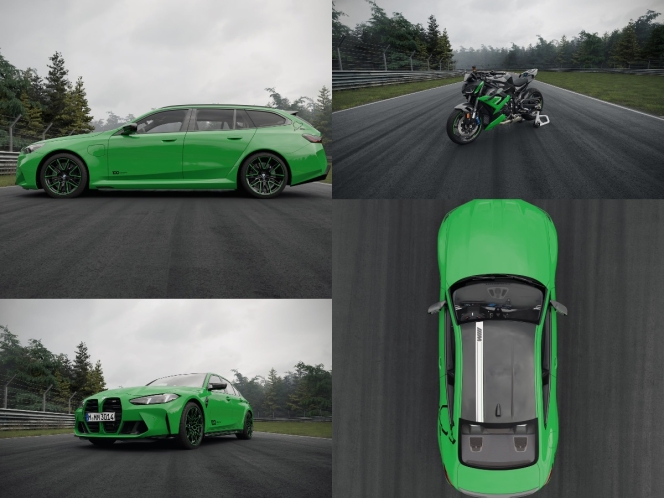
German automotive luxury brand BMW India and BMW Motorrad India have opened pre-orders for the ‘100 Jahre Nurburgring’ edition vehicles to mark the upcoming 100th anniversary of the Nurburgring racetrack in 2027.
The limited collection includes five BMW M car models – the BMW M2 Coupé, BMW M3 Sedan, BMW M4 Coupé, BMW M5 Sedan and the BMW M5 Touring – alongside the BMW M 1000 R motorcycle. The release marks the entry of the BMW M5 Touring into the Indian market.
The edition models feature specific paint finishes in Nurburgring Green and Sapphire Black metallic with green accents, incorporating the ‘100 Years’ logo, Nurburgring since 1927 lettering and the Nurburgring circuit outline.
Exterior details include carbon fibre roofs, model-specific graphics and green wheel accents across select models, while the M5 Touring features a steel roof with custom stripes. Interior specifications across the car lineup include black leather with green and white stitching, door sills, carbon fibre trims, M Carbon bucket seats with individual upholstery, and an M Alcantara steering wheel with a 12 o'clock marker.
The BMW M 1000 R motorcycle features a painted fuel tank with the Nurburgring outline, an airbox cover with ‘one of 100’ numbering, carbon wheels with green accent stripes, an Alcantara seat with embroidered ‘100’ logos and black components for the rear swingarm and frame.
Honda Cars India Sales Decline 19% In September 2026
- By MT Bureau
- October 02, 2026
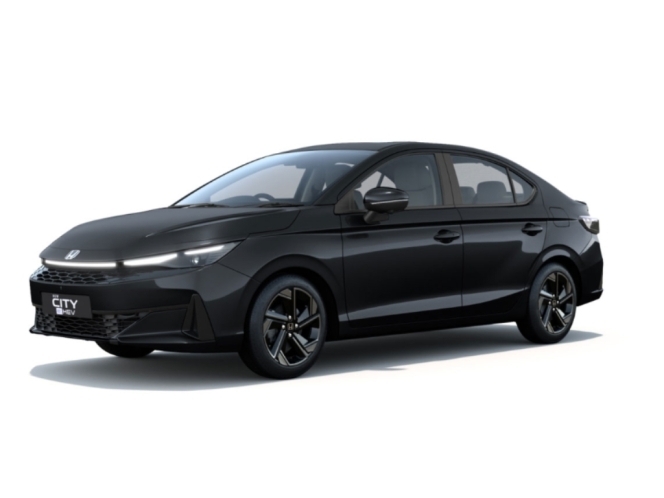
Honda Cars India (HCIL), one of the leading manufacturers of passenger vehicles in the country, has announced its wholesales for September 2026.
The company reported total sales of 6,955 units, down 16 percent YoY, as compared to 8,296 units sold for the same period last year.
In the domestic market, the company sold 4,465 units, down 19 percent YoY, as compared to 5,503 units sold a year ago. On the exports front, the company shipped 2,490 units, down 11 percent YoY, as compared to 2,793 units last year.
Kunal Behl, Vice-President, Marketing & Sales, Honda Cars India, said, We are pleased to see positive sales momentum for the Honda City and Honda Amaze during the month. We are also gearing up for the launch of new Elevate, which will further strengthen our SUV offering with a refreshed and enhanced package. With the festive season underway and an exciting product introduction ahead, we look forward to building stronger momentum in the coming months.”
Kia India Clocks Highest-Ever Monthly Sales Of 32,017 Units In September 2026
- By MT Bureau
- October 01, 2026
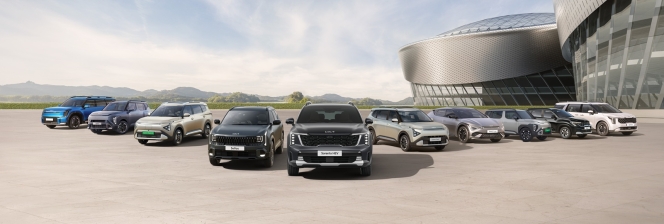
Kia India, one of the leading passenger vehicle manufacturers, has reported its best-ever monthly wholesale performance of 32,017 units in September 2026, representing a 41 percent increase compared to 22,700 units sold last year.
For Q3 of CY2026, the company recorded sales of 89,259 units, reflecting a 38.5 percent growth over 64,443 units for the same period last year.
In terms of YTD (January – September 2026) cumulative sales reached 253,008 units, marking a 22.5 percent increase from 206,582 units reported during the corresponding period in 2025.
Kia India attributed the robust performance to healthy demand across its portfolio incuding Seltos and Sonet models, alongside contributions from the Carens, Carens Clavis, Clavis EV, Syros EV and Sorento, which is offered in diesel and hybrid powertrain options. The company's powertrain options now span petrol, diesel, CNG, hybrid, and electric configurations across its product range.
Atul Sood, Senior Vice-President of Sales and Marketing, Kia India, said, "Our strong performance in September and across the third quarter reflects the continued trust of our customers and the strength of Kia’s evolving portfolio. The Seltos and Sonet continue to be key contributors to our growth, while the strong response to the Sorento and Syros EV reinforces our strategy of expanding into new segments and powertrain categories in line with evolving customer aspirations. As mobility needs become increasingly diverse, we are focused on providing meaningful choice across conventional, CNG, hybrid and electric powertrains, supported by ownership solutions that address real customer needs. We remain committed to building on this momentum through distinctive products, advanced technologies and differentiated experiences designed around the needs of Indian customers."
At present, Kia India operates a retail and service network comprising 915 touchpoints across 425 cities, alongside 137 certified pre-owned outlets across the country.
Toyota Kirloskar Motor Sells 25,027 PVs In September 2026
- By MT Bureau
- October 01, 2026
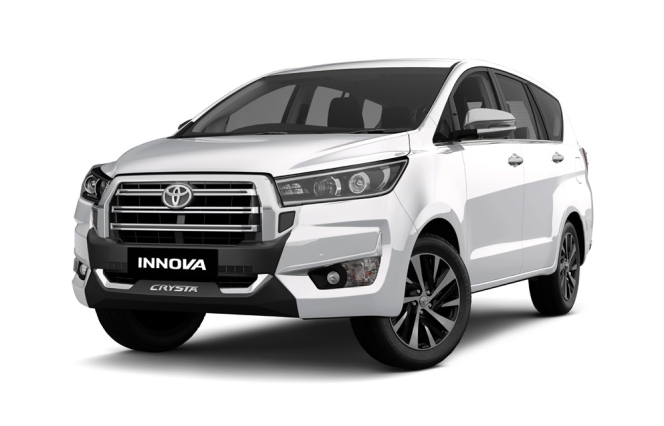
Toyota Kirloskar Motor (TKM), one of the leading passenger vehicle manufacturers, has reported its total wholesales of 28,218 units in September 2026, comprising 25,027 units sold in the domestic market and 3,191 units exported.
For the YTD period (January – September 2026), the automaker reported cumulative total sales of 294,914 units, representing an 8 percent increase compared to 272,824 units sold last year.
Domestic sales for the 9-month period rose 9 percent to 269,619 units, up from 247,081 units in the previous year, while exports reached 25,295 units, compared to 25,743 units a year ago.
Sabari Manohar, Executive Vice-President of Sales-Service-Used Car Business, Toyota Kirloskar Motor, said, "September witnessed continued customer interest across segments, supported by our focus on quality, durability and reliability. As we enter the festive season, we remain committed to strengthening customer engagement and working closely with our dealer partners to deliver enhanced mobility experiences and address evolving customer needs."
Comments (0)
ADD COMMENT