

Slew Of Technologies Make New XE A Car To Reckon With For Jaguar India
- By 0
- December 21, 2021
By T Murrali
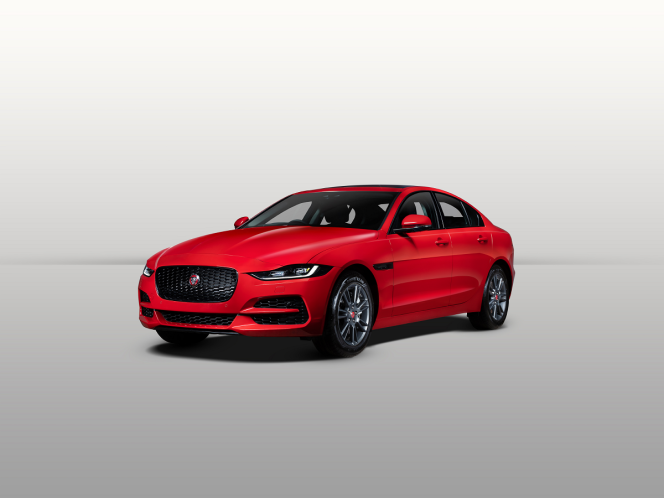
The recently launched New Jaguar XE is giving the much needed fillip to Jaguar Land Rover India as the car plugs the gaps its previous products had. Available in the S & SE variants the new car comes with 184 kW Ingenium Turbocharged Petrol powertrain and 132 kW Ingenium Turbocharged Diesel powertrain options.
 Rohit Suri, President and Managing Director, Jaguar Land Rover India Ltd (JLRIL), said, “The Jaguar XE has always been a distinctly designed executive sports saloon that provides exhilarating performance. The New Jaguar XE is an illustration of how enhancements in its design, technology and driving dynamics can rewrite the rules. We are confident that our Jaguar fans and discerning customers will be delighted with our latest offering.” Going forward, the company plans to launch I-Pace during this calendar; Land Rover Defender will follow. Defying the slow down the company has increased its market share in the premium segment to 16 percent, he said.
Like all Jaguars the new XE distinctively manages to catch the eye from its muscular stance and sculpted bonnet to the new front and rear bumpers, larger front grille and slimmer LED headlamps and tail lamps. It is 4800mm long, 1,416mm high and 1,598mm wide. Its wheel base is 2,835mm and it has a boot volume 403 litres. The turning radius of the new car is 11.22 metres. The New Jaguar XE appears wider and lower than before, with large front apertures, bold graphics and muscular form, all alluding to the car’s performance intent and advanced aerodynamics.
New all-LED headlights with a striking ‘J’ blade daytime running light signature and Animated Directional Indicators create a more purposeful look. The rear of the car also features a new bumper design and slender all-LED tail lights with updated signature graphics which accentuate the visual width of the car, while the 17 inch wheels give it a more planted appearance.
Though all these elements give the sedan a sporty look the design is accentuated further with several nuances in exterior and interiors. To make a 4-door saloon, which is as fun to drive as a sports car, is no mean feat for Jaguar designers, inspired by the F-TYPE - its high-performance car - packed with enhancements, innovations and technology. Rewriting the rules of how a compact saloon should behave, it has all the elements Jaguar is known for - style, precision engineering and offering a tangible sense of excitement.

Driving in a pre-determined circuit the new XE gives a feel of sitting behind the wheel of a sports car, comfortably cocooned by its wrap-around dashboard. The soft grain leather steering wheel, form-hugging 14-way adjustable front seats and impeccable attention to every detail tells how everything is so pleasingly uncluttered and considerately functional.
A refreshed cockpit-style interior offers improved levels of comfort, and the raised centre console adds to its sportiness. Everything revolves around the driver as it was conceived with him in mind. The SportShift Selector, JaguarDrive Control and Touch Pro are central to its seamless design. Once inside the car, you can easily connect with the car straight away with the pulsing start button.
Powertrain
Jaguar’s range of engines features innovative technologies to provide lower fuel consumption and CO2 emissions, without compromising on performance. The new XE is powered by the British-built, Turbocharged Petrol or Diesel engines, both made of lightweight aluminium alloy which, combined with advanced low-friction technologies, deliver refined, efficient and engaging driving experience.
The 2.0 4-cylinder diesel engine powers the vehicle to reach a top speed of 228km; it reaches 100 kmph from zero in 8.1 seconds. Mated with automatic transmission the 1,999 cc engine delivers a maximum power of 132 kW at 4,000 rpm. The high-pressure common rail direct fuel injection, exhaust variable cam timing and a high-efficiency water-cooled intercooler work in combination for clean and efficient combustion; 430 Nm of torque is delivered over a wide engine speed range from 1,750 to 2,500 rpm, delivering the required performance and acceleration. The engine features a variable geometry turbocharger that adapts to the changing flow of exhaust gases for high torque throughout the rev range, and responsiveness that is uniform, progressive and reduces lag.
The 1,999 cc 4-cylinder petrol engine mated with automatic transmission delivers maximum power of 814 kW at 5,500 rpm gives a maximum torque of 365 Nm at 1,500 – 4,000 rpm. Top speed is 250kmph, 0 to 100 in 6.5sec. The intelligent Continuously Variable Valve Lift (CVVL) system varies the extent to which inlet valves are opened, reducing engine pumping losses. This lets the engine 'breathe' with maximum efficiency, optimising power and torque. CVVL works in combination with dual independent variable cam timing for ultimate operating flexibility, resulting in excellent power and fuel economy across the rev range. The twin-scroll turbocharger is fed by an integrated exhaust manifold which increases the transfer of energy to the turbine – significantly reducing turbo lag and improving engine response.
The company has created a range of sophisticated technologies which allow the user to modify the vehicle and enjoy the driving experience when required. JaguarDrive Control allows to select from Comfort, Eco, Dynamic, and Rain, Ice, Snow Mode. Each Mode has its own tailor-made programme which alters different parameters, such as engine and transmission response, steering feel, parasitic load management or traction and stability control.
Designing and building a sports car like XE was possible with a lightweight aluminium chassis and double wishbone front suspension that enables improved levels of handling and road holding, delivering an electrifying driving experience. Unusually for an executive sports saloon, it also features a sophisticated ‘Integral Link’ rear suspension, which provides sharp response and handling, while still retaining a refined and luxurious ride.
In order to help XE tackle winding roads, there's intelligent Torque Vectoring by Braking technology. Maximising control across all surfaces, the car continually monitors and balances the distribution of torque to improve both the grip and steering of the vehicle. Assisting with its stability, the system reduces understeer by applying the brake to the inside wheels, forcing greater torque to outer wheels. For example, on tight turns, it applies the brake to the inside wheel and directs more rotating force from the engine to the wheel with the most grip. The result is a unique combination of sports car-like agility, more consistent road holding, and a feeling of added confidence during drives.
A lightweight design reduces both fuel consumption and CO2 emissions, without compromising on durability and reliability. The weight saving technology assists with achieving a maximum speed of up to 250 kmph. Jaguar XE’s lightweight aluminium intensive body structure continues to play a major role in the car’s agile handling, exceptional safety and efficiency. Aluminium makes up 75 percent of the body and combines with the proven rear wheel drive system, double wishbone front and integral link rear suspension to offer a superior drive.
Connected Technologies
With increasing requirements to get connected to the outside world while driving, XE is loaded with a suite of integrated technologies as standard. The high-definition 10 inch Touch Pro personalised home screen gives all the help and information when required. The interactive side panel for multitasking together with a multimedia connection helps to access the music library. A dose of artificial intelligence makes the XE even listen with a voice recognition system for hands-free requests such as ‘call home’ or ‘find nearest fuel station.’
Interactive Driver Display uses high-definition, crystal-clear graphics to show 3D maps, vehicle settings, contacts and media options. These can be controlled from the multi-function steering wheel.
The standard remote allows to interact with the XE from anywhere with a data connection via the InControl Remote app. From anywhere in the world, it can give information from fuel levels to door and window status, enables to set the perfect cabin temperature in advance, and locate and secure the car from a distance. Smartphone Pack that comes as standard feature, is perfect for mobile phone screen sharing, and makes it easy to use an interactive set of apps through XE's Touch Pro system. It helps to stay connected to smartphone while in the car, and use any compatible apps like Spotify.
Another standard feature is Connected Navigation Pro, a navigation system which allows the user enjoy a continuously seamless experience, while making journeys easier and less stressful. It helps to plan the route, search surrounding locations, get travel tips, understand traffic situations, and even share the estimated time of arrival with friends. The mobile phone can be charged by simply resting it on the wireless device charger in front of the SportShift Selector. This technology is new to Jaguar, and XE is the first of its cars to feature it.
Other features include Online Pack – comprising 4G WiFi Hotspot, Live Apps and Smart Settings, adding to in-car experience so that the driver and passengers can enjoy the journey whilst staying connected to the world. Live Apps – for access to ‘live’ information services such as Weather Watch, Flight Tracker, News and Sports. Other helpful features include a Calendar and Online Media for access to Deezer and TuneIn accounts. Smart Settings, featuring artificial intelligence algorithms help XE learn the car user’s habits and tastes, and predicts seating, climate and music preferences. It'll even change the media channel at a certain time or on a specific day of the week.
Technology Predicts
XE has a host of technologies that can detect potential trouble and help keep the driver alert, safe and comfortable. The Cruise Control and Speed Limiter keep the car at a set speed specified by the driver thereby helping him to stick to local speed limits. Driver Condition Monitor identifies fatigue levels based on driver behaviour and the length and time of the journey. It can even alert the driver to take a break. There is a rear camera for improved visibility when reversing, and a front and rear parking aid to help manoeuvre in and out of tight spaces. Lane Keep Assist detects when the vehicle is unintentionally drifting out of the lane and applies a corrective torque to the steering wheel, encouraging the driver to guide the vehicle back.
Planet-friendly
The Eco mode in XE encourages more efficient and environment-friendly driving. It also helps to cut fuel consumption by moderating energy demand placed on the engine by other systems, such as Climate Control. A display on the Touchscreen keeps the driver in the loop as well as providing some helpful driving tips.
The new XE comes equipped with the latest safety technologies to detect dangerous situations, and then actively respond to such potential situations. Dynamic Stability Control, for instance, detects the first signs of oversteer or understeer, helping to maintain a stable drive. Besides, it will safeguard the vehicle even in low-grip conditions. Engine drag torque control helps prevent wheel slip in adverse weather by providing a gentle push to the wheels where needed.
The premium LED headlights with signature DRL (daytime running lights) are standard on XE. The Auto High Beam Assist provides great visibility. The iconic chicane-shaped LED tail lights are sleek and elegant, wrapping themselves around from the side to the rear. The sleek tail lights are also LED, with the same dramatic animated directional Indicators as the headlights.
The Jaguar range in India includes XE (starting at INR 44.98 lakh), XF (starting at INR 49.78 lakh), F-PACE (starting at INR 63.78 lakh), XJ (starting at INR 111.30 lakh) and F-TYPE (starting at INR 90.93 lakh), ex-showroom. The vehicles are available through 27 authorized outlets across India. (MT)
- BMW India
- BMW Motorrad India
- Nurburgring
- BMW M2 Coupé
- BMW M3 Sedan
- BMW M4 Coupé
- BMW M5 Sedan
- BMW M5 Touring
- BMW M 1000 R
BMW And BMW Motorrad Introduce 100 Jahre Nurburgring Limited Edition Vehicles In India
- By MT Bureau
- October 02, 2026
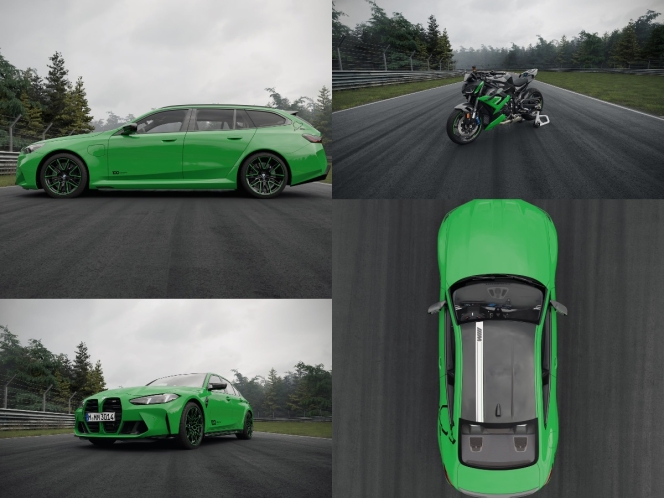
German automotive luxury brand BMW India and BMW Motorrad India have opened pre-orders for the ‘100 Jahre Nurburgring’ edition vehicles to mark the upcoming 100th anniversary of the Nurburgring racetrack in 2027.
The limited collection includes five BMW M car models – the BMW M2 Coupé, BMW M3 Sedan, BMW M4 Coupé, BMW M5 Sedan and the BMW M5 Touring – alongside the BMW M 1000 R motorcycle. The release marks the entry of the BMW M5 Touring into the Indian market.
The edition models feature specific paint finishes in Nurburgring Green and Sapphire Black metallic with green accents, incorporating the ‘100 Years’ logo, Nurburgring since 1927 lettering and the Nurburgring circuit outline.
Exterior details include carbon fibre roofs, model-specific graphics and green wheel accents across select models, while the M5 Touring features a steel roof with custom stripes. Interior specifications across the car lineup include black leather with green and white stitching, door sills, carbon fibre trims, M Carbon bucket seats with individual upholstery, and an M Alcantara steering wheel with a 12 o'clock marker.
The BMW M 1000 R motorcycle features a painted fuel tank with the Nurburgring outline, an airbox cover with ‘one of 100’ numbering, carbon wheels with green accent stripes, an Alcantara seat with embroidered ‘100’ logos and black components for the rear swingarm and frame.
Honda Cars India Sales Decline 19% In September 2026
- By MT Bureau
- October 02, 2026
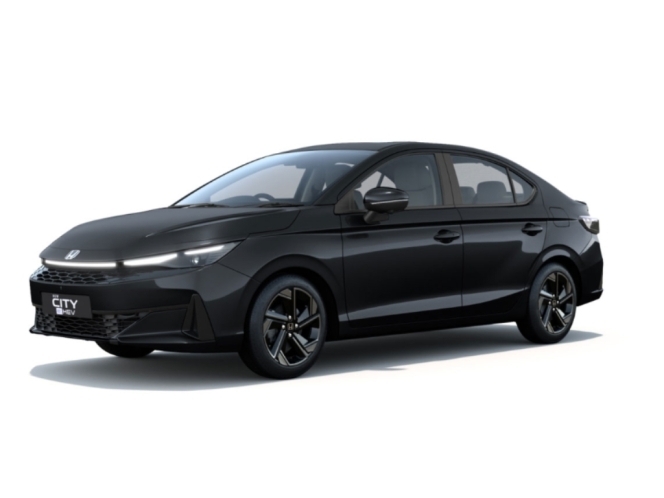
Honda Cars India (HCIL), one of the leading manufacturers of passenger vehicles in the country, has announced its wholesales for September 2026.
The company reported total sales of 6,955 units, down 16 percent YoY, as compared to 8,296 units sold for the same period last year.
In the domestic market, the company sold 4,465 units, down 19 percent YoY, as compared to 5,503 units sold a year ago. On the exports front, the company shipped 2,490 units, down 11 percent YoY, as compared to 2,793 units last year.
Kunal Behl, Vice-President, Marketing & Sales, Honda Cars India, said, We are pleased to see positive sales momentum for the Honda City and Honda Amaze during the month. We are also gearing up for the launch of new Elevate, which will further strengthen our SUV offering with a refreshed and enhanced package. With the festive season underway and an exciting product introduction ahead, we look forward to building stronger momentum in the coming months.”
Kia India Clocks Highest-Ever Monthly Sales Of 32,017 Units In September 2026
- By MT Bureau
- October 01, 2026
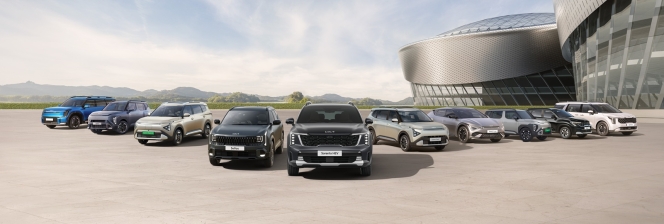
Kia India, one of the leading passenger vehicle manufacturers, has reported its best-ever monthly wholesale performance of 32,017 units in September 2026, representing a 41 percent increase compared to 22,700 units sold last year.
For Q3 of CY2026, the company recorded sales of 89,259 units, reflecting a 38.5 percent growth over 64,443 units for the same period last year.
In terms of YTD (January – September 2026) cumulative sales reached 253,008 units, marking a 22.5 percent increase from 206,582 units reported during the corresponding period in 2025.
Kia India attributed the robust performance to healthy demand across its portfolio incuding Seltos and Sonet models, alongside contributions from the Carens, Carens Clavis, Clavis EV, Syros EV and Sorento, which is offered in diesel and hybrid powertrain options. The company's powertrain options now span petrol, diesel, CNG, hybrid, and electric configurations across its product range.
Atul Sood, Senior Vice-President of Sales and Marketing, Kia India, said, "Our strong performance in September and across the third quarter reflects the continued trust of our customers and the strength of Kia’s evolving portfolio. The Seltos and Sonet continue to be key contributors to our growth, while the strong response to the Sorento and Syros EV reinforces our strategy of expanding into new segments and powertrain categories in line with evolving customer aspirations. As mobility needs become increasingly diverse, we are focused on providing meaningful choice across conventional, CNG, hybrid and electric powertrains, supported by ownership solutions that address real customer needs. We remain committed to building on this momentum through distinctive products, advanced technologies and differentiated experiences designed around the needs of Indian customers."
At present, Kia India operates a retail and service network comprising 915 touchpoints across 425 cities, alongside 137 certified pre-owned outlets across the country.
Toyota Kirloskar Motor Sells 25,027 PVs In September 2026
- By MT Bureau
- October 01, 2026
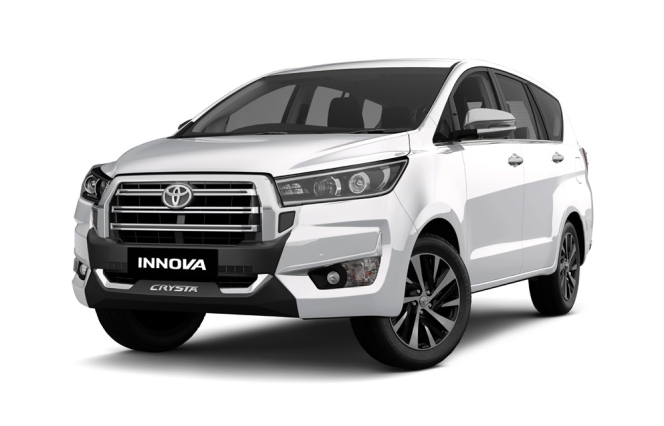
Toyota Kirloskar Motor (TKM), one of the leading passenger vehicle manufacturers, has reported its total wholesales of 28,218 units in September 2026, comprising 25,027 units sold in the domestic market and 3,191 units exported.
For the YTD period (January – September 2026), the automaker reported cumulative total sales of 294,914 units, representing an 8 percent increase compared to 272,824 units sold last year.
Domestic sales for the 9-month period rose 9 percent to 269,619 units, up from 247,081 units in the previous year, while exports reached 25,295 units, compared to 25,743 units a year ago.
Sabari Manohar, Executive Vice-President of Sales-Service-Used Car Business, Toyota Kirloskar Motor, said, "September witnessed continued customer interest across segments, supported by our focus on quality, durability and reliability. As we enter the festive season, we remain committed to strengthening customer engagement and working closely with our dealer partners to deliver enhanced mobility experiences and address evolving customer needs."

Comments (0)
ADD COMMENT