

- Altair
- LG Electronics Vehicle component Solutions Company
- LG VS Company
- Sam Mahalingam
- Sangyong Lee
- Altair HyperWorks
- Altair OptiStruct
Suzuki Ignis facelifted To Offer More Rugged Compact SUV Appearance
- By MT Bureau
- August 11, 2020

Established well globally for its expertise in small cars Suzuki launched the Ignis compact crossover in the UK in early 2017. For August 2020 launch, Ignis has now undergone a facelift with some striking styling upgrades for a more rugged ultra compact SUV appearance along with an enhanced Hybrid powertrain.
While retaining the iconic design characteristics of the current model, the new Ignis has a new front grille and bumpers, refined interior and exterior colours, and an efficiency-enhanced engine with expanded hybrid system capacity.
Ingrained with Suzuki’s design heritage, including a slit-like C-pillar inherited from the first generation Cervo (SC100), blacked out A- and B- pillar, bumper garnish and clamshell bonnet.
The facelift model retains these iconic features, while adding a new Suzuki SUV-style 5-spoke front grille along with front and rear bumpers featuring trapezoid shape silver under garnishes, amplifying the overall SUV character and unique style.
The interior of the Ignis was designed with futuristic urban styling and sweeping horizontal lines that convey breadth and a feeling of space. The instrument panel, featuring a newly designed meter cluster, has been updated with a contrast of black and white that is simple in composition but leaves a bold impression.
New interior accent colours - Lazuli Medium Blue Pearl and Medium Grey Metallic as well as a newly designed instrument panel improve the stylish urban taste of the interior.
Suzuki first introduced its 1.2-litre Dualjet technlogy (K12C) in 2014, initially in the Swift, and then utilised in the Baleno and Ignis models. This engine is now replaced by the new K12D Dualjet unit which offers greater fuel economy and even lower CO2 emissions. The updated K12D 1.2-litre engine powering the new Ignis features a new dual injection system and offers both powerful response and high fuel efficiency. This high-level balance is made possible through advances that include an electric intake VVT (variable valve timing), a variable displacement oil pump and electric piston cooling jets. Maximum power output is 83PS with a torque figure of 107Nm at just 2,800rpm.
Fuel efficency is further enhanced when paired with the self-charging hybrid system powered by a new lithium-ion battery with capacity upgraded from 3Ah to 10Ah to improve energy recovery efficiency.
For the Ignis with 2WD manual transmission the Hybrid system helps Suzuki reach a CO2 emissions figure of just 114g/km (WLTP regulation) plus achieve a fuel consumption figure of 55.7mpg (WLTP) on the combined cycle.
CVT powertrain is available as an option on the facelifted Ignis SZ-T and SZ5 models with 2WD, and is combined with the 1.2 Dualjet Hybrid powertrain. The CVT system can vary the actual gear ratio continuously and stepless from low-speed to high-speed range depending on the driving conditions. The CVT allows improved driveability with reduced shift-shock in comparison with a conventional automatic transmission.
The Ignis adopts Suzuki’s ALLGRIP ‘AUTO’ four-wheel drive system which is available optionally on the SZ5 model with manual transmission. First introduced in Swift, this is a well proven and simple fully automatic and permanent four-wheel drive layout which transfers additional torque to the rear wheels when required via a viscous coupling. It is also an ideal choice for customers living in rural areas who may need additional mobility across rougher terrain or for crossing slippery surfaces during winter months without owning a more conventional SUV sized vehicle. (MT)
Jeep Launches Compass 85th Anniversary Edition In India At INR 2.67 Million
- By MT Bureau
- August 17, 2026
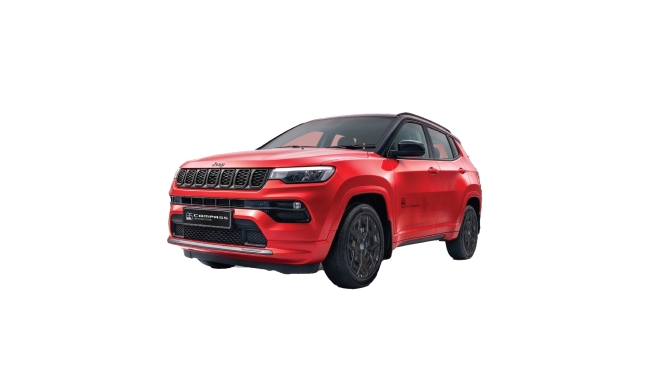
Stellantis-owned Jeep India has launched the Jeep Compass 85th Anniversary Edition, limited to 85 units at prices starting at INR 2.67 million (ex-showroom).
The anniversary edition incorporates visual updates to the exterior and interior of the vehicle platform. External changes include 18-inch alloy wheels finished in gloss black alongside anniversary badging. The interior cabin features a black colour scheme paired with gold accents and contrast trim detailing.
Kumar Priyesh, Business Head and Director of Automotive Brands, Stellantis India, said, "The Jeep Compass has always been central to the Jeep story in India, bringing the brand's legendary capability, design and authenticity to customers who expect more from their SUV. As Jeep celebrates 85 years globally, the Compass 85th Anniversary Edition gives this iconic nameplate a distinctive new expression. With exclusive anniversary-inspired styling, curated accessories and safety technologies, this special edition has been crafted for customers who seek a Compass that feels even more personal, intelligent and exclusive."
The vehicle is offered with optional accessory packages under the brand's personalisation options. These packages add functional and cabin features, including sunroof illumination, ambient lighting, a digital inner rear-view mirror and integrated front and rear dashcams. Bookings for the limited-run vehicle have opened across the company's dealership network and online sales platform.
Mercedes-Benz Opens New Dealership In Lucknow With T&T Motors
- By MT Bureau
- August 17, 2026
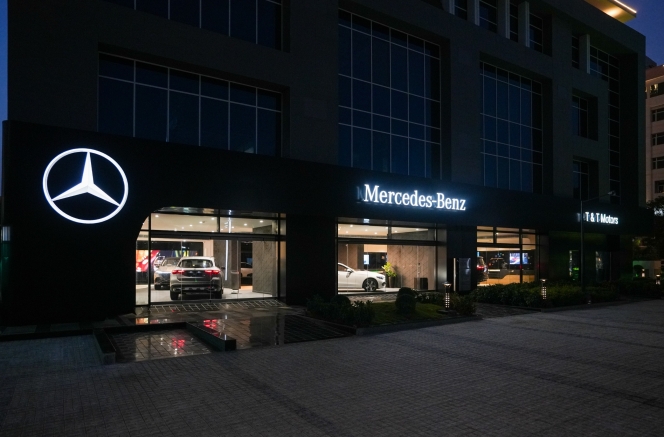
German luxury car brand Mercedes-Benz India has opened its new sales facility in Lucknow in partnership with dealership operator T&T Motors. The outlet expands the company's network in Uttar Pradesh to 10 touchpoints across cities including Lucknow, Noida, Ghaziabad, Agra, Kanpur and Varanasi, contributing to a national presence of over 150 locations across more than 60 cities.
The new facility occupies 9,000 square feet, including over 5,000 square feet of carpet area and was completed in five months. The showroom accommodates four vehicle display bays, private and semi-private consultation zones, a lounge section for vehicle lines and a dedicated delivery bay. To support battery electric vehicles, the location incorporates a 180 kW DC fast charger with two charging bays, backed by a staff of 88 employees.
Brendon Sissing, Vice-President of Sales and Marketing, Mercedes-Benz India, said, “Mercedes-Benz continues to strengthen its luxury retail footprint across India, reflecting our ‘Go to Customer’ strategy. The inauguration of T&T Motors’ new facility in Lucknow marks yet another important milestone in bringing world-class luxury products, services and experiences closer to our customers. Uttar Pradesh remains an important emerging market for Mercedes-Benz, and the growing aspiration for luxury mobility in Lucknow presents strong growth potential for Mercedes-Benz. Through modern luxury infrastructure, personalised consultations, digital capabilities and EV readiness, we are elevating luxury retail experience for our discerning customers in the city.”
- Mahindra & Mahindra
- Scorpio
- Mahindra Lifestyler
- Mahindra Scorpio Lifestyler
- Mahindra India Design Studio
- MIDS
- Mahindra Research Valley
- MRV
- Dr Veluswamy R
- Pratap Bose
- Nalinikanth Gollagunta
Mahindra Scorpio Lifestyler Global Pickup Breaks Cover, India Launch By April 2027
- By MT Bureau
- August 14, 2026
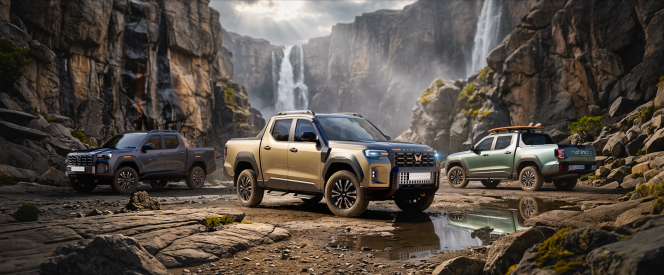
Mumbai-headquartered automotive major Mahindra & Mahindra has unveiled its first global pick up christened Lifestyler, which will be launched in India as the Mahindra Scorpio Lifestyler. The vehicle will go on sale by April 2027 with prices starting below INR 1.97 million ex-showroom.
First shown as a concept in Cape Town, South Africa, in August 2023, the pickup was designed at the Mahindra India Design Studio in Mumbai and developed at Mahindra Research Valley in Chennai. It is built on Mahindra’s next-generation body-on-frame architecture and is intended for both payload and lifestyle use. The company claims to have around 267 patents in terms of innovation for the Lifestyler.
Dr Velusamy R, President, Automotive Business, Mahindra & Mahindra, said, “From the outset, our vision was to create a world-class global pickup that raises the bar for the segment while remaining true to Mahindra's strengths in authentic capability and value. The Scorpio Lifestyler is a testament to the strong product development capabilities at Mahindra Research Valley (MRV). Built on our advanced next-generation body-on-frame architecture, it has been engineered to deliver the capability, durability, safety and refinement demanded by customers around the world.”
Pratap Bose, Chief Design and Creative Officer, Mahindra & Mahindra, said, “The Scorpio Lifestyler is inspired by how our customers work, play and explore. Combining bold exterior design, plush interiors and SUV-like comfort with unmistakable Mahindra toughness, it brings style and refinement to every journey. This philosophy is reflected in the three editions showcased today: Valley celebrates purposeful refinement, Reef embodies freedom and exploration, and Trail captures the spirit of boundless adventure. Together, they express our vision of a pickup that celebrates individuality while remaining rooted in capability, authenticity and the freedom to explore without limits.”
Nalinikanth Gollagunta, CEO, Automotive Division, Mahindra & Mahindra, said, “The Scorpio Lifestyler represents the convergence of global engineering and evolving customer aspirations. As we prepare for its India launch, we see a growing appetite among customers for a vehicle that delivers authentic capability without compromising on technology, safety, comfort or everyday usability. We are investing in building awareness, strengthening our network and creating the right ownership experience for this category. We believe the Scorpio Lifestyler has the potential to redefine expectations and shape the future of the pickup segment in India.”
While the technical details are still under the wraps, the company showcased three editions - the Valley Edition finished in Artemis Grey, the Reef Edition uses an Aquareef finish and the Trail Edition finished in Sahara Beige.
The Mahindra Lifestyler is aimed at the midsize lifestyle pickup segment in Australia and New Zealand, South Africa, Africa, the Middle East and Latin America. It has been developed to meet requirements for capability, durability, safety, technology and everyday use across those markets.
- Tata Motors
- Tata Motors Passenger Vehicles
- Shailesh Chandra
- electric vehicles
- Sierra
- Richard Molyneux
Tata Motors Passenger Vehicles Targets 40% EV Market Share In FY2027
- By Nilesh Wadhwa
- August 13, 2026
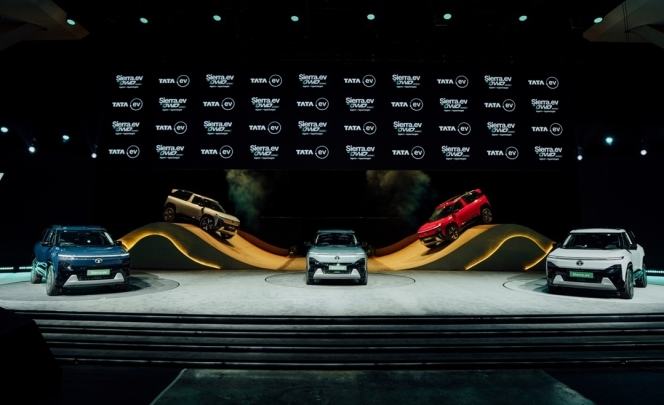
Tata Motors Passenger Vehicles, one of the leading automakers in the country, is charting a confident course for FY2027. The company is sees its multi-powertrain leadership, capacity flexibility and industry-outperformance ambitions to drive a strong H2 for fiscal 2027.
Shailesh Chandra, Managing Director and CEO, of Tata Motors Passenger Vehicles, struck a distinctly forward-looking tone in the company’s Q1 FY27 virtual conference, outlining a strategy built on sustained demand for alternative-energy vehicles, flexible manufacturing, product intensity and disciplined capital allocation even as the broader industry navigates inflationary and commodity headwinds.
He characterised the remainder of FY2027 as a period of continued outperformance relative to the passenger-vehicle industry. Tata Motors at 14.1 percent had already delivered growth roughly twice the industry average of 7.9 percent in FY2026 and a robust 45 percent in Q1 FY2027 as against the industry average of 25.9 percent.
The management expects this momentum to persist. Industry volumes are projected in the mid-double-digit range of 15-20 percent for the remainder of the year in some scenarios.
Tata Motors, on the other hand, is targeting sustained growth even if overall industry expansion moderates to single digits in the second half because of a high base effect from strong H2 FY2026 demand.
Inventory levels are meaningfully lower than a year earlier, creating scope for healthier retail offtake. Q2 is expected to be more challenging for the industry as a whole due to cost pressures, with the second half potentially tighter still for conventional passenger vehicles.
Chandra, however, intends to defend and expand market share through timely product refreshes, facelifts and new nameplates across both ICE and electric portfolios, while prioritising supply-side capacity increases. Waiting periods across the Tata Motors range currently stand at 4-6 weeks, reflecting healthy demand.
Hatchbacks continue to contribute around 15-20 percent of the mix, while SUVs remain the structural growth engine. Export plans include opening a significant new market next year, with a dual focus on ICE and EV products; recent export growth has been driven primarily by South Africa.
Alternative Energy Mix
The shift toward alternative powertrains is central to Chandra’s vision. Industry EV penetration has reached approximately 8 percent – the highest among passenger-vehicle markets – and is expected to climb toward 10 percent by end-FY2027.
Tata Motors’ own EV share of its portfolio has risen from around 38 percent and is targeted at upwards of 40 percent (for the remainder of the year), supported by strong customer acceptance. EV demand has jumped sharply (management noted a 3-4 times increase relative to February levels for the company), but supply remains the binding constraint rather than underlying demand. Chandra revealed that the strong demand for EVs versus supply-side constraints has led to waiting periods for EVs of around 4-6 weeks.
CNG demand is robust: industry CNG share stands near 22 percent, while Tata Motors’ mix is higher at around 27 percent. The outlook remains positive as the CNG station network expands from roughly 8,500 to 15,000-16,000 stations in the coming year. CAFÉ norms (particularly CAFÉ 3 and CAFÉ 4) will further accelerate the push toward alternative-energy vehicles; for OEMs with credible EV offerings, electrification is the most powerful compliance lever.
Sharing his perspective on hybrid technology, Chandra stated that its share in the overall PV segment has stabilised at a modest 2-2.5 percent share. Tata Motors remains ready to introduce hybrids if market conditions warrant, but current emphasis is clearly on CNG and pure electric.
In Q1 the combined CNG-plus-electric mix rose from 19-21 percent to 24 percent. Management is optimistic that EV volumes for the company could grow 70 percent in FY2027, even allowing for some high-base effects in the second half, with overall company growth of 10-15 percent still feasible.
Capacity, Cost Pressures and Capital Plans
For Tata Motors internal EV capacity is not a bottleneck since production systems are fungible and flexible; capacity has already been stepped up from 9,000 to 13,000-14,000 units and reached more than 15,000 units last month, with further increases planned.
Responding to lower-than-anticipated sales for the popular Sierra SUV, the company attributed the temporary production impact to constraints from casting and sheet-metal suppliers plus a five-day production loss at the Sanand plant due to heavy rains, but corrective actions are under way.
Profitability in the recent period was pressured primarily by commodity-price inflation (approximately 4-4.5 percent impact) plus roughly 1 percent from other factors. Cost-reduction initiatives have partially offset these headwinds; in a normalised quarter, margins would have expanded more significantly. Certain PLI benefits were deferred because of new-product launches but will be reapplied in due course.
However, it is important to note that Chandra has emphasised that CAPEX plans remain unchanged at around 6-8 percent of revenue, which will continue to be directed toward new products, technologies and capacity expansion. Management sees no need to revise the programme despite margin pressure.
On the E20 contamination issue raised in the market, Tata Motors has not experienced customer reports and was not among the OEMs that submitted data on the matter.
Jaguar Land Rover Perspective
Richard Molyneux, CFO of JLR, noted that the luxury brand is a truly global business with only a small percentage of sales in India. China remains challenging, production of legacy products (including Jaguar) has been wound down, and a fire plus broader global slowdown affected Range Rover output. Q1 is seasonally soft for JLR, but the team is optimistic about sequential improvement. India is viewed as a significant growth market going forward, supported by existing domestic assembly and imports, with plans to expand the brand’s presence rapidly.
Chandra’s message is one of controlled confidence. Tata Motors Passenger Vehicles enters the balance of FY2027 with lower inventories, a flexible multi-powertrain portfolio that is already capturing rising CNG and EV demand, fungible capacity that can scale with the market, and an intact investment programme focused on product and technology. While the industry faces near-term cost and base-effect challenges, the company’s leadership in alternative energy, combined with ongoing product intensity and supply-side focus, positions it to continue outgrowing the market and to deepen its role in India’s evolving mobility landscape.
Comments (0)
ADD COMMENT