

Tata Motors Passenger Vehicles Records Sales Of 68,810 Units In September 2026
- By MT Bureau
- October 01, 2026
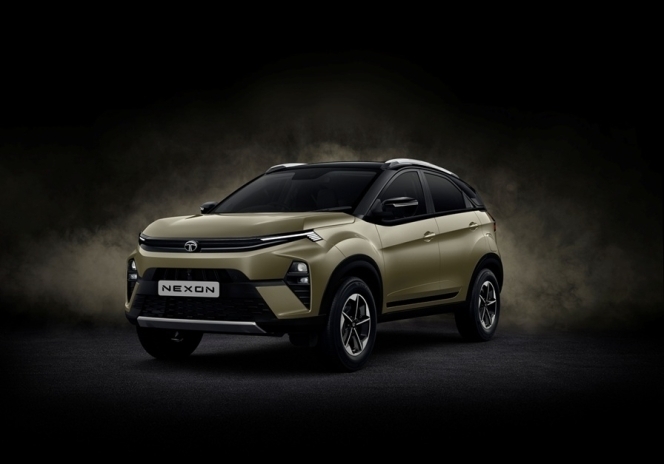
Mumbai-headquartered automotive major Tata Motors Passenger Vehicles has announced its wholesales for September 2026 and Q2 FY2027.
The company reported sold 70,210 passenger vehicles last month, up 15 percent YoY, as against 60,907 units last year. In the domestic market sales grew 15 percent YoY to 68,810 units from 59,667 units a year ago, while exports grew by 13 percent to 1,400 units. Monthly electric vehicle dispatches reached 15,384 units, representing a 67 percent increase over 9,191 units in September 2025.
In Q2 FY2027, the wholesales touched 201,723 units, up 40 percent YoY, as against 144,397 units for the same period last year. The domestic market saw a healthy uptick of 40 percent YoY at 140,189 units, while exports clocked 20 percent YoY growth to 5,049 units. Electric vehicle sales, comprising domestic and export volumes, came at 47,150 units for the quarter, reflecting a 90 percent YoY increase over 24,855 units.
Interestingly, for Q2 FY2027, electric vehicles accounted for 23 percent of the company’s total sales volume, while CNG models contributed 28 percent, bringing the combined volume of alternative powertrains to 51 percent of overall deliveries.
Shailesh Chandra, MD and CEO, Tata Motors Passenger Vehicles, said, “In Q2 FY27, passenger vehicle demand sustained the strong momentum seen following GST 2.0, despite the quarter being seasonally softer. Industry Vahan volumes grew around 24 percent YoY, led by increasing adoption of greener powertrains, providing a promising backdrop for the forthcoming festive season. For Tata Motors Passenger Vehicles, Q2 FY27 was our highest-ever quarter, with sales of 201,723 units and industry-beating growth of 40 percent YoY. We ended the quarter on a strong note, crossing the 70,000-unit sales milestone in September and look forward to carrying this momentum as we enter the festive period. Our greener powertrain portfolio continued to be a significant growth driver. EVs recorded their highest-ever quarterly sales of over 47,000 units, growing 90 percent YoY, with EV penetration in our portfolio rising sharply to 23 percent, compared with around 8 percent for the industry. CNG also delivered its highest-ever quarterly sales and accounted for 28 percent of our volumes. Together, EV and CNG now contribute 51 percent of our sales, reflecting the rapid shift in customer preference towards greener mobility.”
“Customer response remained strong across our portfolio, with Punch emerging as India’s highest-selling SUV during the quarter. Building on the momentum of our Q1 launches, we further strengthened our portfolio with Curvv SeriesX, Sierra Legend Series and the all-new Tata Aeris. We also unveiled our new customer-facing identity, TATA.CARS, reflecting the evolution of our brand in step with the aspirations of today’s Indian car buyer. Looking ahead, we remain optimistic about the festive season, supported by a strong order book and healthy customer traction across the portfolio. As we progressively scale up production, our focus will be on fully leveraging this demand, sustaining our growth momentum and further strengthening our competitive position in the market,” added Chandra.
Skoda Peaq Achieves 5-Star Rating In 2026 Euro NCAP Safety Assessment
- By MT Bureau
- November 23, 2026
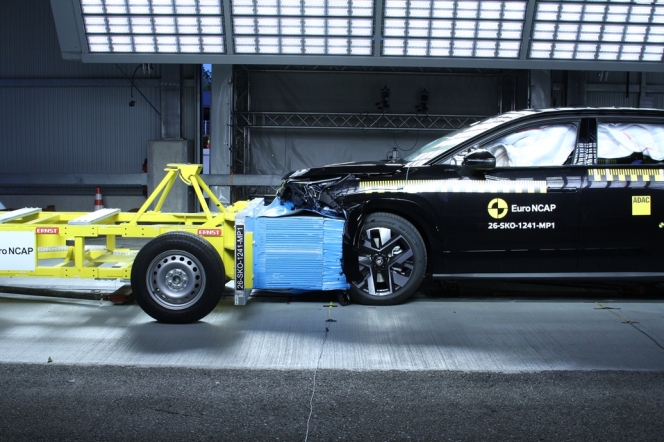
The European New Car Assessment Programme (Euro NCAP) has awarded the Skoda Peaq a 5-star safety rating under its 2026 assessment protocol.
The Skoda Peaq Selection 90 (left-hand-drive) scored 94 percent in Crash Protection, 92 percent in Post-Crash Safety, 78 percent in Crash Avoidance and 65 percent in Safe Driving, becoming the first vehicle to receive maximum points for occupant protection across all assessed crash configurations.
In Crash Protection, the SUV earned maximum points across offset frontal, full-width frontal, side mobile-barrier, side-pole and rear impact configurations for adults and children aged six and 10, while both 5- and 7-seat variants passed child-seat installation checks for i-Size, ISOFIX and seat-belt-secured restraints.
Post-Crash Safety results included rescue sheets in 23 EU languages, a 100-page rescue guide in English, German, Spanish and French, an airbag control unit with an event data recorder, an eCall system, multi-collision braking, thermal-propagation containment exceeding 20 minutes and front side windows remaining operational for over two minutes during submergence testing.
Johannes Neft, Chief Development Officer, Skoda Auto, said, “With the Peaq’s five-star Euro NCAP rating, Skoda continues its strong track record in vehicle safety. This excellent result also demonstrates that our new all-electric SUV fully meets the particularly high standards we set for our flagship across all areas of vehicle development, with safety being integral from the outset. This achievement reflects our team’s expertise and great commitment. I want to thank everyone involved for their dedication and excellent work.”
Crash Avoidance testing evaluated assistance systems across approximately 1,000 scenarios involving cars, two-wheelers, cyclists and pedestrians. In Safe Driving, the Peaq became the first Skoda model equipped with occupant-size detection to adjust front-airbag deployment and seat-belt load-limiter force, paired with a rear-view mirror camera monitoring seat-belt usage and driver attention, buttons and voice controls, and traffic-sign recognition tested over more than 2,000 km across four EU countries alongside the Traffication cloud hazard-alert app.
- Toyota Motor Corporation
- Toyota Kirloskar Motor
- Masakazu Yoshimura
- G. Shankara
- Ramesh Rao
- Kiran HJ
- M B Patil
- D K Shivakumar
Karnataka Chief Minister And Industry Minister Visit Toyota Motor Corporation In Japan
- By MT Bureau
- November 23, 2026
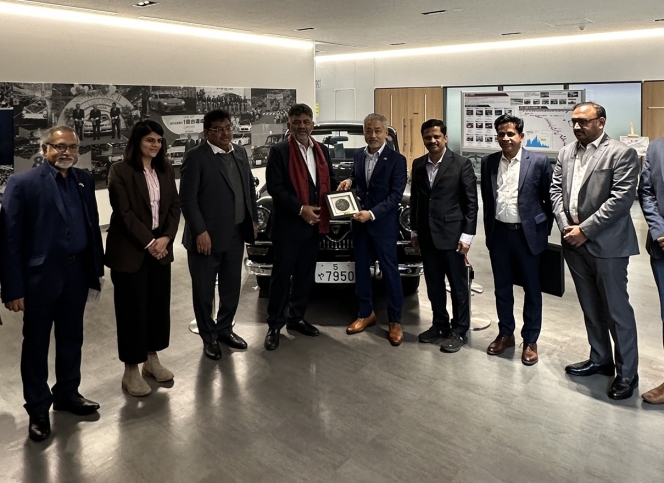
Karnataka Chief Minister D K Shivakumar and Industry Minister M B Patil, accompanied by officials from the Government of Karnataka, visited Toyota Motor Corporation in Japan to strengthen collaboration between the state and the automaker.
During the visit, the delegation observed manufacturing operations and technologies and interacted with production associates and engineers from India undergoing training in Japan.
The Chief Minister held discussions with Toyota leadership, including Masakazu Yoshimura, Regional Chief Executive Officer, G. Shankara, Chief Strategy Officer, Ramesh Rao, Vice-President and Kiran HJ, General Manager for External Affairs, Toyota Kirloskar Motor.
The delegation reviewed Toyota's investments, employment generation, skill development, technology transfer and manufacturing ecosystem in Karnataka, while reaffirming the state government's commitment to supporting investment, growth, employment and people development.
Masakazu Yoshimura, Regional Chief Executive Officer, Toyota Motor Corporation, said, “We sincerely appreciate the continued support and collaboration extended by the Government of Karnataka over the years. Karnataka has played a vital role in Toyota’s growth journey in India and we value the strong partnership built on shared aspirations for industrial development, innovation and economic progress. We remain committed to working closely with the Govt of Karnataka to create long-term value and contribute to its continued growth."
G. Shankara, Chief Strategy Officer, Toyota Kirloskar Motor, said, “Toyota's journey in Karnataka goes beyond manufacturing. We are dedicated to nurturing talent, creating meaningful opportunities and supporting community development through various initiatives. With the continued support of the Government of Karnataka, we look forward to deepening our engagement and contributing to Karnataka’s sustainable development.”
JSW Motors Inks MoU With ARAI To Engineer And Validate Vehicles For India
- By MT Bureau
- November 23, 2026
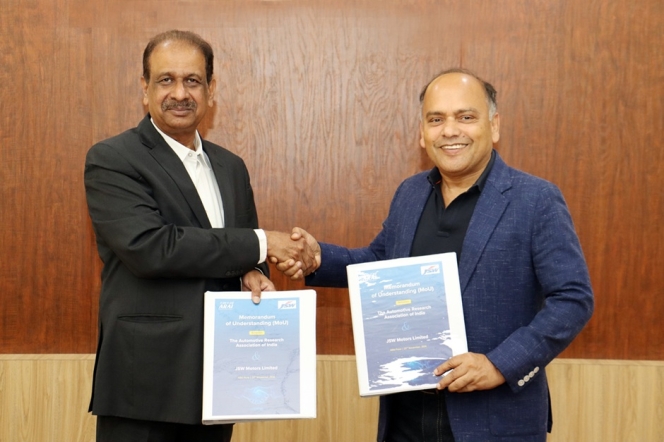
Mumbai-headquartered JSW Motors, the passenger vehicle arm of the JSW Group, has signed a Memorandum of Understanding (MoU) with the Automotive Research Association of India (ARAI) to design, validate and localise new energy vehicles for India.
The MoU was signed at ARAI headquarters in Kothrud, Pune, by JSW Motors Chief Executive Officer Ranjan Nayak and ARAI Director Dr. Reji Mathai. The agreement precedes the brand launch of JSW Motors and its SUV on 3 December 2026, which will be manufactured at its facility at AURIC in Chhatrapati Sambhajinagar, Maharashtra.
Under the agreement, the two organisations will collaborate across vehicle engineering, testing, validation and performance assessment, alongside driver assistance systems development, safety, cybersecurity and engineering compliance. The partnership also covers battery systems engineering and validation, homologation and certification, mobility technology development, engineering skill development and research and knowledge exchange.
Ranjan Nayak said, “At JSW Motors, our ambition is not just to manufacture vehicles, but to build a world-class Indian automobile company with strong indigenous engineering capabilities. Our partnership with ARAI is an important step in this journey, bringing together global technologies and Indian expertise in testing, validation, safety and innovation. Together, we aim to accelerate the development of next-generation mobility solutions designed for Indian conditions and competitive with the best in the world.”
Dr. Reji Mathai added, "ARAI's strength lies in its end-to-end automotive engineering, testing, validation and certification capabilities developed over decades of supporting India's mobility sector. Through this collaboration, ARAI brings its extensive capabilities in automotive R&D, testing, validation and certification, spanning emerging technologies such as ADAS and battery systems, as well as critical safety, quality and regulatory domains including functional safety, cybersecurity and homologation, to enable the development of next-generation new energy vehicles. We are pleased to partner with JSW Motors in creating globally competitive new energy vehicles while advancing innovation, safety and sustainable mobility in India."
Honda Unveils Avancier SUV With Next-Generation Hybrid System
- By MT Bureau
- November 23, 2026
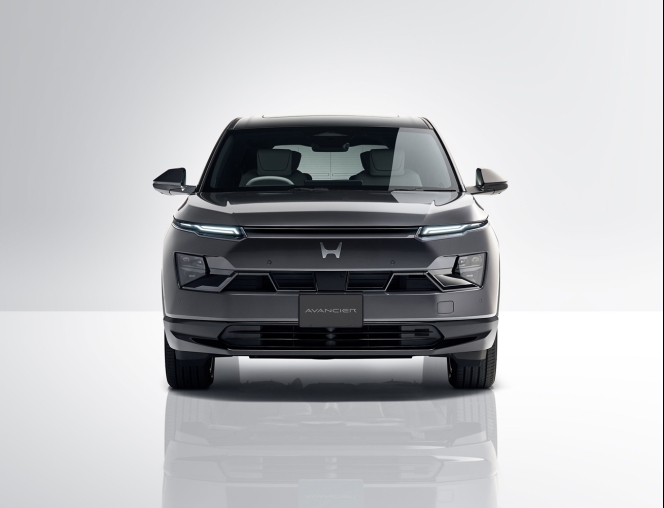
Honda Motor Co., has unveiled the Avancier, a three-row sport utility vehicle (SUV) that becomes the first hybrid model to carry the updated H mark, a modular platform and the Honda Hybrid system.
The Avancier is scheduled for rollout across Asian markets, including Thailand, Japan and China. This marks Honda's plan to introduce 15 hybrid models worldwide by the end of the fiscal year ending 31 March 2030.
The new SUV gets multi-function lights, a grille, flush outer door handles and a tailgate spoiler with a concealed rear wiper. Inside, the three-row cabin features an instrument panel consolidated into a centre information display, a column shifter, armrests for second-row seats, a roof extending to the third row and lighting.
Cabin systems include heated and ventilated second-row seats, a 12-speaker BOSE sound system compatible with Dolby Atmos, voice recognition, over-the-air software updates and smartphone-based Remote In-Cabin View and Remote Surround View under the MyCabin programme.
Built on a modular platform designed for parts commonality across the engine room and rear underbody while tailoring areas such as the rear cabin, the Avancier pairs the Honda Hybrid two-motor system with the Motion Management System, Honda S+ Shift, and DualPower eAWD, which drives the front and rear wheels independently via separate motors under the MyMotion programme.
Comments (0)
ADD COMMENT