

Tata Motors Reports 21 Per Cent Growth Of Sales In Q4 FY21
- By MT Bureau
- April 07, 2021
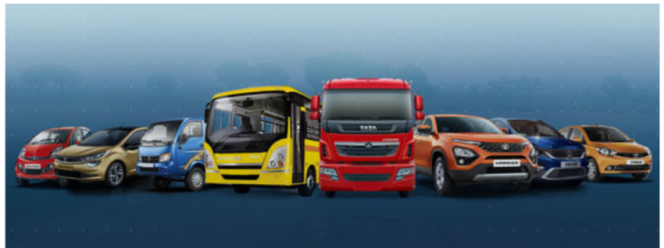
Tata Motors had a great number of sales in this quarter when we take into consideration the ongoing situation of a pandemic. The sales reports show an increase in total domestic and international sales figure of 191,720 units which is an 89 per cent increase from the 101,420 units sold in Q4 FY20.
Sales for the Q4 FY 2021
|
|
|
Domestic |
|
|
Exports |
|
|
Total |
|
|
Category |
Jan - Mar'21 |
Jan - Mar'20 |
Change (in per cent) |
Jan - Mar'21 |
Jan - Mar'20 |
Change (in per cent) |
Jan - Mar'21 |
Jan - Mar'20 |
Change (in per cent) |
|
M&HCV |
40,992 |
23,849 |
+71.8 |
3,667 |
3,231 |
+13.4 |
44,659 |
27,080 |
+64.9 |
|
LCV |
57,975 |
38,407 |
+50.9 |
4,850 |
3,582 |
+35.3 |
62,825 |
41,989 |
+49.6 |
|
UTILITY |
35,449 |
12,112 |
+192.6 |
194 |
281 |
-30.9 |
35,643 |
12,393 |
+187.6 |
|
CARS |
48,408 |
19,888 |
+143.4 |
185 |
70 |
+164.2 |
48,593 |
19,958 |
+143.4 |
|
TOTAL |
182,824 |
94,256 |
+93.9 per cent |
8,896 |
7,164 |
+24.1 per cent |
191,720 |
101,420 |
+89 per cent |
- The total domestic sales increased from 94,256 units to 182,824 units, which is an increase of 93.9 per cent and the international sales have risen from 7164 units to 8896 units which are an additional 24.1 per cent when compared to Q4 of the previous year.
- The sales figures for medium and heavy commercial vehicles were reported to be 40,992 units up from 23,849 units in the fourth quarter of last year, this an increase of 71.8 per cent domestically. For the exports, the numbers were 3,231 units in the past and have increased to 3,667 units displaying a 13.4 per cent increase from Q4 of FY20.
- The increase was consistent in the light commercial vehicles category and Tata Motors sold 57,975 units domestically which compared to the same quarter last year was 38,408 units, this calculates to an increase of 50.9 per cent. In exports, the manufacturer showed an increase of 35.3 per cent by selling 4,850 units in Q4 FY21. This number in last year’s fourth quarter was at 3,582 units.
- The utility segment showed a sales figure of 194 units sold in exports which is a 30.9 per cent decrease as compared to 281 units sold in Q4 FY20. However, the domestic sales were up by 192.6 per cent as the manufacturer sold 35,449 units this quarter. The sales in Q4 FY20 were reported to be a total of 12,112 units.
- The cars that were sold saw a rise in both domestic and export markets. The numbers were up by 143.4 per cent in the domestic market as the manufacturer sold 19,888 units in last year’s fourth quarter and 48,408 units were sold in this quarter. In the export category, the sales were counted to be 70 units last year and this year sit went up to 185 units sold, a growth of 164.2 per cent. (MT)
- BMW India
- BMW Motorrad India
- Nurburgring
- BMW M2 Coupé
- BMW M3 Sedan
- BMW M4 Coupé
- BMW M5 Sedan
- BMW M5 Touring
- BMW M 1000 R
BMW And BMW Motorrad Introduce 100 Jahre Nurburgring Limited Edition Vehicles In India
- By MT Bureau
- October 02, 2026
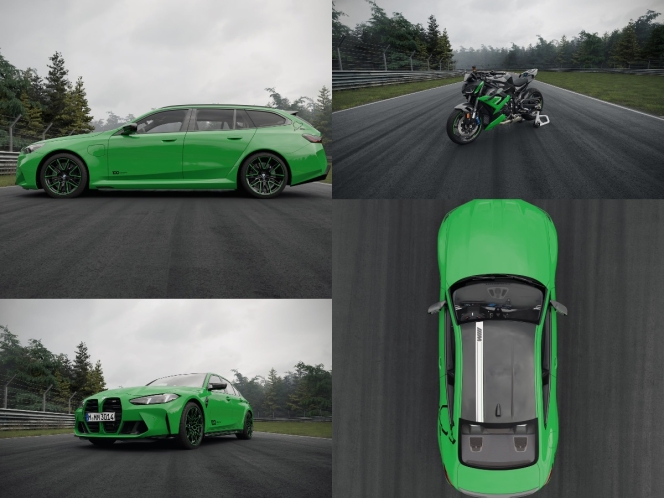
German automotive luxury brand BMW India and BMW Motorrad India have opened pre-orders for the ‘100 Jahre Nurburgring’ edition vehicles to mark the upcoming 100th anniversary of the Nurburgring racetrack in 2027.
The limited collection includes five BMW M car models – the BMW M2 Coupé, BMW M3 Sedan, BMW M4 Coupé, BMW M5 Sedan and the BMW M5 Touring – alongside the BMW M 1000 R motorcycle. The release marks the entry of the BMW M5 Touring into the Indian market.
The edition models feature specific paint finishes in Nurburgring Green and Sapphire Black metallic with green accents, incorporating the ‘100 Years’ logo, Nurburgring since 1927 lettering and the Nurburgring circuit outline.
Exterior details include carbon fibre roofs, model-specific graphics and green wheel accents across select models, while the M5 Touring features a steel roof with custom stripes. Interior specifications across the car lineup include black leather with green and white stitching, door sills, carbon fibre trims, M Carbon bucket seats with individual upholstery, and an M Alcantara steering wheel with a 12 o'clock marker.
The BMW M 1000 R motorcycle features a painted fuel tank with the Nurburgring outline, an airbox cover with ‘one of 100’ numbering, carbon wheels with green accent stripes, an Alcantara seat with embroidered ‘100’ logos and black components for the rear swingarm and frame.
Honda Cars India Sales Decline 19% In September 2026
- By MT Bureau
- October 02, 2026
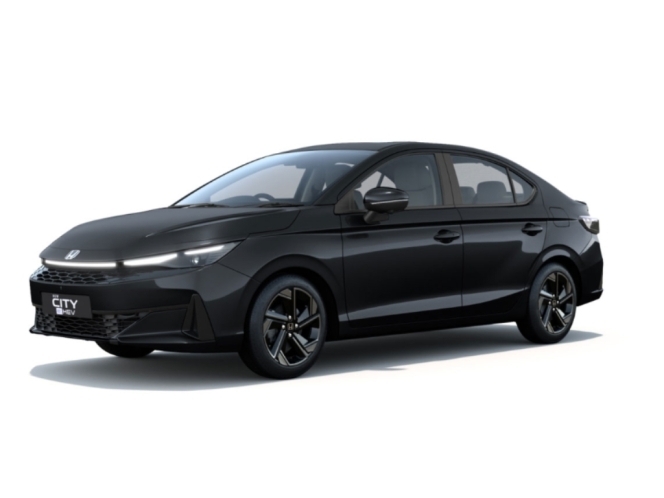
Honda Cars India (HCIL), one of the leading manufacturers of passenger vehicles in the country, has announced its wholesales for September 2026.
The company reported total sales of 6,955 units, down 16 percent YoY, as compared to 8,296 units sold for the same period last year.
In the domestic market, the company sold 4,465 units, down 19 percent YoY, as compared to 5,503 units sold a year ago. On the exports front, the company shipped 2,490 units, down 11 percent YoY, as compared to 2,793 units last year.
Kunal Behl, Vice-President, Marketing & Sales, Honda Cars India, said, We are pleased to see positive sales momentum for the Honda City and Honda Amaze during the month. We are also gearing up for the launch of new Elevate, which will further strengthen our SUV offering with a refreshed and enhanced package. With the festive season underway and an exciting product introduction ahead, we look forward to building stronger momentum in the coming months.”
Kia India Clocks Highest-Ever Monthly Sales Of 32,017 Units In September 2026
- By MT Bureau
- October 01, 2026
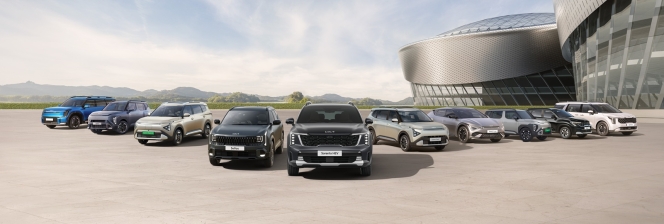
Kia India, one of the leading passenger vehicle manufacturers, has reported its best-ever monthly wholesale performance of 32,017 units in September 2026, representing a 41 percent increase compared to 22,700 units sold last year.
For Q3 of CY2026, the company recorded sales of 89,259 units, reflecting a 38.5 percent growth over 64,443 units for the same period last year.
In terms of YTD (January – September 2026) cumulative sales reached 253,008 units, marking a 22.5 percent increase from 206,582 units reported during the corresponding period in 2025.
Kia India attributed the robust performance to healthy demand across its portfolio incuding Seltos and Sonet models, alongside contributions from the Carens, Carens Clavis, Clavis EV, Syros EV and Sorento, which is offered in diesel and hybrid powertrain options. The company's powertrain options now span petrol, diesel, CNG, hybrid, and electric configurations across its product range.
Atul Sood, Senior Vice-President of Sales and Marketing, Kia India, said, "Our strong performance in September and across the third quarter reflects the continued trust of our customers and the strength of Kia’s evolving portfolio. The Seltos and Sonet continue to be key contributors to our growth, while the strong response to the Sorento and Syros EV reinforces our strategy of expanding into new segments and powertrain categories in line with evolving customer aspirations. As mobility needs become increasingly diverse, we are focused on providing meaningful choice across conventional, CNG, hybrid and electric powertrains, supported by ownership solutions that address real customer needs. We remain committed to building on this momentum through distinctive products, advanced technologies and differentiated experiences designed around the needs of Indian customers."
At present, Kia India operates a retail and service network comprising 915 touchpoints across 425 cities, alongside 137 certified pre-owned outlets across the country.
Toyota Kirloskar Motor Sells 25,027 PVs In September 2026
- By MT Bureau
- October 01, 2026
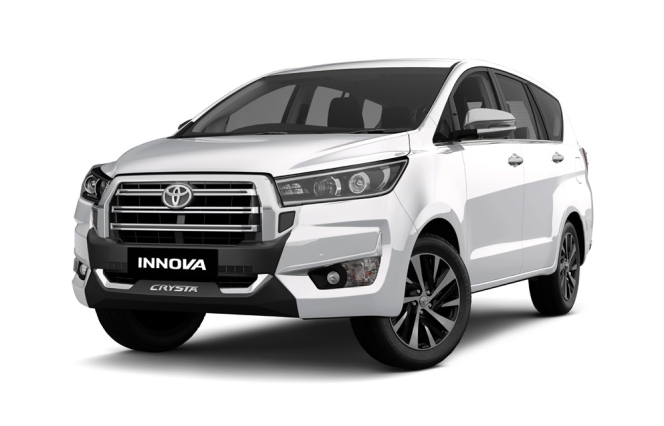
Toyota Kirloskar Motor (TKM), one of the leading passenger vehicle manufacturers, has reported its total wholesales of 28,218 units in September 2026, comprising 25,027 units sold in the domestic market and 3,191 units exported.
For the YTD period (January – September 2026), the automaker reported cumulative total sales of 294,914 units, representing an 8 percent increase compared to 272,824 units sold last year.
Domestic sales for the 9-month period rose 9 percent to 269,619 units, up from 247,081 units in the previous year, while exports reached 25,295 units, compared to 25,743 units a year ago.
Sabari Manohar, Executive Vice-President of Sales-Service-Used Car Business, Toyota Kirloskar Motor, said, "September witnessed continued customer interest across segments, supported by our focus on quality, durability and reliability. As we enter the festive season, we remain committed to strengthening customer engagement and working closely with our dealer partners to deliver enhanced mobility experiences and address evolving customer needs."
Comments (0)
ADD COMMENT