

Turning Into A New Leaf
- By Arup Das
- June 22, 2021
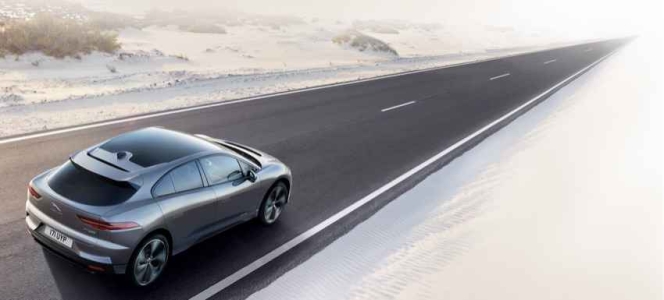
 The cat is finally out of the bag as Jaguar Land Rover launched the all-electric I-Pace in India starting from INR 10,600,000, ex-showroom India. It will be the second luxury electric SUV in India after Mercedes-Benz EQC. Jaguar had earlier opened the bookings of I-Pace in November 2020.
At the launch, Rohit Suri, President and Managing Director, Jaguar Land Rover India Ltd (JLRIL), said, “Jaguar I-Pace is the first all-electric SUV that we’ve launched in India and it marks the beginning of our electrification journey. With our electrified products, we look forward to playing a significant role in India’s electrification drive into the future.” He further stated, “Jaguar I-Pace will appeal to people who look for and purchase the latest in technology and design to express their personalities and stay ahead of the curve. We and our retailer network are fully prepared to cater to the demands of these customers.”
I-Pace variants:
The new Jaguar electric SUV is available in three trims—the S at INR 10,600,000, SE from INR 10,800,000 and the fully-loaded HSE, which starts at INR 11,200,000. All three come standard with 19-inch dual-coloured diamond-cut alloy wheels. The entry-level S variant sports all-LED headlamps, powered tailgate, smartphone-like designed 10-inch Pivo Pro infotainment system’s interface with support for Apple CarPlay and Android Auto, 400W music system with 12 speakers and a subwoofer, 5.5-inch climate control touchscreen unit, cruise control, 3D surround camera, ‘InControl’ car connectivity technology and much more.
The SE offers additional features like leather upholstery, premium LED headlights with prominent DRLs and heated outside rearview mirrors that fold electrically and come with approach lights.
 The feature list continues to increase with the top-of-the-line HSE as it’s packed with ‘Matrix’ LED headlights, adaptive cruise control, a heads-up display, 12.3-inch digital instrument cluster, premium Windsor leather upholstery, an 825W Meridian 3D sound system with 16 speakers and 16-way heated and cooled front electric powered seats with memory function.
The goodies don’t end here as there’s an array of optional features as well like adaptive air suspension, four-zone climate control, an ionising air purifier with PM2.5 filtration etc.
Electric power:
The I-Pace is powered by two electric motors that offer a whopping combined output of 296 kW (394 bhp) and 696 Nm of torque. As impressive as it’s on paper, the electric SUV can do 0-100 kmph in just 4.8 seconds.
The I-Pace comes with a 90 kWh battery that offers a range of WLTP-certified 470 km on a single charge. The Jaguar SUV comes standard with a Home Charging Cable for a 7.4 kW AC wall-mounted charger, but it takes over 10 hours to fully charge the battery. According to Jaguar, the I-Pace can also be quick-charged with a 50 kW charger that offers a range of 270km per hour and a 100kW charger that delivers around 127km range in just 15 minutes.
To ensure complete peace of mind, Jaguar provides a complimentary 5-year service package, 5-year roadside assistance package, 8-year or 160,000 km battery warranty and a 7.4 kW AC wall-mounted charger.
The installation of home charging stations will be done by Tata Power Ltd and will be coordinated via Jaguar retailers. I-Pace owners will also have access to Tata Power’s EZ Charge network, which currently offers around 200 I-Pace compatible charging points on a use and pay basis. Apart from this, Jaguar has also set up over 35 EV chargers installed at its 22 retail outlets across 19 cities. These chargers are a combination of 7.4 kW AC chargers and 25 kW DC (fast) chargers.
In terms of competition, the I-Pace, at the moment, only has to face the Mercedes-Benz EQC, but the Audi-e-tron could enter the Indian market this financial and let’s not forget that Tesla is setting its shop here as well. (MT)
- BMW India
- BMW Motorrad India
- Nurburgring
- BMW M2 Coupé
- BMW M3 Sedan
- BMW M4 Coupé
- BMW M5 Sedan
- BMW M5 Touring
- BMW M 1000 R
BMW And BMW Motorrad Introduce 100 Jahre Nurburgring Limited Edition Vehicles In India
- By MT Bureau
- October 02, 2026
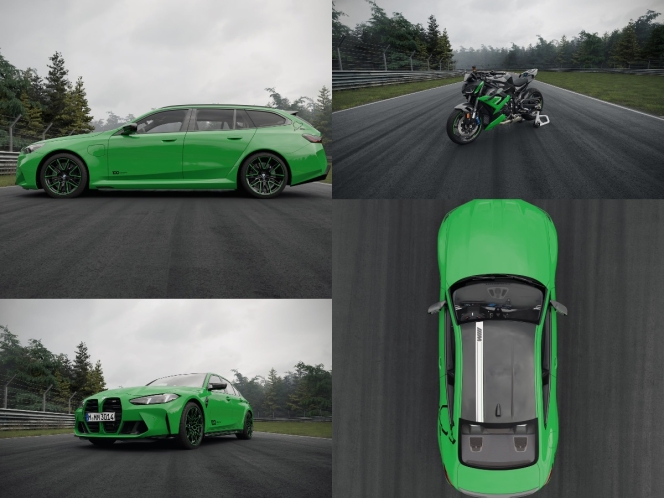
German automotive luxury brand BMW India and BMW Motorrad India have opened pre-orders for the ‘100 Jahre Nurburgring’ edition vehicles to mark the upcoming 100th anniversary of the Nurburgring racetrack in 2027.
The limited collection includes five BMW M car models – the BMW M2 Coupé, BMW M3 Sedan, BMW M4 Coupé, BMW M5 Sedan and the BMW M5 Touring – alongside the BMW M 1000 R motorcycle. The release marks the entry of the BMW M5 Touring into the Indian market.
The edition models feature specific paint finishes in Nurburgring Green and Sapphire Black metallic with green accents, incorporating the ‘100 Years’ logo, Nurburgring since 1927 lettering and the Nurburgring circuit outline.
Exterior details include carbon fibre roofs, model-specific graphics and green wheel accents across select models, while the M5 Touring features a steel roof with custom stripes. Interior specifications across the car lineup include black leather with green and white stitching, door sills, carbon fibre trims, M Carbon bucket seats with individual upholstery, and an M Alcantara steering wheel with a 12 o'clock marker.
The BMW M 1000 R motorcycle features a painted fuel tank with the Nurburgring outline, an airbox cover with ‘one of 100’ numbering, carbon wheels with green accent stripes, an Alcantara seat with embroidered ‘100’ logos and black components for the rear swingarm and frame.
Honda Cars India Sales Decline 19% In September 2026
- By MT Bureau
- October 02, 2026
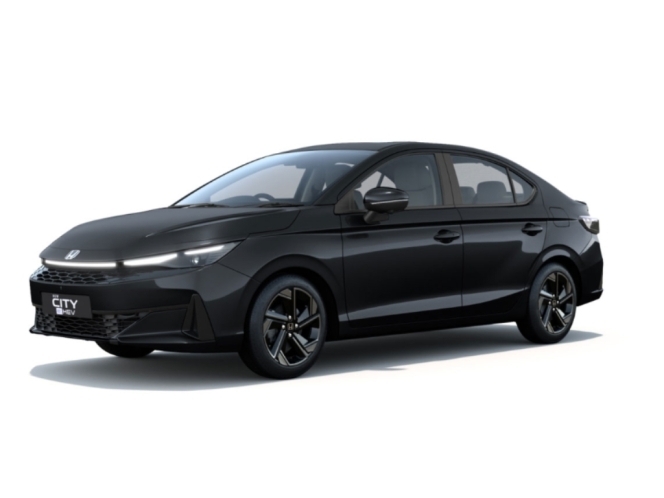
Honda Cars India (HCIL), one of the leading manufacturers of passenger vehicles in the country, has announced its wholesales for September 2026.
The company reported total sales of 6,955 units, down 16 percent YoY, as compared to 8,296 units sold for the same period last year.
In the domestic market, the company sold 4,465 units, down 19 percent YoY, as compared to 5,503 units sold a year ago. On the exports front, the company shipped 2,490 units, down 11 percent YoY, as compared to 2,793 units last year.
Kunal Behl, Vice-President, Marketing & Sales, Honda Cars India, said, We are pleased to see positive sales momentum for the Honda City and Honda Amaze during the month. We are also gearing up for the launch of new Elevate, which will further strengthen our SUV offering with a refreshed and enhanced package. With the festive season underway and an exciting product introduction ahead, we look forward to building stronger momentum in the coming months.”
Kia India Clocks Highest-Ever Monthly Sales Of 32,017 Units In September 2026
- By MT Bureau
- October 01, 2026
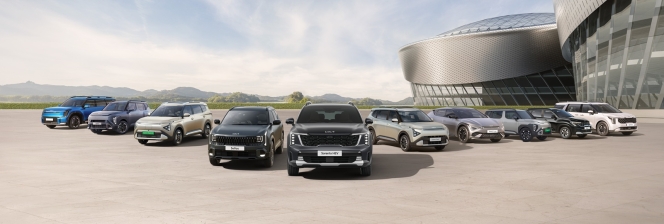
Kia India, one of the leading passenger vehicle manufacturers, has reported its best-ever monthly wholesale performance of 32,017 units in September 2026, representing a 41 percent increase compared to 22,700 units sold last year.
For Q3 of CY2026, the company recorded sales of 89,259 units, reflecting a 38.5 percent growth over 64,443 units for the same period last year.
In terms of YTD (January – September 2026) cumulative sales reached 253,008 units, marking a 22.5 percent increase from 206,582 units reported during the corresponding period in 2025.
Kia India attributed the robust performance to healthy demand across its portfolio incuding Seltos and Sonet models, alongside contributions from the Carens, Carens Clavis, Clavis EV, Syros EV and Sorento, which is offered in diesel and hybrid powertrain options. The company's powertrain options now span petrol, diesel, CNG, hybrid, and electric configurations across its product range.
Atul Sood, Senior Vice-President of Sales and Marketing, Kia India, said, "Our strong performance in September and across the third quarter reflects the continued trust of our customers and the strength of Kia’s evolving portfolio. The Seltos and Sonet continue to be key contributors to our growth, while the strong response to the Sorento and Syros EV reinforces our strategy of expanding into new segments and powertrain categories in line with evolving customer aspirations. As mobility needs become increasingly diverse, we are focused on providing meaningful choice across conventional, CNG, hybrid and electric powertrains, supported by ownership solutions that address real customer needs. We remain committed to building on this momentum through distinctive products, advanced technologies and differentiated experiences designed around the needs of Indian customers."
At present, Kia India operates a retail and service network comprising 915 touchpoints across 425 cities, alongside 137 certified pre-owned outlets across the country.
Toyota Kirloskar Motor Sells 25,027 PVs In September 2026
- By MT Bureau
- October 01, 2026
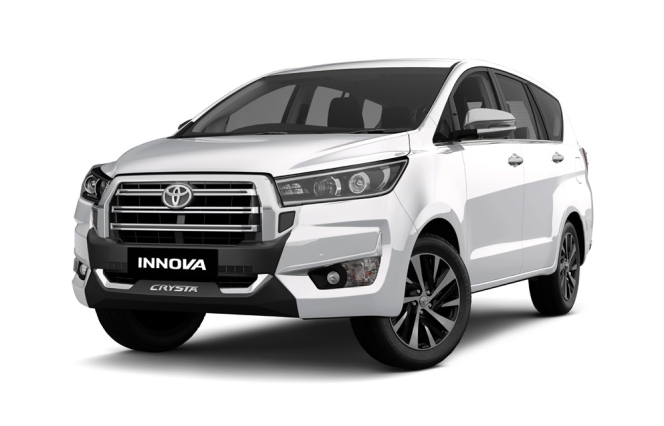
Toyota Kirloskar Motor (TKM), one of the leading passenger vehicle manufacturers, has reported its total wholesales of 28,218 units in September 2026, comprising 25,027 units sold in the domestic market and 3,191 units exported.
For the YTD period (January – September 2026), the automaker reported cumulative total sales of 294,914 units, representing an 8 percent increase compared to 272,824 units sold last year.
Domestic sales for the 9-month period rose 9 percent to 269,619 units, up from 247,081 units in the previous year, while exports reached 25,295 units, compared to 25,743 units a year ago.
Sabari Manohar, Executive Vice-President of Sales-Service-Used Car Business, Toyota Kirloskar Motor, said, "September witnessed continued customer interest across segments, supported by our focus on quality, durability and reliability. As we enter the festive season, we remain committed to strengthening customer engagement and working closely with our dealer partners to deliver enhanced mobility experiences and address evolving customer needs."
Comments (0)
ADD COMMENT