

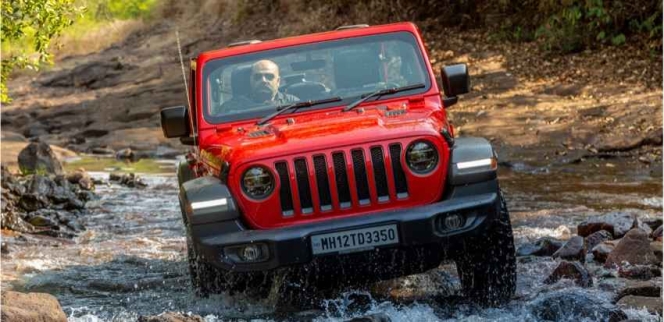
The new modern-day SUVs, in true terms, are nothing more than enhanced cars. They mostly offer better ground clearance, and some even offer an all-wheel-drive system. But you can’t think of doing serious off-roading with them as they are simply not made for that; at best they can blaze through dirt or a gravel track. Well, Jeep has decided to bring some seriousness to the SUV segment by launching one of the most iconic off-roaders in the world, the Wrangler. Jeep India has started assembling it at FCA’s Ranjangaon manufacturing plant near Pune and has become only the second plant in the world to roll out this 4x4 after the Toledo factory in Ohio, USA. The Wrangler is available in two versions—the Unlimited and the Rubicon. The former is priced at INR 5,390,000 and the latter at INR 5,790,000, both ex-showroom India. The new completely knocked down unit (CKD) is now almost INR 1,000,000 cheaper than the previous completely built unit (CBU) versions.
 Commenting on the launch of the locally assembled Wrangler, Dr Partha Datta, Jeep India Managing Director, said, “Indian customers have always desired the legendary Jeep Wrangler, and I am pleased that today we are able to bring this to them, assembled in India. We have extended our points of sale and service for the locally assembled Wrangler to 26 across the country. I’m also happy to announce that we have introduced a MOPAR-original suite of over 120 Wrangler accessories and value packs which customers can order at our dealerships.”
Dr Datta added, “Jeep Wrangler’s capability is unmatched because our engineers always have and continue to test and improve our 4x4 technology to make it a global benchmark. This capability is complemented with a timeless design, modern comforts, the latest in infotainment technology and open-air freedom.”
The Wrangler has a colossal presence with its typical squarish design, the classic round headlamps, which are now all-LED, the imposing seven-slate front grille, raised wheel arches housing daytime running lights (DRLs) along with LED indicators and, of course, the solid-looking chunky bumper with LED front foglamps. The Wrangler is only available as a five-seater in India, but it comes in both hardtop and open-roof options.
Both the variants are powered by a 2-litre 4-cylinder turbocharged petrol engine that has an output of 265 bhp at 5,150 rpm and torque of 400 Nm at 3,000 rpm. It comes standard with an 8-speed torque converter automatic transmission.
Wrangler Rubicon
The top variant, the Rubicon gets state-of-the-art RockTrac Full Time 4x4 technology. This sophisticated system is operated by an electronic clutch which engages and disengages automatically depending on the amount of traction required. With a mechanical shifter, the gear range can be changed from 2H to 4L, 4H Auto and Part-Time 4L. 4H Part-Time and 4L modes. The Rubicon gets a Dana 44 front axle, which is ideal for off-roading due to its increased thickness of the axle tube, making it rigid and durable. To ensure that off-road trails don’t spring a nasty surprise at the Rubicon, Jeep has also installed TruLok electric front- and rear-axle lockers to neutralise any extreme condition.
The Front Sway Bar in the Rubicon can be electronically disconnected, allowing the front suspension to travel up to an additional 30 percent. With a press of a button, the Offroad+ feature lets the Rubicon adapt to different terrains by making adjustments to the throttle, Selec-Speed Control which uses hill-ascent and hill-descent control, traction control and transmission shift mode. It also sports a crawl ratio of 77:1 with a 4:1 low range ratio. The Rubicon gets 17-inch alloy wheels for extreme off-roading conditions and thick gauge boron steel underbody skid plates to protect its underbody.
 Wrangler Unlimited
The Unlimited is a capable off-roader and can tackle the urban jungle as well.
Equipped with the Selec-Tran 4x4 system, the Wrangler Unlimited can automatically switch from 2WD to 4WD depending on the requirement of the conditions. It also sends power to the wheels with the optimum traction to overcome challenging driving situations. Like the Rubicon, it also comes with the Smart Lock feature for constant 4WD mode when needed. The Unlimited version comes with 18-inch aluminium alloys with all-season tyres.
The Rubicon boasts a ground clearance of 217 mm, while the Unlimited offers 214 mm. While both the variants have the same water wading capability of 760 mm (at 8 km/h), approach and departure angles at 36 degrees and 21 degrees, but Rubicon’s break-over angle is one degree superior to the Unlimited at 21 degrees.
Both the Wrangler models offer an array of features like an 8.4- inch touchscreen that supports both Apple CarPlay and Android Auto, a 7-inch multi-information display in the instrument cluster that reads out active safety and security features, vehicle speed, navigation, radio information as well as full-framed removable doors, a three-piece modular hardtop and a fold-flat front windshield. Both the models come equipped with two USB ports on the dashboard, another one in the centre armrest and additional ports for rear passengers. For additional practicality and safety, both the glove box and centre console are lockable.
In India, the Wrangler’s direct competition is the Land Rover Defender, which is available in both petrol and diesel and is priced from INR 7,657,000 lakhs to INR 11,200,000, ex-showroom India. (MT)
- BMW India
- BMW Motorrad India
- Nurburgring
- BMW M2 Coupé
- BMW M3 Sedan
- BMW M4 Coupé
- BMW M5 Sedan
- BMW M5 Touring
- BMW M 1000 R
BMW And BMW Motorrad Introduce 100 Jahre Nurburgring Limited Edition Vehicles In India
- By MT Bureau
- October 02, 2026
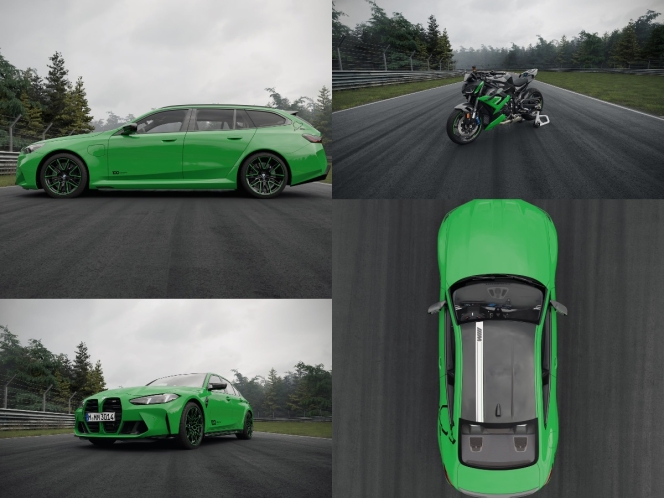
German automotive luxury brand BMW India and BMW Motorrad India have opened pre-orders for the ‘100 Jahre Nurburgring’ edition vehicles to mark the upcoming 100th anniversary of the Nurburgring racetrack in 2027.
The limited collection includes five BMW M car models – the BMW M2 Coupé, BMW M3 Sedan, BMW M4 Coupé, BMW M5 Sedan and the BMW M5 Touring – alongside the BMW M 1000 R motorcycle. The release marks the entry of the BMW M5 Touring into the Indian market.
The edition models feature specific paint finishes in Nurburgring Green and Sapphire Black metallic with green accents, incorporating the ‘100 Years’ logo, Nurburgring since 1927 lettering and the Nurburgring circuit outline.
Exterior details include carbon fibre roofs, model-specific graphics and green wheel accents across select models, while the M5 Touring features a steel roof with custom stripes. Interior specifications across the car lineup include black leather with green and white stitching, door sills, carbon fibre trims, M Carbon bucket seats with individual upholstery, and an M Alcantara steering wheel with a 12 o'clock marker.
The BMW M 1000 R motorcycle features a painted fuel tank with the Nurburgring outline, an airbox cover with ‘one of 100’ numbering, carbon wheels with green accent stripes, an Alcantara seat with embroidered ‘100’ logos and black components for the rear swingarm and frame.
Honda Cars India Sales Decline 19% In September 2026
- By MT Bureau
- October 02, 2026
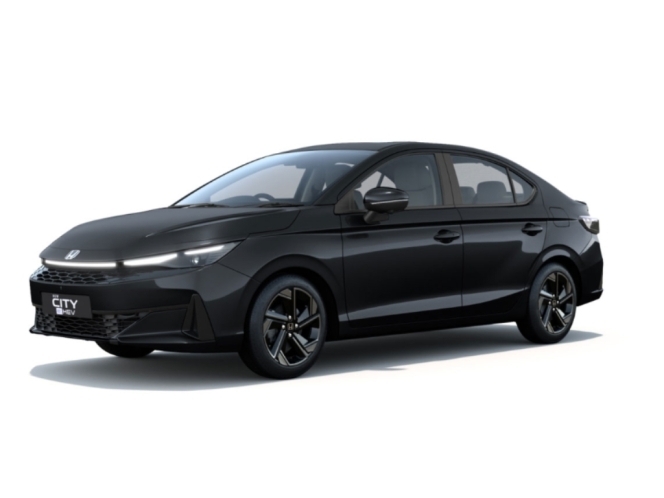
Honda Cars India (HCIL), one of the leading manufacturers of passenger vehicles in the country, has announced its wholesales for September 2026.
The company reported total sales of 6,955 units, down 16 percent YoY, as compared to 8,296 units sold for the same period last year.
In the domestic market, the company sold 4,465 units, down 19 percent YoY, as compared to 5,503 units sold a year ago. On the exports front, the company shipped 2,490 units, down 11 percent YoY, as compared to 2,793 units last year.
Kunal Behl, Vice-President, Marketing & Sales, Honda Cars India, said, We are pleased to see positive sales momentum for the Honda City and Honda Amaze during the month. We are also gearing up for the launch of new Elevate, which will further strengthen our SUV offering with a refreshed and enhanced package. With the festive season underway and an exciting product introduction ahead, we look forward to building stronger momentum in the coming months.”
Kia India Clocks Highest-Ever Monthly Sales Of 32,017 Units In September 2026
- By MT Bureau
- October 01, 2026
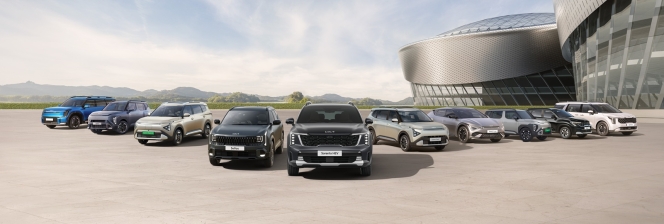
Kia India, one of the leading passenger vehicle manufacturers, has reported its best-ever monthly wholesale performance of 32,017 units in September 2026, representing a 41 percent increase compared to 22,700 units sold last year.
For Q3 of CY2026, the company recorded sales of 89,259 units, reflecting a 38.5 percent growth over 64,443 units for the same period last year.
In terms of YTD (January – September 2026) cumulative sales reached 253,008 units, marking a 22.5 percent increase from 206,582 units reported during the corresponding period in 2025.
Kia India attributed the robust performance to healthy demand across its portfolio incuding Seltos and Sonet models, alongside contributions from the Carens, Carens Clavis, Clavis EV, Syros EV and Sorento, which is offered in diesel and hybrid powertrain options. The company's powertrain options now span petrol, diesel, CNG, hybrid, and electric configurations across its product range.
Atul Sood, Senior Vice-President of Sales and Marketing, Kia India, said, "Our strong performance in September and across the third quarter reflects the continued trust of our customers and the strength of Kia’s evolving portfolio. The Seltos and Sonet continue to be key contributors to our growth, while the strong response to the Sorento and Syros EV reinforces our strategy of expanding into new segments and powertrain categories in line with evolving customer aspirations. As mobility needs become increasingly diverse, we are focused on providing meaningful choice across conventional, CNG, hybrid and electric powertrains, supported by ownership solutions that address real customer needs. We remain committed to building on this momentum through distinctive products, advanced technologies and differentiated experiences designed around the needs of Indian customers."
At present, Kia India operates a retail and service network comprising 915 touchpoints across 425 cities, alongside 137 certified pre-owned outlets across the country.
Toyota Kirloskar Motor Sells 25,027 PVs In September 2026
- By MT Bureau
- October 01, 2026
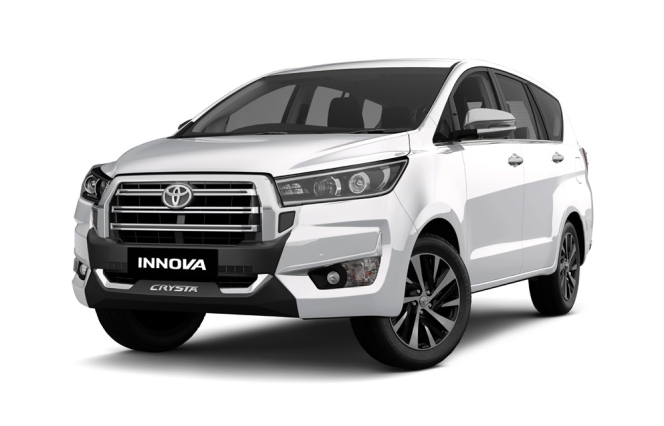
Toyota Kirloskar Motor (TKM), one of the leading passenger vehicle manufacturers, has reported its total wholesales of 28,218 units in September 2026, comprising 25,027 units sold in the domestic market and 3,191 units exported.
For the YTD period (January – September 2026), the automaker reported cumulative total sales of 294,914 units, representing an 8 percent increase compared to 272,824 units sold last year.
Domestic sales for the 9-month period rose 9 percent to 269,619 units, up from 247,081 units in the previous year, while exports reached 25,295 units, compared to 25,743 units a year ago.
Sabari Manohar, Executive Vice-President of Sales-Service-Used Car Business, Toyota Kirloskar Motor, said, "September witnessed continued customer interest across segments, supported by our focus on quality, durability and reliability. As we enter the festive season, we remain committed to strengthening customer engagement and working closely with our dealer partners to deliver enhanced mobility experiences and address evolving customer needs."
Comments (0)
ADD COMMENT