

VW’s 2.0 TDI Engine Complies With New Euro 6d Emission Standard
- By MT Bureau
- December 15, 2020
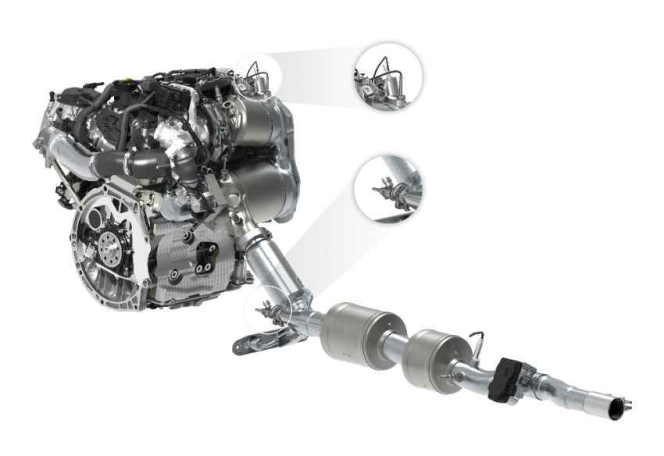
Volkswagen’s 2.0 TDI diesel engine is now in new top form as it undercuts the Euro 6d emission standard limits while also running quietly and smoothly.
The four-cylinder TDI engine with the internal designation EA 288 made its debut in 2012. Six years later, it took an enormous development step forwards, and was therefore given the suffix “evo.” Practically speaking, this meant reduced consumption, lower emissions, quieter acoustics, more spontaneous response and significantly more output and torque. The engine was also prepared for integration into a mild hybrid system.
In summer 2019, the two-litre diesel engine’s technology was further updated for the new Golf. For this, a variant with lower output replaced the previous 1.6 TDI. The specifications stipulated that the engine had to comply with Euro 6 AP emission standard while at the same time also running more smoothly. Volkswagen opted for a dual strategy: detailed measures optimise the combustion process and reduced raw emissions, while twin dosing technology in the exhaust gas system converts the majority of nitrogen oxides into harmless substances.
The performance of the radiator for the low-pressure exhaust gas recirculation system has been increased by 25 percent – thus reducing the formation of nitrogen oxides in the combustion chamber in high-load phases when drivers put their foot down. The injectors, which inject the fuel into the combustion chambers, operate with constantly high precision because a sensor monitors needle closing. The injectors can deliver up to nine injections per combustion cycle, whereby some injected quantities are smaller than a pinhead. The maximum injection pressure is up to 2,200 bar – almost as much as the weight of two standard Golf cars on one square centimetre. Foam insulation under the engine cover panel and a new silencer improve acoustics. As previously, the 2.0 TDI in the output stages from 110 kW (150 PS)1/2 features two balance shafts to eliminate unwanted vibrations.
Volkswagen developed twin dosing technology for exhaust gas treatment. Here, two SCR catalytic converters work together to split nitrogen oxides into water and nitrogen using AdBlue urea solution. Thanks to twin dosing, the emissions of both output variants of the new Golf 2.0 TDI1/2, for example, are well below the limits of the Euro 6d ISC-FCM AP emission standard, which now permits only 80 milligrams of NOx per kilometre. Volkswagen set itself this low value as its target in the real driving emissions (RDE) test – this is equivalent to a 50 percent reduction in nitrogen oxides compared with the predecessor standard Euro 6d-temp.
The first SCR catalytic converter is installed directly downstream of the engine. This has a volume of 3.4 litres and simultaneously acts as a particulate filter. Its task is to convert more than 90 percent of the nitrogen oxides when the exhaust gas temperature is between 220 and 350 degrees Celsius and the vehicle is being driven normally. Thanks to its close proximity to the engine, it already lights off shortly after a cold start. The second SCR catalytic converter is installed in the vehicle floor. It features a two-part design and, depending on the vehicle concept, has a volume of 2.5 to 3.0 litres. The catalytic converter installed further away from the engine performs the main share of nitrogen oxide conversion specifically at high loads and correspondingly high exhaust gas temperatures. The exhaust gas, which can have a temperature of over 500 degrees Celsius when leaving the engine, has cooled down to approximately 350 degrees Celsius when it reaches this component – and this once again permits high conversion rates. (MT)
- BMW India
- BMW Motorrad India
- Nurburgring
- BMW M2 Coupé
- BMW M3 Sedan
- BMW M4 Coupé
- BMW M5 Sedan
- BMW M5 Touring
- BMW M 1000 R
BMW And BMW Motorrad Introduce 100 Jahre Nurburgring Limited Edition Vehicles In India
- By MT Bureau
- October 02, 2026
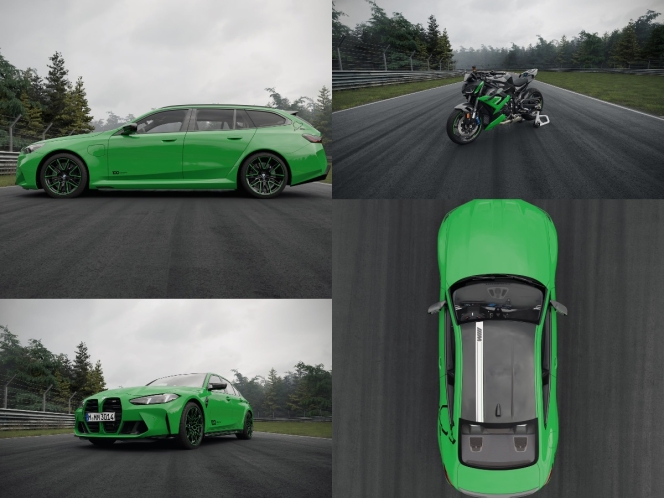
German automotive luxury brand BMW India and BMW Motorrad India have opened pre-orders for the ‘100 Jahre Nurburgring’ edition vehicles to mark the upcoming 100th anniversary of the Nurburgring racetrack in 2027.
The limited collection includes five BMW M car models – the BMW M2 Coupé, BMW M3 Sedan, BMW M4 Coupé, BMW M5 Sedan and the BMW M5 Touring – alongside the BMW M 1000 R motorcycle. The release marks the entry of the BMW M5 Touring into the Indian market.
The edition models feature specific paint finishes in Nurburgring Green and Sapphire Black metallic with green accents, incorporating the ‘100 Years’ logo, Nurburgring since 1927 lettering and the Nurburgring circuit outline.
Exterior details include carbon fibre roofs, model-specific graphics and green wheel accents across select models, while the M5 Touring features a steel roof with custom stripes. Interior specifications across the car lineup include black leather with green and white stitching, door sills, carbon fibre trims, M Carbon bucket seats with individual upholstery, and an M Alcantara steering wheel with a 12 o'clock marker.
The BMW M 1000 R motorcycle features a painted fuel tank with the Nurburgring outline, an airbox cover with ‘one of 100’ numbering, carbon wheels with green accent stripes, an Alcantara seat with embroidered ‘100’ logos and black components for the rear swingarm and frame.
Honda Cars India Sales Decline 19% In September 2026
- By MT Bureau
- October 02, 2026
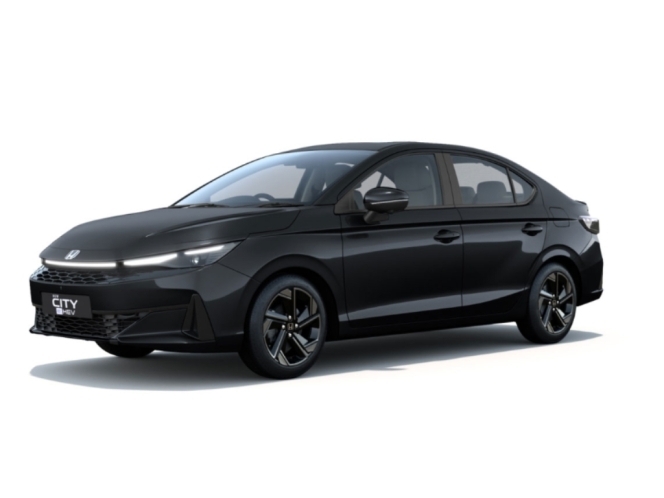
Honda Cars India (HCIL), one of the leading manufacturers of passenger vehicles in the country, has announced its wholesales for September 2026.
The company reported total sales of 6,955 units, down 16 percent YoY, as compared to 8,296 units sold for the same period last year.
In the domestic market, the company sold 4,465 units, down 19 percent YoY, as compared to 5,503 units sold a year ago. On the exports front, the company shipped 2,490 units, down 11 percent YoY, as compared to 2,793 units last year.
Kunal Behl, Vice-President, Marketing & Sales, Honda Cars India, said, We are pleased to see positive sales momentum for the Honda City and Honda Amaze during the month. We are also gearing up for the launch of new Elevate, which will further strengthen our SUV offering with a refreshed and enhanced package. With the festive season underway and an exciting product introduction ahead, we look forward to building stronger momentum in the coming months.”
Kia India Clocks Highest-Ever Monthly Sales Of 32,017 Units In September 2026
- By MT Bureau
- October 01, 2026
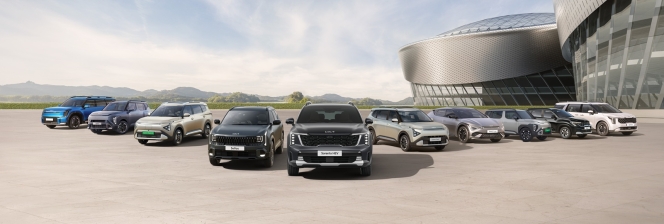
Kia India, one of the leading passenger vehicle manufacturers, has reported its best-ever monthly wholesale performance of 32,017 units in September 2026, representing a 41 percent increase compared to 22,700 units sold last year.
For Q3 of CY2026, the company recorded sales of 89,259 units, reflecting a 38.5 percent growth over 64,443 units for the same period last year.
In terms of YTD (January – September 2026) cumulative sales reached 253,008 units, marking a 22.5 percent increase from 206,582 units reported during the corresponding period in 2025.
Kia India attributed the robust performance to healthy demand across its portfolio incuding Seltos and Sonet models, alongside contributions from the Carens, Carens Clavis, Clavis EV, Syros EV and Sorento, which is offered in diesel and hybrid powertrain options. The company's powertrain options now span petrol, diesel, CNG, hybrid, and electric configurations across its product range.
Atul Sood, Senior Vice-President of Sales and Marketing, Kia India, said, "Our strong performance in September and across the third quarter reflects the continued trust of our customers and the strength of Kia’s evolving portfolio. The Seltos and Sonet continue to be key contributors to our growth, while the strong response to the Sorento and Syros EV reinforces our strategy of expanding into new segments and powertrain categories in line with evolving customer aspirations. As mobility needs become increasingly diverse, we are focused on providing meaningful choice across conventional, CNG, hybrid and electric powertrains, supported by ownership solutions that address real customer needs. We remain committed to building on this momentum through distinctive products, advanced technologies and differentiated experiences designed around the needs of Indian customers."
At present, Kia India operates a retail and service network comprising 915 touchpoints across 425 cities, alongside 137 certified pre-owned outlets across the country.
Toyota Kirloskar Motor Sells 25,027 PVs In September 2026
- By MT Bureau
- October 01, 2026
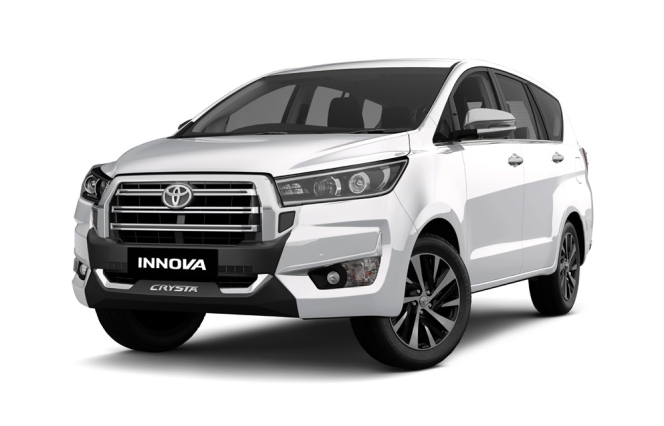
Toyota Kirloskar Motor (TKM), one of the leading passenger vehicle manufacturers, has reported its total wholesales of 28,218 units in September 2026, comprising 25,027 units sold in the domestic market and 3,191 units exported.
For the YTD period (January – September 2026), the automaker reported cumulative total sales of 294,914 units, representing an 8 percent increase compared to 272,824 units sold last year.
Domestic sales for the 9-month period rose 9 percent to 269,619 units, up from 247,081 units in the previous year, while exports reached 25,295 units, compared to 25,743 units a year ago.
Sabari Manohar, Executive Vice-President of Sales-Service-Used Car Business, Toyota Kirloskar Motor, said, "September witnessed continued customer interest across segments, supported by our focus on quality, durability and reliability. As we enter the festive season, we remain committed to strengthening customer engagement and working closely with our dealer partners to deliver enhanced mobility experiences and address evolving customer needs."
Comments (0)
ADD COMMENT