

Altair Announces Software Updates For All Its Products
- By 0
- June 09, 2020
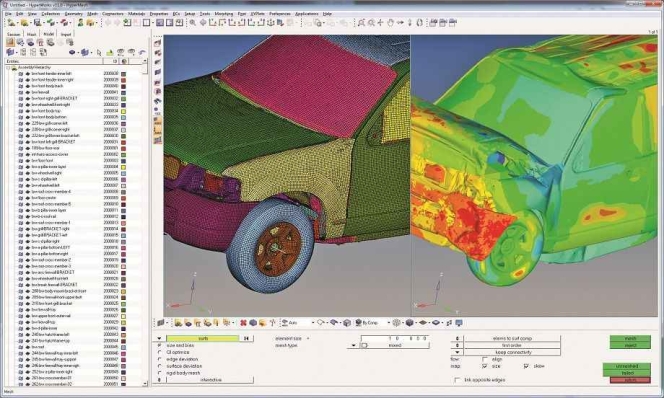
Altair today announced the most significant software update release in the company’s history. All of Altair’s software products have been updated with advancements in user experience and countless new features, including intuitive workflows that empower users to streamline product development, allowing customers to get to market faster.
The software update release expands on the number of solutions available for designers, engineers, data analysts, IT and HPC professionals, facility managers, and more to drive better decisions and accelerate the pace of innovation. It broadens the scope of the new user experience, enables access to more physics, data analytics, and machine learning, and makes the Altair software delivery method more flexible and accessible.
“Our teams are always driven to develop and provide access to a range of different technologies that enable our customers to break through complex problems, and explore and discover on their own terms. This software update release is the largest collection of our applications for design, simulation, and data analytics,” said James Scapa, Chairman, Founder and chief executive officer of Altair.
Some of the most notable highlights enhance and bring new capabilities to the needs aligned to the following applications:
· Structures
o Altair HyperWorks™ – new interface to Altair’s solution for high-fidelity computer-aided engineering (CAE) modeling and visualization, making learning easy and productivity high
o New subsystem entity for modular model configuration
o Altair SimLab™ – fatigue optimization
o Altair OptiStruct™ – includes the addition of new explicit solution and expanded implicit non-linear solutions including 2D axisymmetry
o Altair SimSolid™ – includes advanced 3D seam weld connections to further improve speed
o Altair Radioss™ – employs a dramatic reduction in runtimes for virtual drop testing of electronics devices
· Fluids and Thermal
o HyperWorks CFD – provides engineers and experienced computational fluid dynamics (CFD) specialists with the most productive CFD pre- and post-processing capabilities to-date
o Altair AcuSolve™ – GPU acceleration yields 3-4 times increased speed while also supporting nucleate boiling, radiation, condensation/evaporation and multiphase fluid-structure interaction (FSI)
o Altair ultraFluidX™ – includes a new, more accurate wall model and overset grid technique
o Altair nanoFluidX™ – is three times faster than the previous version
· Industrial Design and Structures
o Altair Inspire™ integration of Altair SimSolid™ solver includes support and connector reaction forces, instantaneous reaction time modeling large PolyNURBS models, and improved geometry generation from optimization
o Inspire Studio – advanced morphing of any geometry type
· Manufacturing
o 3D printing simulation available in Inspire with new unit cell lattice generation
· Electromagnetics and Multiphysics
o SimLab – electric motor modeling and coupling with AcuSolve and Altair Flux™; accommodates ECAD file import (ODB++)
o Altair Feko™ – provides a component library tightly integrated with CADFEKO
o Altair FluxMotor™ now includes thermal and acoustics evaluation
o Flux includes several enhancements including those for modeling iron losses and skew type motors
· Systems Modeling
o Altair Activate™ – performs multi-physics system modeling with hardware-in-the-loop and Internet of Things (IoT) for digital twin development
o Integration of EDEM bulk material modeling with multibody dynamics simulation and hydraulics ideal for heavy equipment and agricultural applications
o Altair MotionView™ – has a two-wheeler vehicle dynamics library for motorcycles and scooters
o Altair Compose™ – OpenMatrix Language available in Jupyter Notebook
o Altair Embed™ – supports three additional target and two additional target families from ST Micro, VRTOS code modifications for MISRA compliance, and OpenCV DNN (Deep Neural Network) module integration
· Data Analytics
o Recent release of Altair Panopticon™ – platform for user-driven monitoring of real-time data – includes major update of cloud-based deployment, enabling users to build, modify, and share custom-designed functions and content easily via standard web browsers; hotfix to enable deployment at Nomura
o Altair Knowledge Hub™ – improved messages for troubleshooting and robustness; security hardening; more flexible Windows deployment; deployment on Azure; transformations including continuous binning and lookup join (refactoring for performance) and more
o Altair Monarch™ – complex Excel input support – "Excel Trapping"; PDF extraction improvements; user experience and UI improvements; enhanced column list and more
o Altair Knowledge Studio™ – new features including Keras model, model stacking, and pivot table; variable transformations node improvements with dataset and variable preview and re-ordering
· Smart Product Development
o Altair SmartWorks™ – major re-architecture of the edge orchestration and augmentation; ability to validate the edge application in real-time environments and deploy at scale
· HPC and Cloud
o Altair Access™ – updated “work from home” features; more responsive 3D remote visualization; internationalization; better job resource charts; two-factor authentication and single sign-on; share support on mobile
o Altair Accelerator™ – EDA workload support on AWS (with Rapid Scaling), Microsoft Azure, and GCP; 10x faster for dynamic workloads; container improvements; REST query API; IPv6
o Altair PBS Professional® – scalability improvements towards exascale; Cray Shasta support; container enhancements for converged AI+HPC workloads; better system maintenance support. (MT)
Bolt Selects NVIDIA To Power European Autonomous Ride-Hailing Fleet
- By MT Bureau
- October 22, 2026

European ride-hailing platform Bolt has selected the NVIDIA Alpamayo Stack autonomous driving software to operate its vehicle fleet in Europe, starting with Lucid automobiles.
The deployment commences in Madrid in 2027, with subsequent deployment planned in Germany and France. The initiative supports the integration of at least 25,000 Level 4-ready Lucid vehicles equipped with NVIDIA Hyperion compute and sensor architecture. The program contributes to Bolt's objective of deploying 100,000 autonomous vehicles across Europe and the UNECE region by 2035. The system integrates reasoning artificial intelligence with perception and planning modules alongside NVIDIA Halos safety controls.
Jevgeni Kabanov, President and Head of Autonomous Driving, Bolt, said, “Autonomous driving will change how people move around cities, and Europe should play a major role in how that future is built. Our ambition isn't to bring autonomous driving to just a handful of cities. We want to make autonomous ride-hailing available at scale across Europe, with 100,000 vehicles on our platform by 2035. We're bringing together some of the best technologies in the world to make that possible. Following our first autonomous mobility launch in Luxembourg, our next step with NVIDIA and Lucid is to begin a programme in Madrid in 2027. The Region of Madrid is pioneering a structured framework for commercial autonomous mobility in coordination with national authorities. Germany will also be a priority for what comes next, with cities already setting out clear ambitions for autonomous mobility.”
Rishi Dhall, Vice-President of Automotive, NVIDIA, said, “Robotaxis will scale when every vehicle is built on a common, safety-engineered foundation. NVIDIA Hyperion standardises the compute and sensor architecture across vehicle platforms, while NVIDIA Alpamayo Stack and Halos provide the driving intelligence and safety foundation. Bolt’s European platform, operational experience and work with cities and regulators make it a strong partner to bring autonomous ride-hailing to market at scale in Europe.”
- Valeo
- NVIDIA
- NVIDIA Halos
- NVIDIA DRIVE AGX
- Level 4
- Marc Vrecko
- Rishi Dhall
- Robotaxi
- autonomous mobility
Valeo Collaborates With NVIDIA To Develop Autonomous Driving Compute Platforms
- By MT Bureau
- October 22, 2026
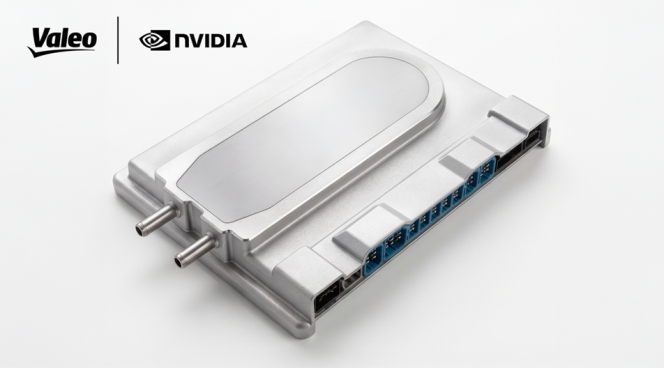
French tier 1 supplier Valeo has announced plans to develop and industrialise high-performance compute platforms utilising the NVIDIA Hyperion reference architecture and NVIDIA Halos safety system.
The initiative combines Valeo's vehicle integration capabilities with centralised computing architectures to support software-defined mobility systems. The platform utilises the NVIDIA DRIVE AGX Thor architecture to deliver processing performance and redundancy for Level 4 autonomous driving, commercial trucking and robotaxi applications. The development framework enables automakers to integrate features and deploy autonomous technologies across vehicle models.
Marc Vrecko, Chief Executive Officer, Valeo Brain Division, said, "Our work with NVIDIA marks a significant milestone in our mission to make autonomous driving a safe, scalable reality. By seamlessly integrating NVIDIA’s advanced compute power into our next-generation platforms, we are delivering the flexible, centralised intelligence vehicle manufacturers require to redefine the driving experience and meet the evolving demands of tomorrow’s intelligent vehicles."
Rishi Dhall, Vice-President of Automotive, NVIDIA, said, "Valeo’s expertise in high-performance computing, vehicle integration and automotive-scale industrialisation will help automakers adopt NVIDIA Hyperion and NVIDIA Halos at production scale. Together, NVIDIA and Valeo are providing the AI performance, functional safety and scalability needed to accelerate the development of Level 4 autonomous vehicles and robotaxis."
HCLTech Launches NVIDIA-Powered Verification And Validation Platform For Software Defined Vehicles
- By MT Bureau
- October 22, 2026
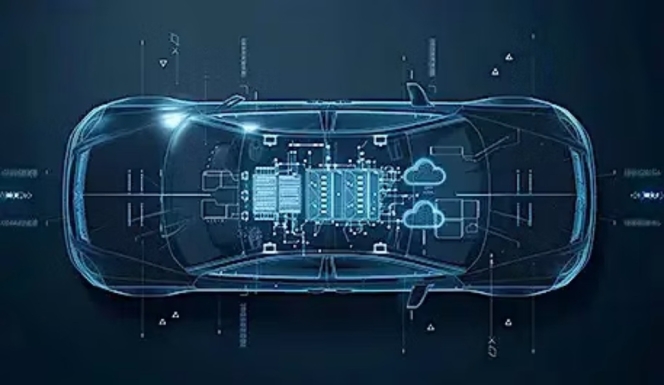
HCLTech has introduced an artificial intelligence (AI) verification and validation platform utilising NVIDIA simulation tools, agentic systems and open models.
The offering targets vehicle manufacturers and tier-1 suppliers to automate software validation workflows and accelerate release cycles. Built on a simulation-first operating model, the platform connects requirements, test creation, execution, analysis and compliance reporting.
The system integrates HCLTech's engineering expertise and validation model with NVIDIA Omniverse, Cosmos, Alpamayo, NuRec and Isaac Sim technologies to generate scenarios in virtual environments, reducing reliance on physical testing.
Additionally, the platform utilises the NVIDIA Agent Toolkit to orchestrate AI agents powered by Nemotron open models across the validation lifecycle.
Pankaj Tagra, Chief Growth Officer and Global Head of Mobility, HCLTech, said, “Automotive software is evolving faster than traditional validation processes were designed to handle. Frequent software updates, increasingly complex vehicle systems and the need to demonstrate compliance across changing configurations can make validation slow, fragmented and difficult to scale. Powered by NVIDIA, HCLTech’s V&V for Auto is designed to help organisations shift from periodic, labor-intensive testing to continuous, intelligent validation, using simulation and AI to make software release decisions with greater speed and confidence.”
Dr. Sebastian Scheurle, EMEA Industry Lead of Automotive Enterprise, NVIDIA, said, “Validation now sets the pace for software-defined vehicles. With NVIDIA Omniverse, Cosmos and Nemotron at its core, this solution leverages world-class simulation and AI capabilities to support automakers in their journey towards moving more testing into simulation, covering rare and safety-critical scenarios earlier and releasing software with greater confidence.”
HARMAN Wins Driver Safety Solution Award For Ready Aware Platform
- By MT Bureau
- October 21, 2026
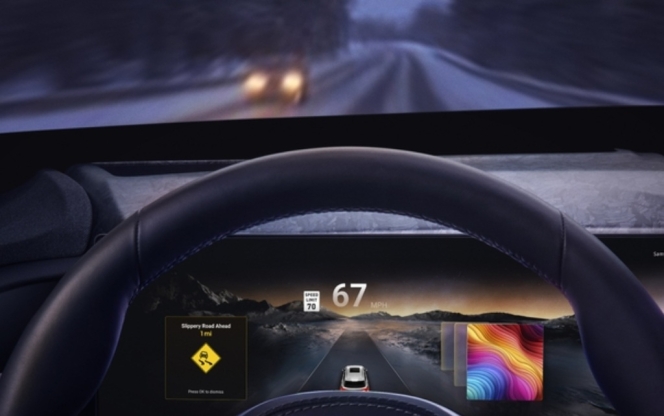
HARMAN has received recognition from the AutoTech Breakthrough Awards, marking the fourth consecutive year the company has been honoured by the market intelligence organisation. The Ready Aware platform received the Driver Safety Solution designation for 2026.
Ready Aware operates as a software-defined vehicle-to-network solution that integrates infrastructure feeds, vehicle telemetry, cloud analytics and digital twin data to provide contextual in-vehicle warnings.
The system processes information regarding road conditions, weather, traffic hazards and signal timing to deliver alerts beyond the driver's line of sight. The architecture works with existing 4G and 5G cellular hardware and vehicle cloud environments, enabling automakers to deploy software updates without hardware modifications. The platform supports Euro NCAP compliance requirements and offers over 15 safety use cases, including intersection warnings, red-light notifications and hazard alerts.
Bryan Vaughn, Managing Director, AutoTech Breakthrough, said, “HARMAN Ready Aware is redefining vehicle safety from reactive intervention to proactive awareness. Almost a quarter of U.S. traffic deaths and roughly half of injuries are related to intersections. Cameras and sensors can be limited by physical occlusions and, on their own, may not have access to information about upcoming signal changes or other traffic conditions. Ready Aware’s software-defined model connects the intelligence already present in cities and connected vehicles, then delivers it to the driver as a timely, contextual alert. Ready Aware turns infrastructure data, vehicle telemetry and cloud analytics into actionable driver awareness—available today, scalable tomorrow, and quickly deployable.”
The system uses a cloud analytics and scoring layer named the Confidence Engine to filter data feeds, reduce false alerts and prioritise notifications to minimise distraction. Automakers can integrate the software via client-to-cloud or cloud-to-cloud configurations to support subscription services and feature monetisation.
Suman Sehra, Global Head of Connectivity Product and Portfolio Management, HARMAN, said, “Ready Aware gives automakers a flexible way to move connected vehicle safety from reactive intervention to proactive awareness. By transforming real-time road intelligence into timely, contextual alerts, Ready Aware helps drivers anticipate hazards before they come into view while giving automakers a scalable foundation to continuously enhance safety through software. This recognition reflects HARMAN’s vision for safer, more informed mobility.”



Comments (0)
ADD COMMENT