

Government Of India Approves INR 72.8 Billion Scheme For Rare Earth Permanent Magnet Production
- By MT Bureau
- November 26, 2025
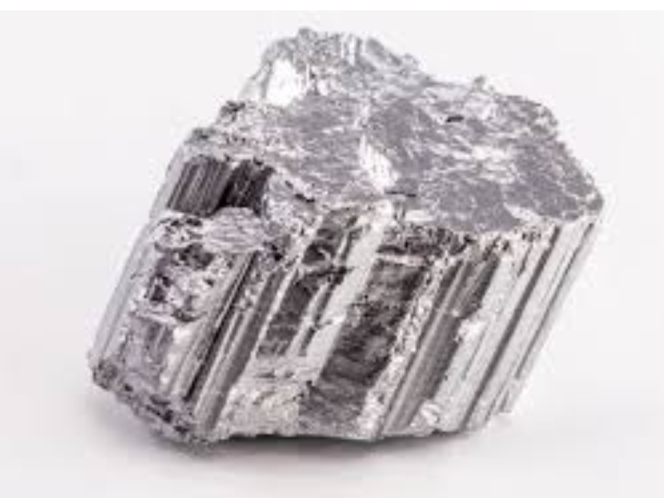
The Union Cabinet, Chaired by Prime Minister Narendra Modi, has approved a Scheme to Promote Manufacturing of Sintered Rare Earth Permanent Magnets with a financial outlay of INR 72.8 billion.
The initiative aims to establish 6,000 Metric Tonnes per Annum (MTPA) of integrated Rare Earth Permanent Magnet (REPM) manufacturing in India. The government states this will enhance self-reliance and position India as a key player in the global REPM market.
REPMs are types of permanent magnets vital for electric vehicles, renewable energy, electronics, aerospace and defence applications. India’s demand for REPMs is met primarily through imports, but consumption is expected to double by 2030 from 2025.
The scheme will support the creation of integrated REPM facilities, covering the conversion of rare earth oxides to metals, metals to alloys and alloys to finished REPMs. This step supports the Atmanirbhar Bharat Abhiyan and India's Net Zero 2070 commitment.
The total financial outlay of INR 72.8 billion consists of INR 64.5 billion towards sales-linked Incentives on REPM for five years. While the remainder INR 7.5 billion towards capital outlay for setting up 6,000 MTPA of manufacturing facilities.
The total capacity will be allocated to five beneficiaries through a global competitive bidding process, with each receiving up to 1,200 MTPA of capacity.
The scheme duration is seven years from the award date, including a two-year gestation period for setting up the integrated facility and five years for incentive disbursement.
The government states this initiative is a step towards strengthening the domestic REPM manufacturing ecosystem and enhancing competitiveness in markets globally.
Shailesh Chandra, President, SIAM, “The Indian automobile industry welcomes the Government of India’s newly announced scheme to promote the domestic manufacturing of Rare Earth permanent magnets, with an allocated outlay of INR 72.8 billion. This initiative is a significant step toward building a resilient and stable supply chain, particularly for components and sub-assemblies essential for the production of electrified vehicles.
The scheme is expected to accelerate adoption of clean mobility solutions and support India’s broader sustainability goals. By strengthening indigenous manufacturing capabilities, it will contribute to reducing carbon emissions and lowering dependence on crude oil imports, further enhancing the nation’s energy security.”
Vikrampati Singhania, President, ACMA, “ACMA wholeheartedly welcomes the Cabinet’s approval of the REPM Manufacturing Scheme. This is a strategic and forward-looking intervention that addresses one of the most critical gaps in the EV and advanced mobility ecosystem. Rare Earth Permanent Magnets are foundational to electric motors and high-efficiency systems, and the establishment of a domestic, integrated manufacturing base will significantly strengthen India’s technological competitiveness. This initiative will not only reduce import dependence but also provide long-term resilience to the automotive supply chain, encourage investments in advanced materials, and position India strongly in global value chains for EVs and clean energy. We commend the Government’s vision and remain fully committed to supporting the industry in leveraging this opportunity for innovation, value creation, and Atmanirbhar Bharat.”
Stephane Deblaise, CEO, Renault Group India, “The Government’s decision of investing INR 72.8 billion for India’s first integrated Rare Earth Permanent Magnet manufacturing scheme is a pivotal step in strengthening the nation’s self-reliance aspirations. This initiative reflects India’s strategic intent to strengthen its rare-earth refining capabilities and accelerate high-value manufacturing. For the automobile sector, localizing rare earth magnets will boost growth for both auto OEMs and component manufacturers, support clean energy powertrains, reduce import dependence, deepen the domestic value chain and enhance long-term competitiveness. We welcome this vision and look forward to contributing to a robust, future-ready mobility landscape that supports India’s sustainable growth and its ambition to become a global automotive hub.”
Jaideep Wadhwa, Director, Sterling Tools, "The Government scheme to invest nearly INR 75 billion in Sintered Rare Earth Permanent Magnet production is a very timely and welcome move. This, along with the plans for semiconductor and cell manufacturing, reaffirms the country’s commitments to electrification. However, this one initiative, aimed at adding 6,000-tonne capacity over seven years, will not be a panacea for all REM availability issues. India must also promote technologies to reduce the overall dependence on rare earth magnets. A holistic solution must include development of magnet free motor technologies. Fortunately, great progress has been made in magnet free technologies in recent years. Indian OEs and Tier 1s need to work together to commercialise these technologies at the earliest."
HARMAN Wins Driver Safety Solution Award For Ready Aware Platform
- By MT Bureau
- October 21, 2026
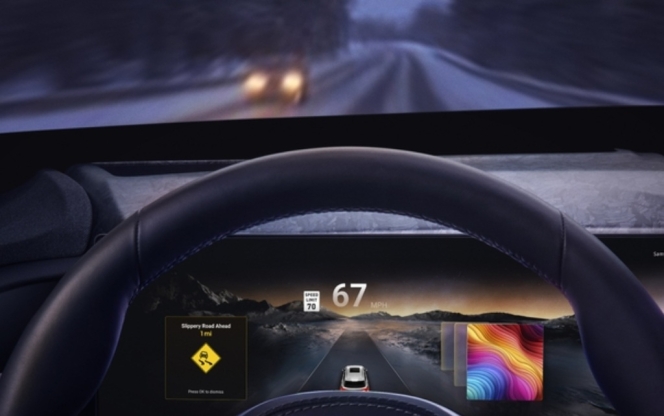
HARMAN has received recognition from the AutoTech Breakthrough Awards, marking the fourth consecutive year the company has been honoured by the market intelligence organisation. The Ready Aware platform received the Driver Safety Solution designation for 2026.
Ready Aware operates as a software-defined vehicle-to-network solution that integrates infrastructure feeds, vehicle telemetry, cloud analytics and digital twin data to provide contextual in-vehicle warnings.
The system processes information regarding road conditions, weather, traffic hazards and signal timing to deliver alerts beyond the driver's line of sight. The architecture works with existing 4G and 5G cellular hardware and vehicle cloud environments, enabling automakers to deploy software updates without hardware modifications. The platform supports Euro NCAP compliance requirements and offers over 15 safety use cases, including intersection warnings, red-light notifications and hazard alerts.
Bryan Vaughn, Managing Director, AutoTech Breakthrough, said, “HARMAN Ready Aware is redefining vehicle safety from reactive intervention to proactive awareness. Almost a quarter of U.S. traffic deaths and roughly half of injuries are related to intersections. Cameras and sensors can be limited by physical occlusions and, on their own, may not have access to information about upcoming signal changes or other traffic conditions. Ready Aware’s software-defined model connects the intelligence already present in cities and connected vehicles, then delivers it to the driver as a timely, contextual alert. Ready Aware turns infrastructure data, vehicle telemetry and cloud analytics into actionable driver awareness—available today, scalable tomorrow, and quickly deployable.”
The system uses a cloud analytics and scoring layer named the Confidence Engine to filter data feeds, reduce false alerts and prioritise notifications to minimise distraction. Automakers can integrate the software via client-to-cloud or cloud-to-cloud configurations to support subscription services and feature monetisation.
Suman Sehra, Global Head of Connectivity Product and Portfolio Management, HARMAN, said, “Ready Aware gives automakers a flexible way to move connected vehicle safety from reactive intervention to proactive awareness. By transforming real-time road intelligence into timely, contextual alerts, Ready Aware helps drivers anticipate hazards before they come into view while giving automakers a scalable foundation to continuously enhance safety through software. This recognition reflects HARMAN’s vision for safer, more informed mobility.”
- Maruti Suzuki India
- Integrated Traffic Management System
- ITMS
- Gurugram Metropolitan Development Authority
- Gurugram Police
- Sibash Kabiraj
- P C Meena
- Rahul Bharti
Maruti Suzuki Expands Integrated Traffic Management System In Gurugram
- By MT Bureau
- October 19, 2026
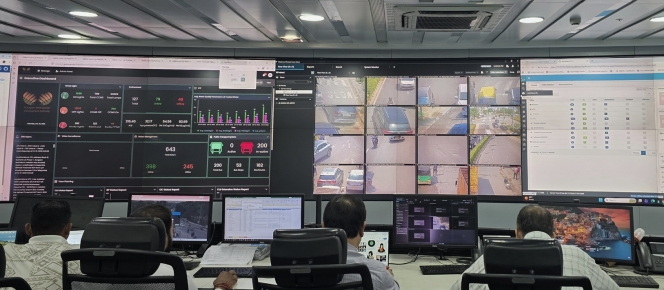
Maruti Suzuki India, the country’s largest passenger vehicle manufacturer, has announced the second phase expansion of its Integrated Traffic Management System (ITMS) in Gurugram under its corporate social responsibility initiative, allocating approximately INR 750 million to the project.
The expansion will see the installation of 1,000 additional radar-integrated cameras across 70 junctions and nine road stretches covering 65 kilometres in the city. Combined with the initial phase, which deployed 400 cameras across 23 junctions, the completed network will encompass 1,400 cameras across 93 junctions and 13 road corridors.
Implemented in partnership with the Gurugram Metropolitan Development Authority and the Gurugram Police, the automated system detects traffic offences including speed limit violations, red-light jumping, helmetless riding, triple riding and wrong-side driving. The camera units record registration plate details and transmit data directly to the Integrated Command and Control Centre for enforcement processing.
Sibash Kabiraj, Commissioner of Police, Gurugram, said, "We appreciate Maruti Suzuki’s continued support in strengthening Gurugram’s traffic management infrastructure through its CSR initiative. The expansion of the Integrated Traffic Management System will further strengthen our ability to monitor traffic violations, enable timely enforcement, and encourage greater compliance with traffic regulations."
P C Meena, CEO of the Gurugram Metropolitan Development Authority, said, "GMDA is committed to building a robust, technology-driven surveillance network to strengthen traffic management and road safety across Gurugram. The expansion of CCTV coverage in collaboration with Maruti Suzuki India Limited and Gurugram Police will enable more effective traffic monitoring, strengthen enforcement of traffic rules and promote greater road discipline. Connecting the CCTV network with GMDA’s Integrated Command and Control Centre will further enhance real-time surveillance, improve coordination among enforcement agencies and facilitate quicker action against traffic violations, contributing to safer roads for all commuters."
Rahul Bharti, Senior Executive Officer of Corporate Affairs, Maruti Suzuki India, said, "We are pleased to further strengthen our partnership with GMDA and the Gurugram Traffic Police in advancing road safety through technology-driven interventions. This advanced tracking system addresses issues like riding without helmets, triple riding, red-light violations, over-speeding, and wrong-side driving. These violations highlight a critical road-safety challenge, as human error continues to be the leading cause of road accidents in India. The findings reinforce the need for sustained, collaborative efforts to improve compliance with traffic regulations and foster safe road behaviour. Improving road safety requires a combination of responsible driving, robust driving license testing and effective traffic enforcement. We are committed to working alongside authorities in these areas to build a safer mobility ecosystem."
Volvo Cars Partners NVIDIA To Develop Autonomous Driving Technology
- By MT Bureau
- October 19, 2026
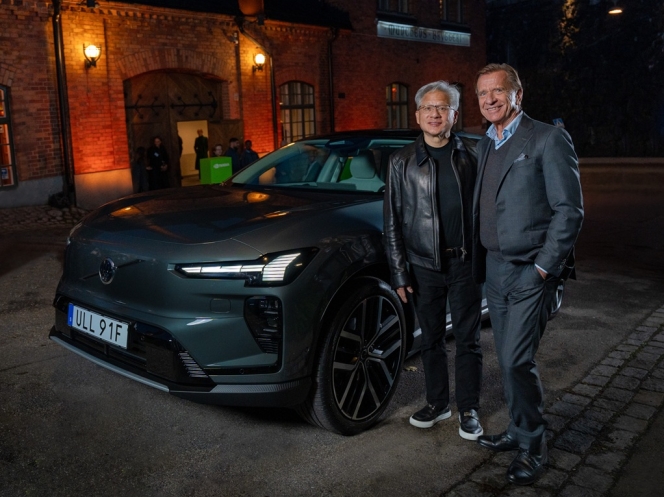
Swedish automotive company Volvo Cars has expanded its technology partnership with NVIDIA to integrate the computing firm's Hyperion sensor and compute architecture into its next-generation vehicle platform.
The system combines Volvo's vehicle safety architecture with NVIDIA's hardware, Halos operating system and Alpamayo Stack driving software. The technology is designed to navigate highway environments, urban traffic and parking scenarios, laying the foundation for the gradual introduction of eyes-off and mind-off driving capabilities. The system will make its commercial debut in an upcoming production model as part of Volvo Cars' vehicle development roadmap.
Hakan Samuelsson, President and CEO, Volvo Cars, said, "Volvo has been synonymous with car safety for almost 100 years. By working with NVIDIA, we bring together two distinct strengths: industry-leading safety knowledge and world-class AI technology. That combination gives us a unique opportunity to create safer and more attractive cars for our customers."
Jensen Huang, Founder and CEO, NVIDIA, said, "Accelerated computing has transformed the car into an intelligent machine that can understand the world around it. Volvo has spent nearly a century protecting people on the road. Together, we’re combining Volvo’s extraordinary vehicle safety systems with NVIDIA Hyperion and Halos to build a new generation of cars that make driving safer and more effortless."
The agreement marks a continuation of the collaboration between the two companies, which established their initial development partnership in 2017. The deployment of NVIDIA's computing stack will support Volvo's transition toward software-defined electric vehicles across its global product lineup.
Valeo And KE:SAI Partner On Open-Source Autonomous Driving System Initiative
- By MT Bureau
- October 14, 2026

French tier 1 supplier Valeo and open science research lab KE:SAI have launched a joint research collaboration to develop a generalist artificial intelligence (AI) driving system for autonomous vehicles. The partnership plans to publish models, code, weights and datasets as open-source resources.
The initiative brings together artificial intelligence teams from valeo.ai in Paris and the KE:SAI founding team in Tübingen, Germany. The collaboration focuses on training a unified AI model capable of operating across different vehicle platforms, sensor configurations and geographic environments. Initial development will utilise large-scale real-world driving data before integrating reinforcement learning within simulated environments to address rare driving scenarios.
KE:SAI was co-founded by research organisation Kyutai and the ELLIS Institute Tübingen. By making the underlying code, benchmarks and model weights accessible, the initiative aims to provide automakers, component suppliers and academic laboratories with a standardised reference system for autonomous driving research and development.
Marc Vrecko, CEO, Valeo Brain, said, "This open-science collaboration with KE:SAI marks a strategic milestone for Valeo and the broader European automotive ecosystem. By combining our deep industrial and technological expertise in autonomous driving with world-class open-source research, we are establishing a shared foundation to accelerate the development of physical AI and democratize next-generation self-driving technologies."
Andreas Geiger, CEO, KE:SAI, said, "For language models, open source compressed years of progress into months, yet frontier physical AI is still largely closed. Valeo shares our belief that open foundations create more innovation than any closed system ever could. Everything we develop will be open. Every step forward is a step forward for everyone."
Comments (0)
ADD COMMENT