

- Maruti Suzuki India
- Maruti Suzuki Innovation Fund
- Ravity Software Solutions
- Sociograph Solutions
- Amlgo Labs
- Hisashi Takeuchi
- Vikas Rungta
Maruti Suzuki India Invests INR 20 Million In Ravity Software Solutions
- By MT Bureau
- November 21, 2025
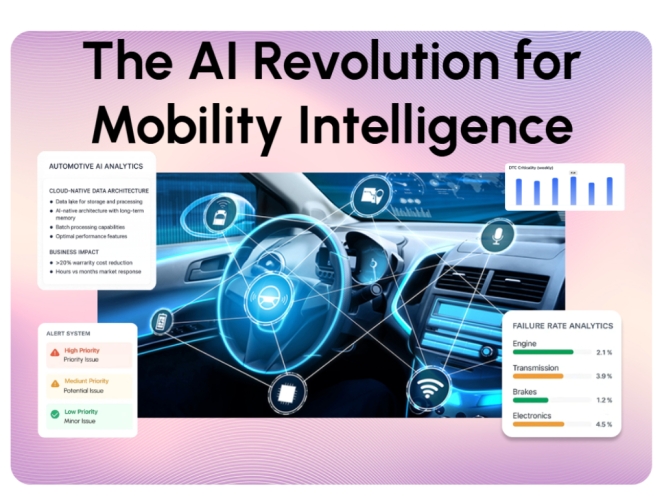
Maruti Suzuki India (Maruti Suzuki) has announced an investment of nearly INR 20 million to pick up 7.84 percent stake in Bengaluru-based mobility insights start-up Ravity Software Solutions. The start-up claimed to be a global platform for AI-driven connected mobility intelligence, which transforms vehicle data into business value.
This marks the automaker’s third such move through ‘Maruti Suzuki Innovation Fund’, which makes strategic investments in innovative and high-potential start-ups that can support Maruti Suzuki India’s operations.
The company made its first investment of INR 20 million in Sociograph Solutions in June 2022, followed by the same amount in Amlgo Labs in March 2024.
Hisashi Takeuchi, Managing Director & CEO, Maruti Suzuki India, said, “Aligning to our core value of keeping customer at the core of our business, we are focused on enhancing vehicle ownership experience. In the age of open innovation, we strive to co-create business solutions with specialized entities operating in the particular field. Startups are ideal partners as they bring agility, fresh thinking, and cutting-edge solutions, to support our goal of ensuring customer delight. Our investment in Ravity Software Solutions will enable us to elevate customer experience through data-driven insights. We have been associating with startups since 2019 under our Maruti Suzuki Innovation programs. Through this initiative, we are investing in a culture of innovation, building strategic partnerships, and unlocking new opportunities, in line with Government’s ‘Startup India’ initiative to promote entrepreneurship in the country.”
Vikas Rungta, Founder, Ravity Software Solutions, said, “It is an honour to be associated with an industry leader like Maruti Suzuki, whose name is synonymous with bringing personal mobility to millions in India as well as across the globe. An automobile major like Maruti Suzuki partnering with a startup speaks volumes about its forward-thinking mindset, humility, and openness to learn and collaborate to explore new ideas. With our excellence and expertise in AI, analytics and mobility, we are committed to upholding the trust Maruti Suzuki has placed in us. We believe that the high complementarity of our strengths: Maruti Suzuki’s scale of business and our agility and entrepreneurship, will further enhance customer experience and delight.”
Accenture, Google Cloud Launch Horizon Platform For SDVs With Volvo Cars
- By MT Bureau
- September 22, 2026
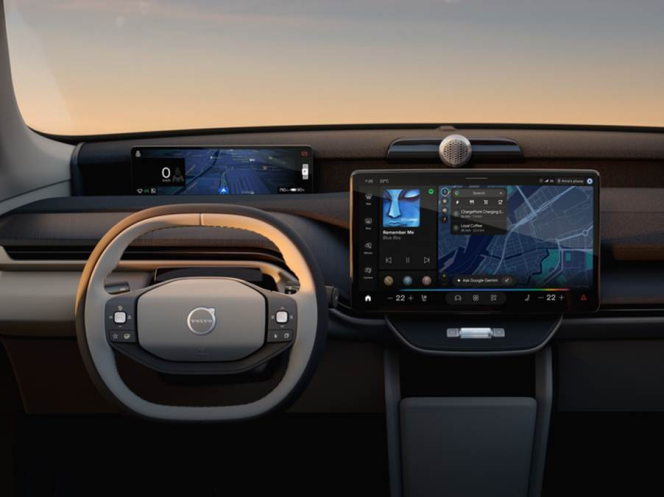
Accenture and Google Cloud have announced that Volvo Cars has signed on as the lead industry partner for Horizon, an open-source software development platform designed for car makers and automotive suppliers to build, test and deploy software on the Android Automotive Operating System.
The Horizon platform unifies cloud-native development tools, virtual testing environments and artificial intelligence workflows. Volvo Cars is migrating its global software development environment for the Android Automotive Operating System to the platform to accelerate engineering processes and virtual testing across its global development teams.
Insights gathered from Volvo Cars' deployment will be used by Accenture and Google Cloud to refine the platform and expand its generative artificial intelligence features for automotive and industrial manufacturers.
According to metrics provided by Accenture and Google Cloud, testing speeds using virtual Cuttlefish-based Android Automotive environments can improve by up to 9 times, while infotainment feature development costs can decrease by up to 40 percent. Software build times, which previously required up to two hours, can yield feedback within minutes through caching and build pipeline optimisation.
Remote access to virtual and physical device farms allows engineers to test software without requiring local physical test equipment, while virtual workbenches enable developers to set up development environments in seconds.
Gregor Zetsche, Head of Connected Experience, Volvo Cars, said, "We’re building some of the most complex products in the world, which requires a development environment built to match. As Horizon’s lead industry partner, we can directly solve our toughest engineering challenges and empower our teams to deliver new experiences faster than ever."
Juergen Reers, Global Automotive & Mobility Lead, Accenture, said, "Horizon enables a faster, more flexible and efficient way to deliver software-defined vehicle features. Its standardised, repeatable and scalable processes help deliver reliable, high-quality software products, while significantly reducing time to market. Horizon will allow Volvo Cars’ engineers to focus on what matters most: creating differentiated vehicle experiences and continuously delivering new value to drivers through software at high speed."
Henry Bzeih, Global Director for the Automotive Industry, Google Cloud, said, "Software now defines the automotive brand. Horizon on Google Cloud gives Volvo Cars the ability to move faster while releasing high-quality software and features on a cadence that matches the expectations of modern mobility. This is how next generation digital experiences reach drivers at agile speed."
Accenture and Google Cloud are working with additional automotive and industrial organisations to expand adoption of the Horizon platform across international markets.
Emerson Expands Bangalore Test And Measurement R&D Centre
- By MT Bureau
- September 22, 2026
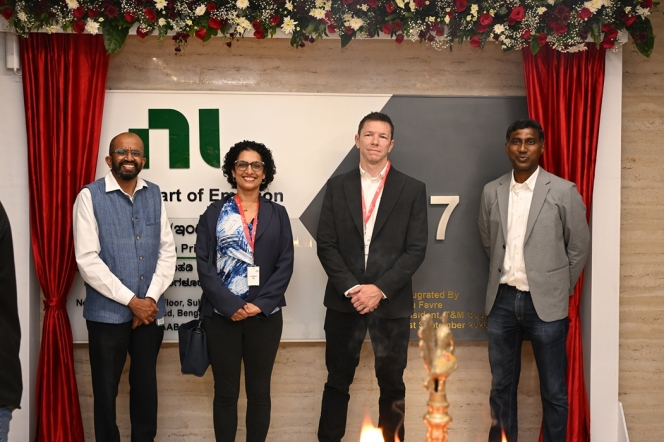
Emerson has announced the expansion of its test and measurement research and development (R&D) facility in Bengaluru, which it claims is an additional 50 percent.
The investment increases capacity at the site to develop software-defined and automated validation technologies for industrial customers.
The Bengaluru facility operates as Emerson's NI Software Centre of Excellence and represents the company's second-largest test and measurement R&D centre globally. Engineering teams at the site hold product responsibility for test software platforms, AI-enabled engineering capabilities, systems engineering technologies and radio frequency test software. The tools serve clients across the semiconductor, aerospace, defence, transportation, life sciences and manufacturing sectors.
Ritu Favre, President of Emerson's Test & Measurement business, said, "Bangalore plays an increasingly strategic role in Emerson’s global test innovation network. The site combines deep expertise in test software and AI-enabled engineering and validation technologies with close connections to rapidly evolving industries. This investment helps customers manage growing product complexity, streamline validation and bring new innovations to market faster."
The expansion provides capacity to advance automated validation workflows and integrated test platforms as hardware complexity increases across shortened product development timelines.
Emerson's investment aligns with domestic growth in semiconductors, electric mobility, and aerospace manufacturing driven by initiatives such as the India Semiconductor Mission and the National Electric Mobility Mission Plan.
Alongside the R&D centre, Emerson operates a second Bengaluru location dedicated to application engineering, calibration services, sales and customer support.
- ToneTag
- TATA.CARS
- DrivePay
- Global Fintech Fest 2026
- Indian Oil Corporation
- National Payments Corporation of India
- UPI
- XTRAREWARDS
- Vivek Kumar Singh
ToneTag Launches In-Car Fuel Payment Solution DrivePay With IndianOil And TATA.CARS
- By MT Bureau
- September 11, 2026

Digital payment infrastructure company ToneTag has launched an in-car fuel payment system at the Global Fintech Fest 2026.
The solution is developed for TATA.CARS under the name DrivePay and integrates National Payments Corporation of India's UPI Circle framework for Internet of Things devices to enable direct fuel payments at IndianOil retail outlets.
The DrivePay platform integrates payment capabilities into connected vehicle infotainment screens. Drivers can simply pay at fuel stations from the vehicle dashboard without using mobile applications, physical cards, or external payment terminals.
The service also incorporates IndianOil’s XTRAREWARDS loyalty scheme, automatically crediting reward points to customer accounts without requiring mobile number inputs during checkout. Following the initial demonstration at GFF 2026, deployment will begin across IndianOil outlets ahead of a wider rollout.
Vivek Kumar Singh, Co-Founder and Director – Labs, ToneTag, said, "Payments are rapidly moving beyond traditional interfaces such as cards and smartphones, and connected devices are emerging as the next frontier for commerce. With DrivePay, powered by ToneTag, we are bringing an IoT-based UPI Circle payment experience directly into the connected vehicle. This initiative with IndianOil, TATA.CARS and NPCI demonstrates how payment infrastructure can seamlessly extend into connected devices, enabling the vehicle itself to become a secure payment interface. We believe this is an important step towards a future where mobility, payments and commerce are seamlessly connected."
The project combines IndianOil's retail distribution network, TATA.CARS' vehicle hardware, ToneTag's payment processing software and NPCI's UPI transaction network. ToneTag plans to extend its connected vehicle payment systems to additional automotive original equipment manufacturers and mobility providers.
Hyundai Motor India Rolls Out Remote Immobiliser Feature For Venue SUVs
- By MT Bureau
- September 11, 2026

Hyundai Motor India, one of the leading passenger vehicle manufacturers, has introduced the Hyundai Bluelink Remote Immobiliser security feature for the Hyundai Venue and Venue N Line models.
The feature is available on the connected-car-Navigation-Cockpit equipped HX10 variant of the Venue and the N10 variant of the Venue N Line.
The security system allows vehicle owners to immobilise a parked car via the Hyundai Bluelink mobile application, preventing engine restart in scenarios involving key cloning or unauthorised access.
In cases of suspected theft, users can trigger the immobiliser remotely, locking the engine start capability once the ignition is turned off. The system operates alongside network-dependent live location tracking to assist vehicle recovery. For safety reasons, the software does not cut power or shut down an active engine while the vehicle is in motion.
The feature is being deployed via a Controller Over-the-Air update leveraging Hyundai's Software-Defined Vehicle (SDV) architecture. Eligible Venue and Venue N Line models sold since November 2025 will receive the update automatically without requiring physical service centre visits. The ccNC system allows over-the-air updates across up to 19 individual vehicle controllers.
Furthermore, From September 2026, the remote immobiliser will be standard equipment on HX10 and N10 variants, with plans for phased implementation across other Bluelink-enabled models.
Tarun Garg, MD and CEO, Hyundai Motor India, said, “With Hyundai Bluelink now powering over eight lakh connected vehicles in India, we continue to strengthen our connected mobility ecosystem by delivering meaningful innovations that address evolving customer needs. Hyundai Bluelink Remote Immobiliser offers customers greater control and peace of mind by enabling them to remotely secure their parked Hyundai VENUE or VENUE N Line and respond quickly in the event of suspected theft, while incorporating safeguards that prioritise customer safety. Importantly, this feature also demonstrates the future-ready potential of Hyundai’s Software-Defined-Vehicle architecture. Through a seamless Controller Over-the-Air update, we are introducing an important new capability to eligible model variants without requiring customers to visit a workshop.”
At present, Hyundai Motor India offers the Bluelink connected car system across 11 of its 15 vehicle lines in the country, providing functions including emergency crash notifications, vehicle diagnostics, remote telemetry and voice command controls.

Comments (0)
ADD COMMENT