

- SAE India
- ADAS
- Vehicle Dynamics
- Global Automotive Research Centre
- GARC
- ICAT
- Maruti Suzuki India
- ATS
- GARC
- AB Dynamics
- Tenneco
- JK Tyre
- 4active
- Applus IDIADA
- ZF
- Stahle
- CEAT
- Applied Intuition
- Rane
- Gabriel
- Continental
- MRF
- OXTS
- Kiriu Corporation
- Motoring Trends
- Vivek Trivedi
- Dr. Subramaniam K
- Ashok Leyland
- Renji Issac
- Dr Ramadhan Sakuthalai
- Amrita University
- Amardeep Singh
- Dr Peter Pfeffer
- Mydnamics
- ANiruddha Reddy
- Applied Intuition
- Piyush Ghongade
- Jagdish Chauhan
- Dr Roshi John
- RoshAI
- Dr Rajesh Megalingam
- AB Dynamics
- Vipul Dave
- Rane Brake Lining
- Nisshinbo Brake
- Balaji Lenin
- Michninari Ishikawa
- Jojo Chacko
- Vector
- Raunak Santosh
- IDIADA
- Sunil Patil
- ZF India
- K Rajrajeswari
- S Perumal
- Cederic Asselineau
- Stahle
- Steve Boyle
- Moshon Data
- Prakash Abhayanker
- 4active Systems
- Rejin Sathianesan
- Bosch
- Bob Rupani
- Balasubramanian N
- Renault Nissan Technology & Business Centre
- Nagarajan
- SAE India
- Ramanathan
- SAEINS
- ATS
- Hari Krishnan
- MIC-IV
- Nilesh Wadhwa
- Motoring Trends
Motion In Control 2025 Vehicle Dynamics & ADAS Conference Concludes On A High Note
- By MT Bureau
- February 10, 2025
The automotive industry is undergoing one of its biggest disruptions ever, what’s with consumer demand, government policies and the latest technology making their way into the vehicles of tomorrow.
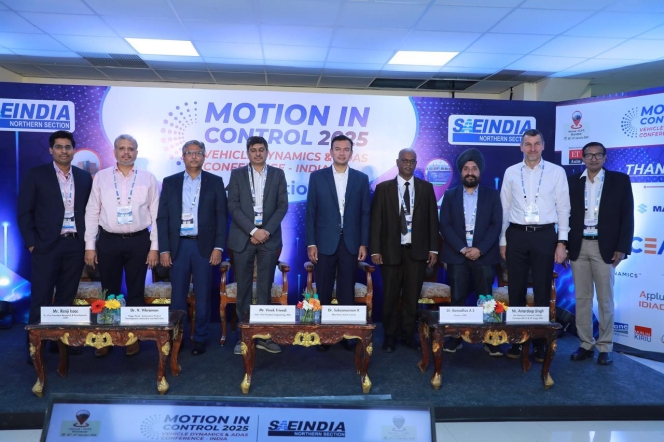
To bring forth discussion and ignite conversation around the topic of Vehicle Dynamics & ADAS (Advanced Driver Assistance Systems), SAEIndia Northern Section recently held a two-day seminar ‘Motion In Control-IV 2025’ on 6 February 2025. It featured presentations, live demonstrations and a panel discussion, at Global Automotive Research Centre (GARC), Chennai.
The event was supported by ICAT, Maruti Suzuki India, ATS, GARC, AB Dynamics, Tenneco, JK Tyre, 4active, Applus IDIADA, ZF, Stahle, CEAT, Applied Intuition, Rane, Gabriel, Continental, MRF, OXTS and Kiriu Corporation. Motoring Trends was the official media partner for the event.
It brought together industry experts from automakers, component manufacturers, testing equipment manufacturers and even educational institutions to discuss, debate and plan the way forward.
It is no secret that various factors such as consumer awareness, innovative technologies and regulatory push are enabling automakers to incorporate various sensors and AI-enabled tech such as ADAS to become a common sight.
What’s more, while these technologies are quite popular in developed markets, they cannot be simply copied-pasted in India; the adoption is not quite so simple.
The two-day open platform brought forth industry experts to share their views on how conventional vehicle dynamics solutions are paving the way for sensor-based technologies. This not only makes the vehicles safer but also opens the doors for new ways to look at vehicle design, validation and even certification for India-specific challenges.
Day 1
The first day of the event saw Vivek Trivedi, Executive Vice-President – Engineering, Maruti Suzuki India share his views on the topic of ‘Insight of Future Technologies in India related to Vehicle Dynamics & ADAS’.
Dr. Subramaniam K, R&D Head at Ashok Leyland gave a presentation on ‘Vehicle Dynamics in EV: Advantages and Challenges’.
Renji Issac, Senior Vice-President Research & Development, CEAT presented his views on ‘Tyre development in a virtual world’.
Dr. V. Vikraman, Senior Vice-President, Research & Development, Mahindra & Mahindra, gave insights on how the automaker was using the latest technology and tools for development of its high-performance SUVs.
Dr. Ramadhas Arumugam Sakuthalai, Director, GARC, spoke about how Indian testing agencies were prepared to support the automotive industry for their testing needs when it came to Vehicle Dynamics and ADAS solutions.
Amardeep Singh, Vice-Chair, SAEINS and Convenor MIC-IV, and VP – Engineering, Maruti Suzuki India set the context for plenary sessions.
This was followed by Dr. Peter Pfeffer, CEO, Mdynamics presenting his thoughts on ‘Advance Driving Characteristics Development Through Performance – HIL (Hardware in Loop) and Driving Simulator.
The audience also got to understand on what was happening in the field of validation and release of L2/L3 ADAS at scale by Aniruddha Reddy, Head of Sales EMEA & India, Applied Intuition.
In a joint presentation, Piyush Ghongade, Head- Vehicle Dynamics, CEAT and Jagdish Chauhan, Team Lead – NVH, 4W, CEAT spoke about the ‘Role of Vehicle Dynamics in Advanced NVH Tyre Tuning: Challenges and Solutions.’
Dr. Roshi John, Founder & CEO, RoshAI introduced the company’s approach towards self-driving vehicles.
Dr. Rajesh Kannan Megalingam, Associate Professor, Department of Electronics & Communication Engineering, School of Engineering, Amritapuri, gave a presentation on ‘Exploring Autonomous Vehicle Scenarios in Indian Roads: Smart Centre Case Studies’.
The last session of the day saw Vipul Dave, Senior Business Development Manager – UK, Greater Europe & India AB Dynamics give his perspective on Future Trends in ADAS Testing.
Balaji Lenin, General Manager, Rane Brake Linking and Michninari Ishikawa, Manager, Nisshinbo Brake, spoke about the Brake friction material for advanced vehicle technologies.
Jojo Chacko, Technical Product Expert, Vector, spoke about ‘Addressing Challenges in Vehicle Dynamics for ADAS’.
Raunak Santosh, DGM Head – Chassis & Active Safety, IDIADA gave a presentation on ‘Vehicle Dynamics – In the age of new Technological Revolution.’
Day 2
The second day of the event saw Ms. K Rajrajeswari, Senior Engineer, GARC and S Perumal, Manager, GARC gave a presentation on Vehicle Dynamics & ADAS Testing Solutions at GARC.
Sunil Patil, Director Engineering, ZF India spoke about the ‘Scalable ADAS Systems for Emerging Markets’.
Prof C Lashmikanathan of Amrita School of Engineering, brought in the academic perspective on how educational institutions were accelerating vehicle dynamics development using modern test environment and tools.
Cederic Asselineau, Business Development Manager, Stahle, spoke about the evolution in Robotics and Software for human driving style imitation.
Steve Boyle, MD, Moshon Data, shared his view on ADAS & lack of knowledge surrounding it with everyday users.
Prakash Abhayanker, Head India Operations – 4active Systems brought in his perspective on what the Future of ADAS Testing meant for the company.
Rejin Sathianesan, Senior Technical Expert, Bosch gave a presentation on Securing ADAS: ‘Protecting the future of ADAS system’.
In the last session for the event, a panel discussion took place on the topic of ‘Navigating the Future: Bridging ADAS and Vehicle Dynamics for Smarter Driving’. The panellists included – Bob Rupani, Veteran Auto Journalist; Balasubramanian N, VP – Product Engineering, Renault Nissan Technology & Business Centre in India; Nagarajan, Vice-President, SAE India; Ramanathan, Vice-Chair, SAEINS & MD, ATS and Hari Krishnan M, Co-Convenor MIC-IV & Senior GM, Engineering, Maruti Suzuki India. A range of topics were discussed ranging from how automakers and suppliers had to make the latest technology work in India but also making it more robust and affordable. The panel was moderated by Nilesh Wadhwa, Assistant Editor, Motoring Trends.
The event also saw partner organisations give demonstrations on technologies such as – Automated Emergency Braking (AEB), self-parking technology, automatic braking and cruise control among others.
Omega Seiki Mobility Partners Electra AI For Battery Intelligence
- By MT Bureau
- August 18, 2026
Delhi NCR-headquartered electric vehicle company Omega Seiki Mobility (OSM) has partnered Electra AI to integrate battery health monitoring across its fleet operations.
The collaboration incorporates Electra AI’s analytics platform into OSM’s electric commercial vehicles. The technology enables real-time tracking, predictive maintenance and state-of-health diagnostics for battery packs. The data metrics aim to support warranty management, optimise vehicle uptime, assist financing assessments and provide residual value tracking for secondary market sales.
Uday Narang, Founder and Chairman, Omega Seiki Mobility, said, "The next phase of EV growth in India will not be driven solely by new vehicle sales, but by the creation of a credible and thriving secondary market. Battery health is the single biggest determinant of an EV's residual value, and until that can be measured transparently, the used EV market will remain constrained. Through our partnership with Electra AI, we are bringing unprecedented visibility into battery performance, enabling buyers, financiers, and fleet operators to make informed decisions with confidence. This will help improve resale values, unlock greater access to financing, and accelerate the adoption of electric mobility by ensuring that EVs remain valuable assets throughout their lifecycle."
Vivek Dhawan, Chief Strategy Officer, Omega Seiki Mobility, said, “As electric mobility scales, the industry must move beyond selling vehicles and focus on delivering intelligence that improves asset performance throughout its life. By integrating Electra AI's advanced analytics into our ecosystem, we will gain deeper operational insights that help enhance fleet productivity, reduce unplanned downtime, strengthen warranty management, and support data-driven product development. This collaboration represents an important step towards building a smarter, more efficient, and technology-led mobility ecosystem that creates tangible value for customers, partners, and stakeholders alike."
Fabrizio Martini, Co-Founder and Chief Executive Officer, Electra AI, stated: “Vehicle makers like OSM are being asked to put more capable, more affordable EVs on the road every year — and to stand behind them with confidence. Our AI Brain for Batteries platform gives them the real-world intelligence to do exactly that: design better vehicles, offer stronger assurance to their customers, and keep fleets running. That’s what battery intelligence is for — turning data into trust across the whole ecosystem, from the OEM to the financier to the operator.”
The deployment aims to support commercial fleet operators across India by reducing maintenance delays and improving total cost of ownership visibility.
Hyundai Motor India and Radio Mirchi Launch Traffic Quality Index
- By MT Bureau
- August 17, 2026

Hyundai Motor India, in partnership with Radio Mirchi, has launched the Hyundai Traffic Quality Index, a standardised traffic rating framework designed to convey real-time road conditions across seven major Indian cities. The initiative operates across Delhi, Mumbai, Bengaluru, Chennai, Hyderabad, Pune and Kolkata.
The system translates live traffic inputs, on-ground reports and official traffic police advisories into a numerical scale from 1 to 10. The ratings are categorised into three colour-coded tiers: 1 to 3 represented in green for light traffic, 4 to 7 in yellow for moderate traffic and 8 to 10 in red for heavy congestion. Updates are broadcast over Radio Mirchi’s audio network to inform drivers during commutes without requiring direct interaction with mobile devices.
The system processes real-time location data alongside updates regarding road closures, diversions, and civic works. Hyundai Motor India and Radio Mirchi plan to expand the index to additional urban centres in subsequent phases of the project.
Virat Khullar, Head of Marketing, Hyundai Motor India, said, “At Hyundai, our commitment to road safety has always extended beyond the vehicle itself. For over three decades in India, we have continuously invested in technologies and initiatives that make mobility safer and smarter. With the Hyundai Traffic Quality Index, we are taking that commitment a step further by empowering commuters with actionable information. We believe informed and technology enabled decisions lead to safer roads, calmer driving behaviour and better commuting experience. Our vision is for Hyundai Traffic Quality Index to evolve into a daily utility that millions of Indians rely on, much like they check the weather or the Air Quality Index before stepping out.”
Yatish Mehrishi, Chief Executive Officer, ENIL, said, “Radio has always been a trusted companion for people on the move. With the Traffic Quality Index, we are taking that relationship a step further by making traffic information simpler, more consistent and more useful for everyday commuters. Our presence across cities, supported by our RJs, on-ground teams and real-time local insights, gives us a unique understanding of how people experience their daily commute. TQI brings these insights together in an easy-to-understand format that can help people make better decisions on the road. We are delighted to partner with Hyundai to build a public utility that can make urban commuting smarter and safer. It is a strong example of how media, technology and local intelligence can come together to solve an everyday consumer need.”
ACP Ravindra Pandit of Delhi Traffic Police, added, “The Hyundai Traffic Quality Index is a commendable initiative that empowers us to keep commuters informed about congestion, diversions, and other traffic-related issues on specific routes. By receiving timely and accurate updates, motorists can make informed decisions and opt for alternate routes, reducing inconvenience and easing congestion. Timely dissemination of reliable traffic information benefits both the public and traffic authorities, making overall traffic management more efficient and commuter-friendly.”
Anil Patil, Regional Transport Officer for Mumbai West, commented, “Understanding and managing traffic more effectively has become increasingly important today. TQI will help us better understand traffic conditions, improve awareness among citizens, and provide valuable support in making traffic management more efficient.”
IPS Manoj Patil, Additional Commissioner of Police for Pune City, said, “Traffic Quality Index can give the traffic police a different kind of study and analysis. Especially because it will include inputs and suggestions coming directly from citizens. So, we will get an independent understanding of the actual traffic situation. I feel this can be extremely useful for us while planning future traffic management as well as infrastructure projects. So, I really welcome this initiative If we are able to measure the traffic quality index in this manner, it will definitely have an overall impact on our deployment and the way we manage traffic.”
Dr B. Shamoondeswari, Additional Commissioner of Police (Traffic) for Greater Chennai Police, said: “Just like AQI helps us understand air quality, TQI will help us understand traffic quality. It’s a great initiative that can make people more aware, help manage congestion, and contribute towards smoother traffic movement in our cities.”
ACP A. Krishnaiah of LB Nagar Traffic Police in Hyderabad noted: “The Hyundai Traffic Quality Index is a valuable initiative that helps commuters stay updated on traffic congestion, diversions, and other route-related issues. Access to timely and reliable traffic information enables motorists to plan their journeys better and choose alternative routes when required. This not only reduces travel inconvenience but also helps ease traffic congestion. Overall, the initiative supports both commuters and traffic authorities by making traffic management more effective, responsive, and commuter-friendly.”
- TIER IV
- Next-Generation Edge AI Semiconductor Research and Development Programme
- Japan Science and Technology Agency
- JST
- Level 4 autonomous
- SoC
- Professor Yoshihiro Kawahara
- Tensor Operator Set Architecture
- TOSA
- PyTorch
- Shinpei Kato
TIER IV Joins Japan's Edge AI Semiconductor Development Programme
- By MT Bureau
- August 16, 2026
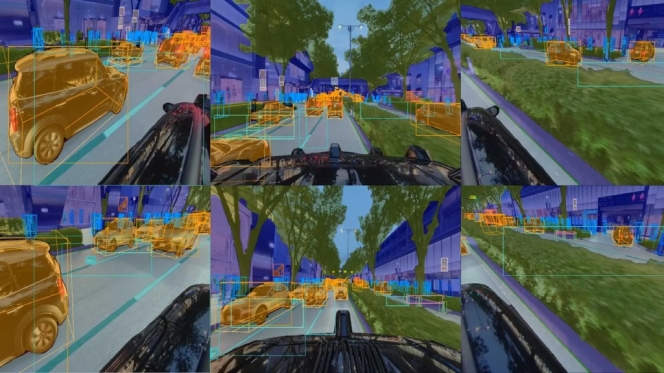
Open-source autonomous driving software company TIER IV has joined the Next-Generation Edge AI Semiconductor Research and Development Programme, led by the Japan Science and Technology Agency (JST). The initiative focuses on the development of a software-defined system-on-chip (SoC) designed for Level 4 autonomous driving applications.
As part of the programme, a team led by Professor Yoshihiro Kawahara at the University of Tokyo is researching physical AI chip design based on specific use cases. Concurrently, TIER IV is developing the logic design for an AI chip aimed at processing inference for end-to-end autonomous driving systems. TIER IV plans to open-source the resulting logic design, compiler, and software toolchain to allow semiconductor manufacturers and developers to modify and build upon the hardware architecture.
The project focuses on developing hardware architectures tailored for Transformer AI models, which process sensor data from cameras and point clouds for perception and motion planning.
The chip design incorporates dedicated circuits for matrix multiplication and attention mechanisms, aiming to reduce power consumption from external memory transfers. To maintain software adaptability, TIER IV is integrating the Tensor Operator Set Architecture (TOSA) as an intermediate representation layer between AI frameworks such as PyTorch and the chip hardware.
The initiative also applies formal verification techniques to mathematically trace numerical consistency during AI model compilation.
Shinpei Kato, Founder and Chief Executive Officer, TIER IV, said, “Advances in AI have been accelerated by powerful computing platforms, including GPUs, which have enabled rapid progress across the industry. As Level 4 autonomous driving moves toward broader deployment, we believe the next step is to complement these platforms with computing architectures designed for real-world and real-time requirements. Through this initiative, we are introducing a software-defined and open approach to AI chip design that combines power efficiency, adaptability, transparency and verifiability. In particular, the ability to understand how an AI model is transformed for execution and to verify the correctness of that processing will be increasingly important as autonomous driving systems are deployed in safety-critical environments. By extending the open-source philosophy behind Autoware from software to AI chip design and related toolchains, we aim to create an open ecosystem in which automakers, semiconductor manufacturers and developers can build upon the technology and continue advancing their own systems. This represents an important step toward a scalable, adaptable and reliable computing foundation for Level 4 autonomous driving.”
Professor Yoshihiro Kawahara stated, “In physical AI applications such as robotics and autonomous driving, GPU power consumption has long been a major bottleneck for deployment on battery-powered devices. This project aims to fundamentally overcome this constraint through a functionally differentiated chip design backward-mapped from specific use cases. I look forward to TIER IV developing chips responsible for high-level decision-making – specifically, the high-level behavioural layer that handles the thinking process essential for end-to-end physical AI and autonomous driving. As the leading force behind Autoware, the global standard open-source software for autonomous driving, TIER IV is democratising design, with an approach spanning application requirements to hardware. This enables applied researchers to shape their ideal semiconductors. This initiative, supported by an open ecosystem, has the potential to lay the foundations for a steady stream of Japanese startups creating high-value semiconductors.”
- Stonerdige
- Inc.
- EVO ECU
- IAA Transportation 2026
- Renesas Electronics
- Christian Leblanc
- Natalia Noblet
- Aish Dubey
Stoneridge To Debut EVO ECU Platform For Commercial Vehicles At IAA Transportation
- By MT Bureau
- August 14, 2026
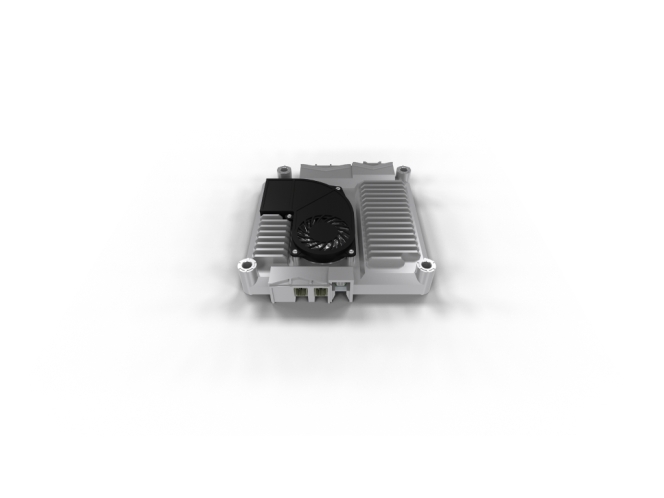
American automotive supplier Stoneridge, Inc. has announced details of its EVO ECU Platform, which will debut at IAA Transportation 2026 in Hanover, Germany.
The electronic control unit (ECU) is engineered for commercial vehicles, buses, coaches and off-highway applications to consolidate system architecture and support software-defined capabilities.
The platform replaces multiple individual control units with a centralised processing architecture designed to manage vehicle data, enable remote software updates and facilitate diagnostics.
The ECU is developed in collaboration with technology partner Renesas Electronics using its R-Car system-on-chip technology and the hardware is built to withstand operating conditions involving temperature variations, vibration and dust exposure.
Christian Leblanc, Global Vice-President of Product and Project Management, Stoneridge, said, “Commercial vehicles are becoming increasingly connected and intelligent, but traditional vehicle architectures were not designed to support the pace of innovation happening today. EVO provides a scalable platform that helps simplify integration, improve vehicle performance and give our customers the flexibility they need to adapt as technology continues to evolve.”
“Fleet customers were at the centre of our development process. EVO helps enable faster troubleshooting, fewer service interruptions and the ability to continuously improve vehicle capabilities throughout the vehicle lifecycle,” added Leblanc.
The software structure was developed alongside Green Hills Software to segregate safety-critical operations while allowing system updates. Additionally, Stoneridge partnered with indie Semiconductor to produce the platform's image processor, supporting camera integration and driver assistance systems.
Natalia Noblet, President and CEO, Stoneridge, said, “Our industry is undergoing a significant transformation, driven by increasing connectivity, automation and evolving regulatory requirements. EVO represents our commitment to helping customers navigate that transformation with a flexible platform designed to support innovation today and tomorrow.”
Aish Dubey, Vice-President and Head of the HPC SoC Division, Renesas Electronics, commented, “Stoneridge’s EVO ECU Platform demonstrates how commercial-vehicle manufacturers can modernise vehicle electronics for demanding operating environments. Our collaboration brings together Stoneridge’s commercial-vehicle expertise and Renesas’ R-Car system-on-chip, power-management and programmable mixed-signal technologies to create a scalable, automotive-grade foundation for connected and software-defined commercial vehicles.”
The system has undergone field testing within the Stoneridge Innovation Truck demonstrator vehicle, which will be exhibited alongside the platform at the Hanover trade show.
Comments (0)
ADD COMMENT