

Regenerative Production Of Hydrogen, Infrastructure Establishment- Key For Fuel Cell Growth
- By 0
- June 16, 2020
The first step towards whole vehicle development was the Project Mercury collaboration between Hyundai and United Technologies Corporation (UTC). A number of vehicles were developed during the collaboration, with system improvements in powertrain performance and increasing range capabilities culminating in the final vehicle, MercuryⅡ. This was based on the JM Tucson platform with an 80kW fuel cell system, 337km range and the ability to start from temperatures as low as -20 degree Celsius.

In 2000, Hyundai also launched the Polaris project in conjunction with the Korean Government’s G7 Project. The G7 Project was an initiative to help close the technological gap that existed between Korea and other advanced countries, specifically in the field of eco-innovation. The Polaris project saw Hyundai independently develop complete fuel cell vehicle systems, which lead to several project vehicles such as Polaris Ⅱ which showcased a Hyundai fuel cell system with an output of 80kW and a range of 370km.
At the same time as the PolarisⅡ was in development, Hyundai produced its first fuel cell bus in 2005, with a 160kW fuel cell system and an operating range of 380km. Hyundai also began in-house electric vehicle research in the early 1990’s. The two technologies became unified for the first time in the 2007 Tucson FCEV, which had a combined fuel cell and battery electric drivetrain output of 100kW and a range of 370km. Fuel cell bus development continued alongside passenger vehicles, with the 2009 2nd Generation Fuel Cell Bus offering a combined fuel cell system power of 200kW and an operating range of 380km.
2010 saw two milestones in the company’s fuel cell technology development: the accumulative distance covered by all Hyundai fuel cell vehicles reached the two million km mark and the new ix35 FCEV prototype was launched. This fuel cell vehicle was the first Hyundai to use high pressure 700bar fuel storage, boosting range to 635km from the 100kW fuel cell drivetrain.
Significantly in 2013, Hyundai became the first manufacturer to series produce the ix35 Fuel Cell electric vehicle. The 100kW fuel cell system and 700bar storage produced an NEDC certified 594km range.

In 2014, Hyundai unveiled the Intrado concept at the Geneva Motor Show. This concept showcased a focus on usability and adaptability, using advanced materials such as high strength steel and carbon fibre and new manufacturing and joining techniques that together have the potential to change the way cars are made. Intrado demonstrated a next-generation hydrogen fuel-cell powertrain with a hybrid Li-ion 36 kW battery, with a range of over 600 km.
By 2015, ix35 Fuel Cell sales were taking place across the world, including 13 countries in Europe. In the UK, 17 customers (from private companies, car sharing organisations and government agencies) became the first to drive hydrogen fuel cell cars. Across the European continent, the ix35 Fuel Cell vehicles on the road covered more than 1.2 million km’s.
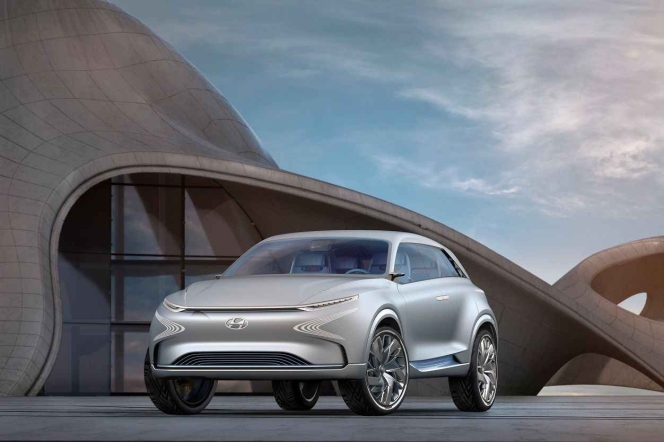
Hyundai’s ongoing commitment to fuel cell development was shown in 2017, with the FE Fuel Cell concept that was shown at the Geneva Motor Show. It featured new drivetrain technology including a fuel cell stack 20 percent lighter than that of the ix35 Fuel Cell, yet with an increased power density of 30 percent and a range of over 800km.
2018 was another landmark year for the company’s fuel cell story, with the launch of NEXO, the only fuel cell SUV in the world. Following this the company announced its long-term roadmap - ‘Fuel Cell Vision 2030’ - to reaffirm its commitment to accelerate the development of a hydrogen society by leveraging the group’s global leadership in fuel-cell technologies. Aligned with the roadmap, Hyundai Motor Group has pledged to drastically boost annual fuel-cell system production capacity to 700,000 units by 2030 and explore new business opportunities to supply fuel-cell systems to other transportation manufacturers of vehicles, drones, vessels, rolling stocks and forklifts. The demand for fuel-cell systems from sectors beyond transportation such as power generation and storage systems is also expected to emerge quickly.
In May 2019, the Hyundai Motor Group announced an investment of €80 million in Rimac and is also aiming to lead the high-performance electrified vehicle market. The companies have been working closely together to develop prototypes for both an electric version of Hyundai’s N brand mid-ship sports car and a high-performance fuel cell electric vehicle with the intent to bring them to market.
In September 2019, Hyundai Hydrogen Mobility was formed - a joint venture between Hyundai Motor Company and H2 Energy. In turn, an additional partnership was forged with Hydrospider - a joint venture of H2Energy, Alpiq and Linde to promote green hydrogen ecosystem in Switzerland and other European countries. As part of this partnership, Hyundai Hydrogen Mobility plans to bring 1,600 Hyundai H2 Xcient Fuel Cell Electric Trucks, marking the entry of the automaker into Europe’s clean mobility commercial vehicle sector.
The Hyundai H2 XCIENT Fuel Cell truck features a new 190 kW hydrogen fuel cell system with two 95 kW fuel cell stacks connected in parallel. It delivers a single-fuelling travel range of more than 400 km, with a fuel storage capacity of almost 35kg of hydrogen.
Showcasing an alternative usage of our fuel cell stacks, the company previewed the Hyundai Generator, a portable charging station for electric vehicles and the newest feature of emission free electric charging at the 2019 Frankfurt Motor Show. The generator consists of two fuel cell stacks and combined hydrogen storage, giving the ability to charge two EVs simultaneously at high speed. As a comprehensive service provider of the new eTCR (Electric Touring Car Racing) championship, Hyundai will be providing the generator as a recharging system for all the cars to both showcase its technical leadership and accelerate the transition to clean e-technology.

As the Hyundai Motor Group positions itself as a global leader in clean vehicle technology, it also understands that there are considerable benefits in leveraging collective R&D capabilities across the industry. An example of this is the partnership between Hyundai Motor Group and Audi, which has seen both manufacturers share fuel cell technology developments to elevate their presence in the future fuel cell electric vehicle market.
Hyundai Motor Group also plans to strengthen its competitiveness in the fuel cell components industry, engaging in new business opportunities created by partnerships with other vehicle manufacturers. Hyundai Mobis, the leading FCEV components manufacturer of the Group, is continuously expanding its role in developing and supplying proprietary core components for Hyundai and other OEM’s fuel cell electric vehicles. Hyundai Mobis was the first company in the world to establish an integrated production system for core components of fuel cell electric vehicles and the company’s plant in Chungju, South Korea, already has the production capacity of 3,000 powertrain fuel cell complete (PFC) modules per year, and has capacity to produce tens of thousands of PFC modules down the road to meet forecast market demand. PFC modules are fuel stacks, drive motors, power electronic components and hydrogen fuel supply units.
Long ranges and short refuelling times make hydrogen an attractive future source of energy for electric mobility. This is particularly true for larger automobiles, where the weight advantages of the fuel cell vehicle inherent to its design are particularly pronounced. Key aspects for its future market success include the regenerative production of hydrogen and the establishment of a sufficient infrastructure. (MT)
Bolt Selects NVIDIA To Power European Autonomous Ride-Hailing Fleet
- By MT Bureau
- October 22, 2026
European ride-hailing platform Bolt has selected the NVIDIA Alpamayo Stack autonomous driving software to operate its vehicle fleet in Europe, starting with Lucid automobiles.
The deployment commences in Madrid in 2027, with subsequent deployment planned in Germany and France. The initiative supports the integration of at least 25,000 Level 4-ready Lucid vehicles equipped with NVIDIA Hyperion compute and sensor architecture. The program contributes to Bolt's objective of deploying 100,000 autonomous vehicles across Europe and the UNECE region by 2035. The system integrates reasoning artificial intelligence with perception and planning modules alongside NVIDIA Halos safety controls.
Jevgeni Kabanov, President and Head of Autonomous Driving, Bolt, said, “Autonomous driving will change how people move around cities, and Europe should play a major role in how that future is built. Our ambition isn't to bring autonomous driving to just a handful of cities. We want to make autonomous ride-hailing available at scale across Europe, with 100,000 vehicles on our platform by 2035. We're bringing together some of the best technologies in the world to make that possible. Following our first autonomous mobility launch in Luxembourg, our next step with NVIDIA and Lucid is to begin a programme in Madrid in 2027. The Region of Madrid is pioneering a structured framework for commercial autonomous mobility in coordination with national authorities. Germany will also be a priority for what comes next, with cities already setting out clear ambitions for autonomous mobility.”
Rishi Dhall, Vice-President of Automotive, NVIDIA, said, “Robotaxis will scale when every vehicle is built on a common, safety-engineered foundation. NVIDIA Hyperion standardises the compute and sensor architecture across vehicle platforms, while NVIDIA Alpamayo Stack and Halos provide the driving intelligence and safety foundation. Bolt’s European platform, operational experience and work with cities and regulators make it a strong partner to bring autonomous ride-hailing to market at scale in Europe.”
- Valeo
- NVIDIA
- NVIDIA Halos
- NVIDIA DRIVE AGX
- Level 4
- Marc Vrecko
- Rishi Dhall
- Robotaxi
- autonomous mobility
Valeo Collaborates With NVIDIA To Develop Autonomous Driving Compute Platforms
- By MT Bureau
- October 22, 2026
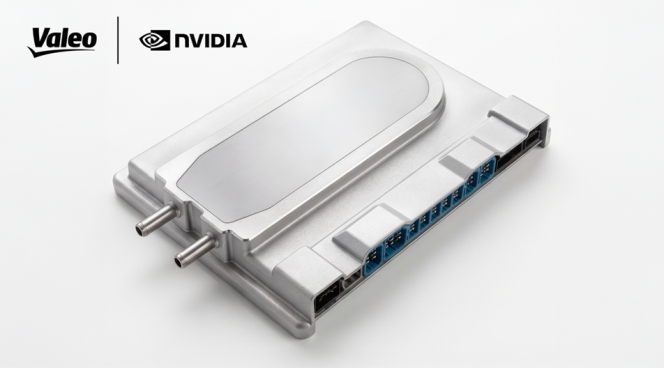
French tier 1 supplier Valeo has announced plans to develop and industrialise high-performance compute platforms utilising the NVIDIA Hyperion reference architecture and NVIDIA Halos safety system.
The initiative combines Valeo's vehicle integration capabilities with centralised computing architectures to support software-defined mobility systems. The platform utilises the NVIDIA DRIVE AGX Thor architecture to deliver processing performance and redundancy for Level 4 autonomous driving, commercial trucking and robotaxi applications. The development framework enables automakers to integrate features and deploy autonomous technologies across vehicle models.
Marc Vrecko, Chief Executive Officer, Valeo Brain Division, said, "Our work with NVIDIA marks a significant milestone in our mission to make autonomous driving a safe, scalable reality. By seamlessly integrating NVIDIA’s advanced compute power into our next-generation platforms, we are delivering the flexible, centralised intelligence vehicle manufacturers require to redefine the driving experience and meet the evolving demands of tomorrow’s intelligent vehicles."
Rishi Dhall, Vice-President of Automotive, NVIDIA, said, "Valeo’s expertise in high-performance computing, vehicle integration and automotive-scale industrialisation will help automakers adopt NVIDIA Hyperion and NVIDIA Halos at production scale. Together, NVIDIA and Valeo are providing the AI performance, functional safety and scalability needed to accelerate the development of Level 4 autonomous vehicles and robotaxis."
HCLTech Launches NVIDIA-Powered Verification And Validation Platform For Software Defined Vehicles
- By MT Bureau
- October 22, 2026
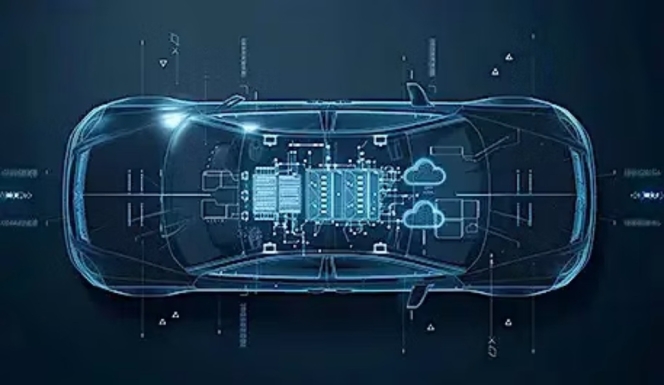
HCLTech has introduced an artificial intelligence (AI) verification and validation platform utilising NVIDIA simulation tools, agentic systems and open models.
The offering targets vehicle manufacturers and tier-1 suppliers to automate software validation workflows and accelerate release cycles. Built on a simulation-first operating model, the platform connects requirements, test creation, execution, analysis and compliance reporting.
The system integrates HCLTech's engineering expertise and validation model with NVIDIA Omniverse, Cosmos, Alpamayo, NuRec and Isaac Sim technologies to generate scenarios in virtual environments, reducing reliance on physical testing.
Additionally, the platform utilises the NVIDIA Agent Toolkit to orchestrate AI agents powered by Nemotron open models across the validation lifecycle.
Pankaj Tagra, Chief Growth Officer and Global Head of Mobility, HCLTech, said, “Automotive software is evolving faster than traditional validation processes were designed to handle. Frequent software updates, increasingly complex vehicle systems and the need to demonstrate compliance across changing configurations can make validation slow, fragmented and difficult to scale. Powered by NVIDIA, HCLTech’s V&V for Auto is designed to help organisations shift from periodic, labor-intensive testing to continuous, intelligent validation, using simulation and AI to make software release decisions with greater speed and confidence.”
Dr. Sebastian Scheurle, EMEA Industry Lead of Automotive Enterprise, NVIDIA, said, “Validation now sets the pace for software-defined vehicles. With NVIDIA Omniverse, Cosmos and Nemotron at its core, this solution leverages world-class simulation and AI capabilities to support automakers in their journey towards moving more testing into simulation, covering rare and safety-critical scenarios earlier and releasing software with greater confidence.”
HARMAN Wins Driver Safety Solution Award For Ready Aware Platform
- By MT Bureau
- October 21, 2026
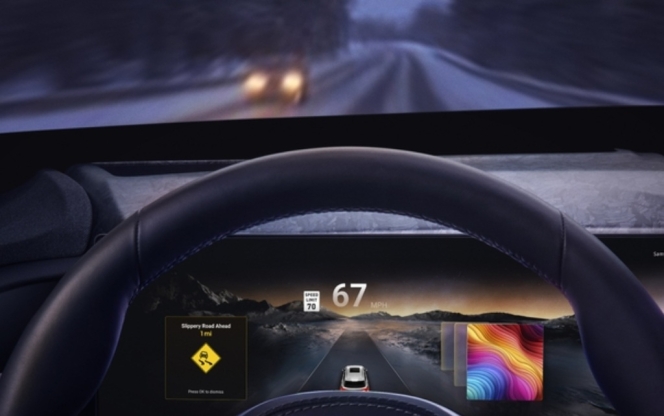
HARMAN has received recognition from the AutoTech Breakthrough Awards, marking the fourth consecutive year the company has been honoured by the market intelligence organisation. The Ready Aware platform received the Driver Safety Solution designation for 2026.
Ready Aware operates as a software-defined vehicle-to-network solution that integrates infrastructure feeds, vehicle telemetry, cloud analytics and digital twin data to provide contextual in-vehicle warnings.
The system processes information regarding road conditions, weather, traffic hazards and signal timing to deliver alerts beyond the driver's line of sight. The architecture works with existing 4G and 5G cellular hardware and vehicle cloud environments, enabling automakers to deploy software updates without hardware modifications. The platform supports Euro NCAP compliance requirements and offers over 15 safety use cases, including intersection warnings, red-light notifications and hazard alerts.
Bryan Vaughn, Managing Director, AutoTech Breakthrough, said, “HARMAN Ready Aware is redefining vehicle safety from reactive intervention to proactive awareness. Almost a quarter of U.S. traffic deaths and roughly half of injuries are related to intersections. Cameras and sensors can be limited by physical occlusions and, on their own, may not have access to information about upcoming signal changes or other traffic conditions. Ready Aware’s software-defined model connects the intelligence already present in cities and connected vehicles, then delivers it to the driver as a timely, contextual alert. Ready Aware turns infrastructure data, vehicle telemetry and cloud analytics into actionable driver awareness—available today, scalable tomorrow, and quickly deployable.”
The system uses a cloud analytics and scoring layer named the Confidence Engine to filter data feeds, reduce false alerts and prioritise notifications to minimise distraction. Automakers can integrate the software via client-to-cloud or cloud-to-cloud configurations to support subscription services and feature monetisation.
Suman Sehra, Global Head of Connectivity Product and Portfolio Management, HARMAN, said, “Ready Aware gives automakers a flexible way to move connected vehicle safety from reactive intervention to proactive awareness. By transforming real-time road intelligence into timely, contextual alerts, Ready Aware helps drivers anticipate hazards before they come into view while giving automakers a scalable foundation to continuously enhance safety through software. This recognition reflects HARMAN’s vision for safer, more informed mobility.”
Comments (0)
ADD COMMENT