

- Stonerdige
- Inc.
- EVO ECU
- IAA Transportation 2026
- Renesas Electronics
- Christian Leblanc
- Natalia Noblet
- Aish Dubey
Stoneridge To Debut EVO ECU Platform For Commercial Vehicles At IAA Transportation
- By MT Bureau
- August 14, 2026
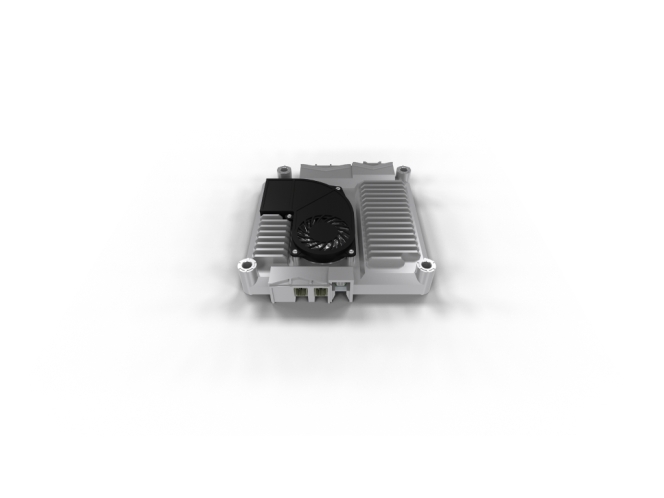
American automotive supplier Stoneridge, Inc. has announced details of its EVO ECU Platform, which will debut at IAA Transportation 2026 in Hanover, Germany.
The electronic control unit (ECU) is engineered for commercial vehicles, buses, coaches and off-highway applications to consolidate system architecture and support software-defined capabilities.
The platform replaces multiple individual control units with a centralised processing architecture designed to manage vehicle data, enable remote software updates and facilitate diagnostics.
The ECU is developed in collaboration with technology partner Renesas Electronics using its R-Car system-on-chip technology and the hardware is built to withstand operating conditions involving temperature variations, vibration and dust exposure.
Christian Leblanc, Global Vice-President of Product and Project Management, Stoneridge, said, “Commercial vehicles are becoming increasingly connected and intelligent, but traditional vehicle architectures were not designed to support the pace of innovation happening today. EVO provides a scalable platform that helps simplify integration, improve vehicle performance and give our customers the flexibility they need to adapt as technology continues to evolve.”
“Fleet customers were at the centre of our development process. EVO helps enable faster troubleshooting, fewer service interruptions and the ability to continuously improve vehicle capabilities throughout the vehicle lifecycle,” added Leblanc.
The software structure was developed alongside Green Hills Software to segregate safety-critical operations while allowing system updates. Additionally, Stoneridge partnered with indie Semiconductor to produce the platform's image processor, supporting camera integration and driver assistance systems.
Natalia Noblet, President and CEO, Stoneridge, said, “Our industry is undergoing a significant transformation, driven by increasing connectivity, automation and evolving regulatory requirements. EVO represents our commitment to helping customers navigate that transformation with a flexible platform designed to support innovation today and tomorrow.”
Aish Dubey, Vice-President and Head of the HPC SoC Division, Renesas Electronics, commented, “Stoneridge’s EVO ECU Platform demonstrates how commercial-vehicle manufacturers can modernise vehicle electronics for demanding operating environments. Our collaboration brings together Stoneridge’s commercial-vehicle expertise and Renesas’ R-Car system-on-chip, power-management and programmable mixed-signal technologies to create a scalable, automotive-grade foundation for connected and software-defined commercial vehicles.”
The system has undergone field testing within the Stoneridge Innovation Truck demonstrator vehicle, which will be exhibited alongside the platform at the Hanover trade show.
- Energy in Motion
- EIM
- Dr. Hanif Qureshi
- Ministry of Heavy Industries
- Mahendra Singhi
- Dalmia Cement
- Arun Kumar Khurana
- UltraTech Cement
- Manav Bansal
- Drivn
- Narendra Murkumbi
- battery swap
Energy In Motion Inaugurates EV Battery Swapping And Charging Infrastructure For CVs Along NH-48 Corridor
- By MT Bureau
- September 29, 2026
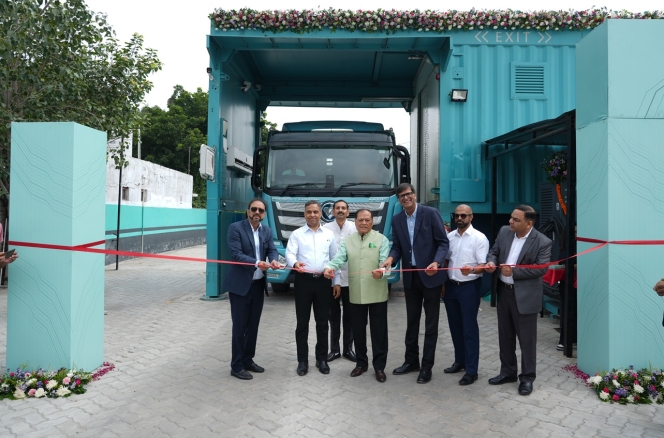
Energy In Motion (EIM Ltd) has inaugurated a heavy-duty battery swapping-cum-charging station at Rewari, Haryana, expanding its energy infrastructure along the NH-48 Delhi-Mumbai freight corridor.
The facility was inaugurated by Dr. Hanif Qureshi, IPS, Additional Secretary, Ministry of Heavy Industries, Government of India. The event was attended by representatives from cement and logistics companies, fleet operators, financial institutions, and transport providers, including Mahendra Singhi, Board Member and Advisor at Dalmia Cement, Arun Kumar Khurana, Joint President and Head of Operations Logistics at UltraTech Cement, Manav Bansal, Co-Founder and CEO at Drivn and Narendra Murkumbi, Managing Director at Energy In Motion.
The Rewari station joins existing EIM facilities at Palwal and Kotputli along the NH-48 corridor. Each station operates with a connected load of 2.5 MW to supply power directly along key transit routes. The infrastructure utilises a battery-swapping model designed to replace depleted heavy-vehicle batteries with charged units, reducing vehicle idle time compared to stationary plug-in charging methods.
Narendra Murkumbi, MD, EIM, said, “The Rewari station is dedicated to support Green logistics more economically. The facility can swap a discharged battery of an Electric Heavy commercial vehicle (e-HCV) typically in 7 minutes, against 55-60 minutes of charging time through a conventional charger, there by yielding a significantly higher fleet availability and better economics for any fleet owner or transporter. The station has the capacity to serve over 150 vehicles a day. EIM’s Battery Swapping, together with its larger capacity battery of 350 kWh, can result into a 10 percent increment in the No. of monthly return trips on any corridor for any Logistics Service Provider (LSP). We plan to set-up 40 such stations across India in the current financial year, of which 8 are already operational and 7 more in various stages of installation. EIM, in its pursuit of creating value for its customers through innovative solutions, has already gained large traction across India through its ‘Maitryi’ model (Battery as a Service or BaaS) where a customer’s upfront capital deployment stands reduced by 40 percent while buying a heavy-duty electric truck, a capital-intensive item.”
EIM offers its infrastructure under a Battery as a Service (BaaS) commercial structure, designated as the 'Maitryi' model. The arrangement separates the vehicle purchase price from the battery unit, lowering initial capital expenditure for logistics providers purchasing heavy-duty electric trucks. The company plans to deploy 40 heavy-duty swapping-cum-charging stations across India during the current financial year, with eight facilities currently in operation and seven in development.
- Toyoda Gosei Co
- Toyoda Gosei (China) Investment Co
- CATARC Component Technology (Tianjin) Co
- China Automotive Technology & Research Center
Toyoda Gosei Partners China Automotive Technology & Research Center
- By MT Bureau
- September 28, 2026
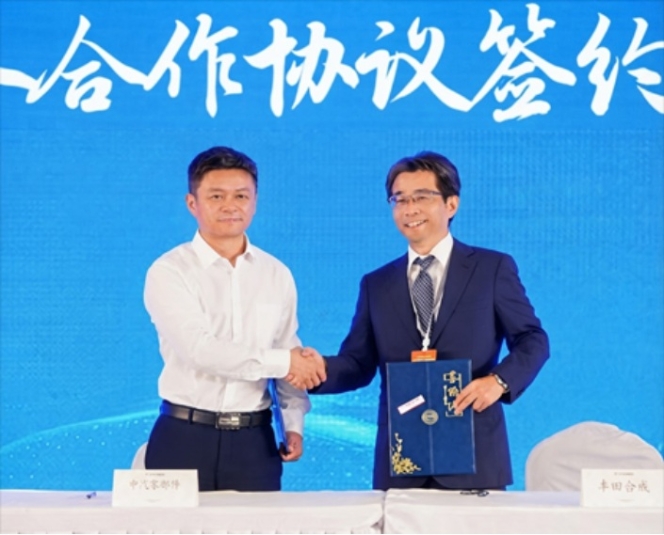
Japanese tier 1 supplier Toyoda Gosei Co’s regional headquarters in China, Toyoda Gosei (China) Investment Co., has inked a partnership agreement for safety standards and technical innovations with CATARC Component Technology (Tianjin) Co., a group company of the China Automotive Technology & Research Center (CATARC).
The agreement focuses on safety standards and technical developments as China Automotive Technology & Research Center formulates vehicle safety regulations and industry standards in China.
As per the understanding, Toyoda Gosei (China) Investment Co., aims to accelerate product development by increasing the deployment of computer-aided engineering technology and creating safety products tailored to local requirements.
The partnership comes amid market shifts in China driven by the adoption of electric vehicles and the entry of new automotive manufacturers. Toyoda Gosei plans to leverage its engineering resources to supply safety components to carmakers operating within the Chinese automotive sector.
BlueBinaries To Acquire MicroNova’s Automotive Testing Business
- By MT Bureau
- September 25, 2026
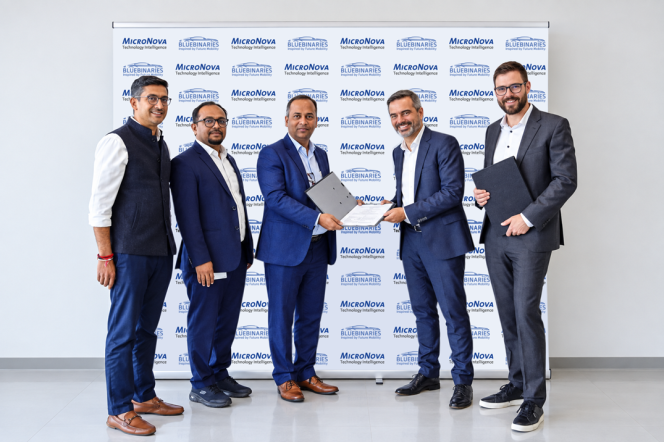
Mobility engineering and technology company BlueBinaries has signed a definitive agreement to acquire the automotive testing business of Germany-based MicroNova AG.
The carved-out entity will operate as an independent company within the BlueBinaries group under the name NovaBinaries. Following the transaction, BlueBinaries projects annual revenue of USD 50 million and aims to expand revenue to USD 100 million in the coming years.
Founded in 2017 and headquartered in Chennai, BlueBinaries provides vehicle engineering, digital engineering, testing and homologation services to original equipment manufacturers across India, Europe, North America, the Middle East and Asia.
MicroNova, based in Vierkirchen near Munich, develops testing and validation systems for the automotive sector, including hardware-in-the-loop systems, test automation platforms, virtualisation solutions and engineering services. Its test automation platform, EXAM, is used by European automotive manufacturers. NovaBinaries will focus on software test solutions, hardware-in-the-loop systems, test automation, virtual validation, and software test factories by combining MicroNova’s product portfolio with BlueBinaries’ engineering operations.
Srinivas Aravapalli, Founder and CEO, BlueBinaries, said, "The acquisition of MicroNova’s industry-leading HiL Testing and Test Automation business represents a watershed moment in BlueBinaries’ journey towards absolute technological leadership in the global mobility ecosystem. By integrating these world-class validation and test automation technologies into our existing portfolio, we are uniquely positioned to offer an unmatched, end-to-end test offerings to our customers.”
Kishore LM, Founder and COO, BlueBinaries, said, “The acquisition of the Automotive Testing business from MicroNova is a strategic leap that enhances our ability to offer right technology solutions across automotive software testing. MicroNova’s technical depth, customer centricity, and regional strength align perfectly with our strategic vision to be the first partner choice for global customers complimenting our current portfolio. Our intent is to offer these proven technologies and better solutions globally combining precision, engineering excellence, scale, and flexibility while the mobility industry moves into the SDV and AI era.”
- Kantar
- Google India
- AI
- Artificial Intelligence
- YouTube
- Maps
- Gemini
- Google Search
- Siddharth Shekhar
- Virat Khullar
- Hyundai Motor India
Google-Kantar Study Finds 93% Of Indian Car Buyers Use AI Tools During Vehicle Research
- By MT Bureau
- September 24, 2026
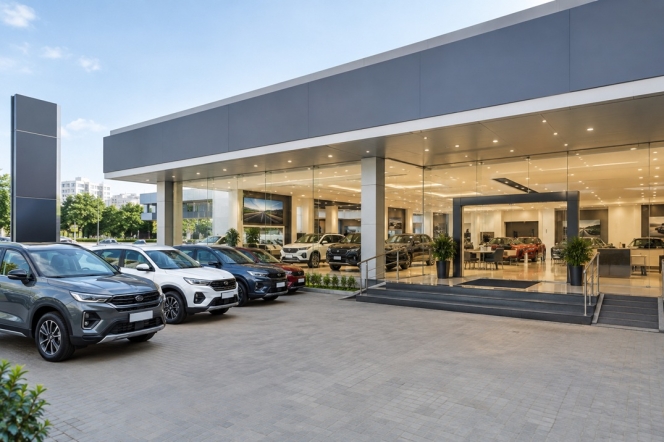
A study conducted by Google and Kantar titled ‘Automobile Purchase Journey in the Age of AI’ shows that 93 percent of automobile shoppers in India utilise artificial intelligence (AI) interfaces during their research process.
The research indicates that the car buying process involves multiple digital platforms, with 87 percent of buyers interacting with Google services including Search, YouTube, Maps and Gemini. Consumers utilising artificial intelligence touchpoints consult an average of 7.8 resources to research and evaluate choices, compared to 6.9 touchpoints for buyers overall. Within Google Search, 90 percent of surveyed users reported encountering AI Overviews, while 89 per cent utilised AI Mode to process technical specifications, vehicle features and financing options. Furthermore, 80 percent of buyers using AI chatbots also turn to Google Search or YouTube for active research.
The findings highlight that initial consideration sets form early, with 80 percent of buyers maintaining a predefined list of brands prior to active research. Approximately six in 10 buyers use YouTube for casual exploration, where 77 percent of users rely on professional automotive reviewers to inform their choices. Daily media consumption habits among car buyers show that 63 percent watch YouTube, 55 percent stream YouTube on television screens, 54 percent read newspapers and 43 percent watch linear television. Decision-making remains a shared process within households, with 64 percent of respondents involving family members and 53 percent consulting spouses. Vehicle safety ratings and styling were identified as primary motivators by 41 percent of buyers.
Siddharth Shekhar, Director, Google India, said, "The car buying journey in India is deliberate, non-linear, and deeply digital-particularly ahead of the festive season, when consideration peaks. Buyers move between discovery on YouTube and conversational validation on Search. Among surveyed Google Search users, 90 percent come across AI Overviews and 89 percent use AI Mode to navigate nuanced, complex queries. As AI helps buyers navigate complex choices, our ad and commerce solutions help automotive brands respond to their intent-connecting initial curiosity directly to the showroom."
Virat Khullar, Head of Marketing, Hyundai Motor India, said, "The automotive purchase journey is increasingly shaped by moments of discovery, research and intent across digital channels. Our partnership with Google helped us harness the scale of YouTube to build awareness and the intelligence of AI-powered Search ad solutions to identify and convert high-intent consumers. By unifying upper- and lower-funnel marketing, we were able to deliver a more relevant and efficient customer experience, turning consideration into action and driving strong sales momentum for Hyundai Verna."
The study was carried out by Kantar in May 2026 across metropolitan and Tier-1 cities in India, surveying 1,022 consumers who had purchased a car within the preceding six months.
Comments (0)
ADD COMMENT