

Volvo Cars Selects Aptiv’s Gen 8 Radar For Next-Generation Safety Systems
- By MT Bureau
- May 13, 2026
Aptiv has announced that Volvo Cars has awarded its Gen 8 radar platform for deployment in future vehicle programs, with production scheduled to begin in 2028.
The partnership centres on enhancing the perception capabilities of Volvo’s Advanced Driver Assistance Systems (ADAS) as both companies shift toward software-defined architectures.
The Gen 8 platform is Aptiv's latest advancement in high-resolution sensing, utilising proprietary antenna and silicon designs to support AI-powered and machine learning-powered safety functions.
Key Capabilities of the Gen 8 Radar Platform:
- High-Resolution Perception: Superior angular measurement and discrimination allow the system to resolve complex driving scenarios with high precision.
- Environmental Robustness: Engineered to maintain high performance in adverse weather and challenging urban environments where traditional sensors may struggle.
- Sensor Fusion Optimisation: Designed for seamless integration with cameras and other perception layers, providing a more reliable "world model" for the vehicle's computer.
- Scalability: A modular architecture that allows Volvo to deploy the technology across various vehicle lines and global markets efficiently.
Alwin Bakkenes, Head of Software Engineering at Volvo Cars, said, “Volvo Cars has always been guided by a belief that safety should be designed around people and real‑world driving conditions. Aptiv’s Gen 8 radar platform helps us deliver even more robust perception capabilities to our advanced driver assistance systems across increasingly complex environments and driving scenarios.”
Matthew Cole, Senior Vice President, Sensors & Compute at Aptiv, added: “Volvo Cars’ commitment to protecting people inside and outside the vehicle has set the benchmark for automotive safety. Aptiv’s Gen 8 radar was designed with that same purpose in mind: delivering dependable, high-resolution perception that performs in a wide range of use cases and environmental conditions. We’re proud to support Volvo Cars as they continue advancing their safety ambitions across future vehicle programs.”
The collaboration reinforces Volvo Cars' long-term safety mission – aiming for a future with zero accidents, while positioning Aptiv as a primary technology partner in the evolution of intelligent, software-led vehicle safety systems.
- Detroit Engineered Products
- DEP
- DEP MeshWorks
- DEP AIWorks Platforms
- IntelliNXT Learning & Technologies
- IntelliNXT
- CAE
- Radha Krishnan
- Karaiadiselvan
DEP and IntelliNXT Partner To Build Computer-Aided Engineering Talent In India
- By MT Bureau
- November 26, 2026
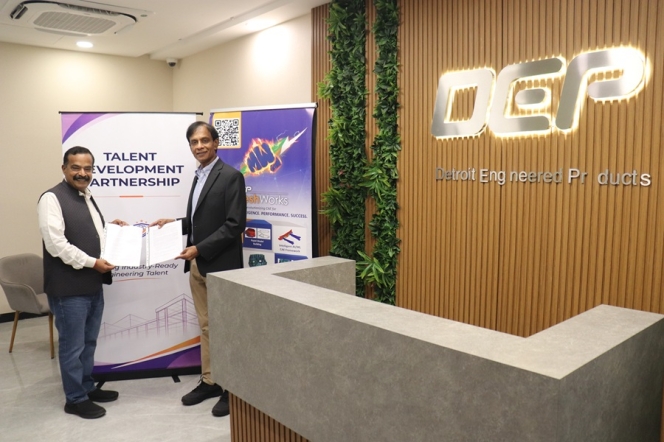
Detroit Engineered Products (DEP), developer of the DEP MeshWorks and DEP AIWorks platforms, has entered into a Talent Development Partnership with IntelliNXT Learning & Technologies (IntelliNXT) to build a pipeline of Computer-Aided Engineering (CAE) talent in India.
As per the agreement, IntelliNXT will design and deliver a training programme in association with DEP to develop participants' skills in CAE and DEP MeshWorks, a platform used by engineering teams to build element models from CAD data, parameterise them, and run optimisation studies.
Delivered through sessions, labs and projects, the curriculum will also introduce engineering workflows enabled by artificial intelligence (AI), an area where DEP AIWorks combines machine learning with simulation to shorten product development cycles. IntelliNXT will assess participants, certify graduates, and coordinate placement activities with DEP by recommending candidates based on assessment performance, streamlining recruitment and onboarding for the software developer.
Radha Krishnan, Founder & President, DEP, said, “Industry-ready engineers are the foundation of every successful CAE adoption. Partnering with IntelliNXT lets us bring DEP MeshWorks to a new generation of engineers in India and build a lasting talent pipeline.”
Karaiadiselvan, Chief Mentor, IntelliNXT Learning & Technologies, said, “Access to DEP MeshWorks lets us train our learners on a tool that industry actually uses, and helps companies find job-ready talent.”
- Hindustan Zinc
- Indian Institute of Technology Madras
- IIT Madras
- zinc-air battery
- Amarendu Prakash
- Praveen Chakravarthy
- Dr. Aravind Kmar Chandiran
- Prof Manu Santhanam
- Prrof. V Kamakoti
- HZL 2.0
Hindustan Zinc, IIT Madras Unveil Three-Wheeler Prototype With 1 kWh Zinc-Air Range Extender
- By MT Bureau
- November 26, 2026
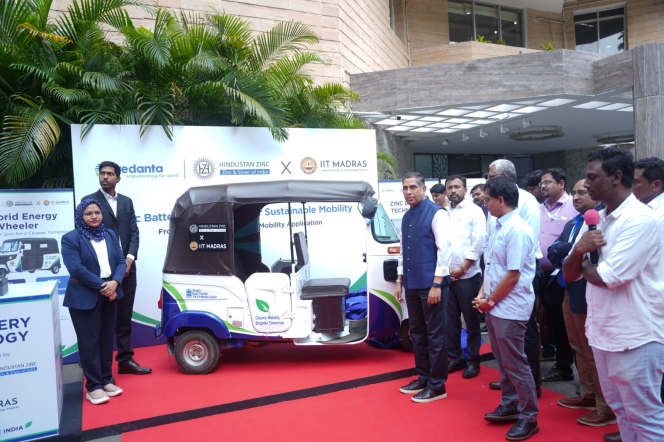
Hindustan Zinc, in collaboration with the Indian Institute of Technology Madras (IIT Madras), has unveiled a three-wheeler prototype fitted with an approximately 1 kWh zinc-air battery acting as a range extender.
The partners presented the prototype during the IIT Madras Energy Summit 2026 in the presence of Praveen Chakravarthy, Member of Parliament (Rajya Sabha), Amarendu Prakash, CEO and Whole-time Director, Hindustan Zinc, IIT Madras Dean (ICSR) Prof. Manu Santhanam and project lead Dr. Aravind Kumar Chandiran from the Department of Chemical Engineering.
Initiated in 2024, the research partnership has progressed from laboratory testing to vehicle demonstration under Hindustan Zinc's HZL 2.0 growth strategy. The vehicle utilises a dual-battery architecture in which the zinc-air unit supplies nearly 10 percent of the vehicle's energy requirements during operation, while a lithium-ion battery handles acceleration and power demands. Operating with a water-based electrolyte, zinc and oxygen from the air, the technology leverages India's zinc reserves to advance energy storage capabilities.
Amarendu Prakash said, “At Hindustan Zinc, we are constantly exploring opportunities to expand the applications of zinc and unlock greater value from this versatile metal. With zinc being abundantly available in India, there is an opportunity to explore indigenous energy storage solutions that can contribute to the vision of Viksit Bharat. Our collaboration with IIT Madras reflects our commitment to translating scientific research into practical applications, creating new demand avenues for zinc and strengthening its role in the global clean energy transition.”
Prof. V. Kamakoti, Director, IIT Madras, said, “Energy is the major focus of discussion globally, be it artificial intelligence, agriculture all the way to advanced manufacturing. Ensuring generation, storage and distribution of energy from different sources, specifically the renewable ones is the most important topic for research, development and commercialisation. Our collaboration with Hindustan Zinc is yet another important effort towards this goal.”
- XPENG
- Next Generation Pilot
- Tesla
- Autonomous Lab
- Paris Motor Show
- XPENG VLA 2.0
- United Nations Economic Commission for Europe
- He Xiaopeng
- Romain Caubet
XPENG Launches Public ADAS Test Rides In Paris Ahead Of 2027 Rollout
- By MT Bureau
- November 24, 2026
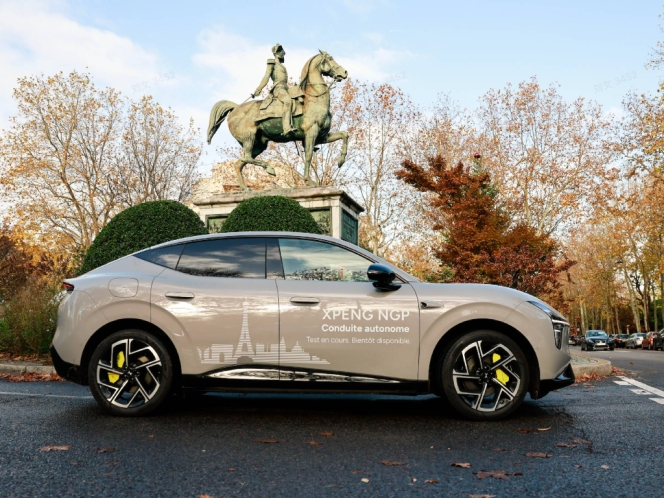
Chinese automotive and technology company XPENG has launched public test rides for its Next Generation Pilot (NGP) driver-assistance system at its retail store at 10 boulevard Gouvion-Saint-Cyr in Paris, becoming the first automaker from China to offer such trials from a retail location in Europe.
Following its participation alongside Tesla in the Autonomous Lab programme at the 2026 Paris Motor Show, the initiative allows customers to book drives in city traffic and intersections while the company conducts testing and localisation ahead of a rollout planned for 2027, subject to regulatory approvals and market readiness.
Powered by XPENG's VLA 2.0 architecture, the NGP system sits within a technology stack that includes Turing AI chips, world foundation models and integrated software and hardware across electric vehicles, robotaxis and robots. Alongside retail demonstrations, the Guangzhou-headquartered automaker participates in automated driving standards as OICA Secretary for the United Nations Economic Commission for Europe (UNECE) TF-ESRI taskforce.
He Xiaopeng, Chairman and CEO, XPENG, said, “Our mission is to bring Physical AI into everyday life and make advanced intelligent driving accessible to users worldwide. At the Paris Motor Show, many people asked when they could experience our technology themselves. Today, we are taking that next step. For us, this is not just about showcasing technology, but about understanding how people experience it in the real world. Backed by our full-stack R&D and continuous localisation efforts, we are committed to listening to European customers, adapting our technology to their needs, and working towards safer, smarter and more seamless mobility experiences. This is what ‘In Europe, For Europe, With Europe’ means to us.”
Romain Caubet, Country Manager, XPENG in France, said, “At the Paris Motor Show, we introduced European audiences to our advanced driving assistance technology through real-world demonstrations. Today, we are bringing that experience closer to customers through our Paris store. Paris offers a unique and challenging urban driving environment, making it an ideal location for people to experience the technology firsthand. We look forward to hearing their feedback as we continue to develop our intelligent driving experience for European customers.”
L&T Technology Services Launches SDVault.ai Toolchain For Software-Defined Vehicles
- By MT Bureau
- November 23, 2026
Bengaluru-headquartered engineering R&D company L&T Technology Services (LTTS) has introduced SDVault.ai, an engineering and assurance toolchain built on its EIOne platform to support automotive original equipment manufacturers and Tier-1 suppliers in developing, integrating and validating software-defined vehicles.
The platform is supported by 15 patent filings and operates across 12 engineering domains spanning requirements, system and electrical/electronic architecture, safety, cybersecurity, process assurance, software and code intelligence, verification, embedded debugging, virtual electronic control unit validation, trace and network analysis, root-cause intelligence and regression and release assurance.
Combining more than 250 artificial intelligence agents with rule-based automation, SDVault.ai connects requirements and architecture with code, tests, failures, actions and release evidence across the V-cycle while keeping engineers in control of decisions, verification and certification.
The platform can be deployed end-to-end or alongside existing toolchains within customer-controlled environments, with pilots demonstrating 30 to 40 per cent capacity for workload absorption and reducing tasks such as ticket triage from approximately four hours to 10 minutes.
Amit Chadha, CEO and MD, L&T Technology Services and NASSCOM Executive Council Member, said, “Software-defined vehicles are dramatically increasing the complexity of automotive engineering. AI can help, but in safety-critical engineering, AI alone is not enough. It requires deterministic engineering, domain knowledge, traceability and engineers firmly in control. SDVault.ai brings these together as Engineering Intelligence across the SDV V-cycle, connecting requirements, architecture, software, verification and evidence. It gives OEMs and Tier-1 suppliers a practical path to engineer more software, validate it with greater confidence and take more vehicle programs to production with the teams they already have.”
Comments (0)
ADD COMMENT