

India’s Two-wheeler Domestic Production Dips to 1.83 crore in FY21: Report
- By MT Bureau
- January 17, 2022
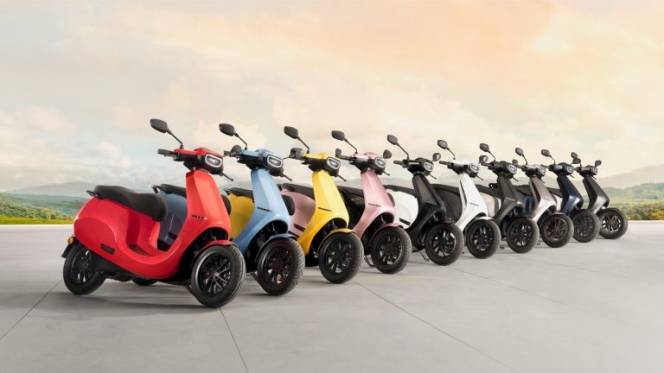
The domestic production of the two-wheeler segment dropped to about 1.83 crore in FY21 as against the production of about 2.10 crore in FY20, financial services credit rating company Infomerics Valuation and Rating said in a report.
According to the Industry Outlook Automobile Industry report, the Indian automobile industry is valued at more than INR 8 lakh crore. Its turnover contributes approximately 7.1 percent of overall GDP, 27 per cent of industrial GDP and 49 per cent of manufacturing GDP.
With the pandemic causing havoc in the automobile industry, the numbers have plummeted in FY21 for both production and sales, compared to the figure in FY20.
The study said two-wheeler is the most significant contributor to the automobile sector. It contributes about four-fifth to the overall industry, followed by passenger vehicles, contributing approximately 13 per cent to the industry.
Following some positive steps from the government, the automobile industry emerged as the top sector during the first four months of FY2021-22 with a 23 per cent share of the total FDI equity inflow, the study pointed out. The reforms by the government in FDI policy, investment facilitation and improving ease of doing business are some of the reasons for the increased FDI inflow, it said.
Along with enhancing FDI, the government has floated INT 25,938 crore worth of new production-linked incentive (PLI) scheme for the auto sector. The PLI Scheme for Automobile and Auto Components Industry will lead to a new investment of more than INR 42,500 crore, incremental production of over INR 2.3 lakh crore for five years. It is also expected to create additional employment opportunities for more than 7.5 lakh jobs.
The government also extended the second phase of the Faster Adoption and Manufacturing of Hybrid and Electric vehicle (FAME) scheme by two years to 31 March 2024. Besides, the Central government approved the INR 76,000 crore scheme to boost semiconductor and display manufacturing.
However, the study pointed some significant challenges for the industry in future. It said there was a mismatch between funds allocated and disbursed. The Union government has only disbursed about 10 per cent (about INR 820 crore) of the total subsidies out of INR 8,596 crore earmarked under the FAME-II scheme. EV makers pointed out that the aggressive localisation criteria for qualifying for FAME-II were a reason for the limited disbursal under the scheme. The semiconductor shortage has also been adversely affecting the industry. The automotive component industry, which had a turnover of INR 3.40 lakh crore (USD 45.9 billion) for the April 2020-March 2021 period, posted a de-growth of 3 per cent, compared with the turnover in the previous year.
The report said the restructuring of Ford’s Indian operations caused massive anxiety for dealers and customers. The future of about 170 Ford dealers with a combined investment of INR 2000 crore and about 40,000 employees is uncertain, the study pointed out.
Some foreign original equipment manufacturers (OEMs) who exited in the last four years include General Motors in 2017, MAN Trucks in 2018, United Motor Cycles in 2019 and Harley Davidson in 2020. Accordingly, the FADA sought to introduce legislation, viz., Automobile Dealers Protection Act, to create an enabling environment for automobile dealers. Industry body FADA also indicated that it was the worst festive season in the decade, with overall vehicle registrations falling 18 per cent in 2021 as against the festive season in 2020.
However, the report highlighted that the EV segment and the sector growth is optimistic and is also likely to get an impetus by the government’s series of incentives.
Besides, the report is not very optimistic about the overall industry in the short term due to the semiconductor shortage and infrastructure challenges on the EV front.
The industry faces challenges from other factors like triple-digit fuel prices and the sudden exit of big companies. The report suggested that the industry needs to work on the semiconductor issue and try to develop native capacities, adding that the government needs to work in tandem and consider reducing fuel prices. (MT)
TVS Motor Co Launches Updated TVS Radeon Motorcycle At INR 67,100
- By MT Bureau
- October 13, 2026
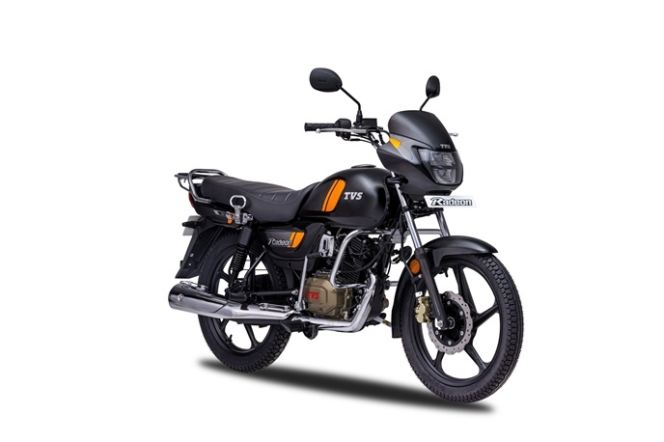
Chennai-headquartered two-wheeler and three-wheeler major TVS Motor Company has launched an updated version of its TVS Radeon motorcycle, introducing styling revisions and updated lighting components ahead of the domestic festive season. The commuter motorcycle model currently maintains a customer base exceeding 1.1 million units in India.
The updated TVS Radeon features revised body panels across the fuel tank, side sections and rear cowl, alongside new graphic schemes. Lighting updates include a full LED headlamp unit with integrated signature lighting, LED turn signals and an LED tail lamp incorporating a multi-dimensional lens effect.
The motorcycle retains core functional components from the previous iteration, including its segment-length seat layout and a reverse LCD instrument cluster with real-time mileage indicator functions.
The model is available across authorised dealerships in three trim levels: the Base variant priced at INR 67,100, the Digi Cluster Drum variant at INT 70,100 and the top-spec Digi Cluster Disc variant priced at INT 73,100 (ex-showroom, Delhi).
Aniruddha Haldar, Senior Vice-President and Head of Commuter & EV Business, TVS Motor Company, said, "Over the last decade, TVS Radeon customers have grown with a progressive India. More than 1.1 million customers have made TVS Radeon part of their everyday journeys, and as their lifestyles, aspirations and expectations have evolved, their motorcycle also has evolved with them. At TVS Motor, we have always put the customer at the heart of meaningful product evolution. The new TVS Radeon is a reflection of that belief, bringing a more youthful, dynamic and aspirational character to a motorcycle in line with its consumers from the New India of today. Radeon continues to stand for superior build quality, reliability, and its distinctive new lighting signature, contemporary graphics and confident design, makes it such a preferred ride. The new TVS Radeon is designed for customers who want their everyday motorcycle to be as progressive and expressive as the life and country they are building. We salute the nation building spirit of the Progressive Radeon rider."
VinFast Signs Letters of Intent With Over 50 Two-Wheeler Dealers In India
- By MT Bureau
- October 08, 2026
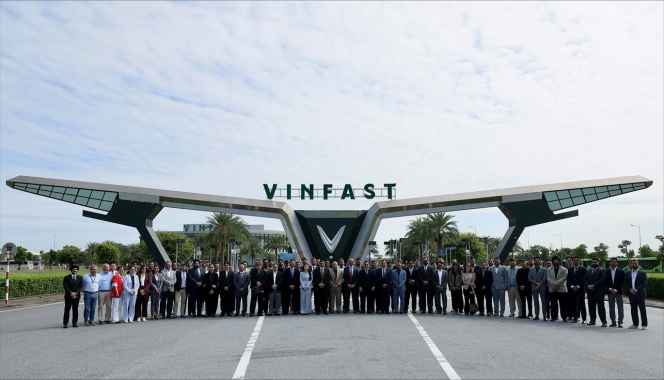
Vietnamese automotive company VinFast has signed Letters of Intent (LoI) with its first group of over 50 e-motorcycle dealer partners in India, establishing a distribution footprint across 15 states and 34 cities. The agreement was finalised at VinFast’s manufacturing facility in Hai Phong, Vietnam, during a delegation visit by Indian retail partners.
As per the terms, VinFast and its retail partners will open showrooms in locations including Delhi NCR, Rajasthan, Punjab, Madhya Pradesh, Chhattisgarh, Uttar Pradesh, Maharashtra, Gujarat, Karnataka, Telangana, Tamil Nadu, Kerala, Andhra Pradesh, West Bengal and Odisha. The initial expansion target focuses on commercial centres with high two-wheeler adoption rates as part of the manufacturer's network setup.
Vo Thi Cam Tu, Managing Director of VinFast E-Scooters Overseas Market, said, "India is one of the most important markets in VinFast's global growth story, and this partnership reflects the scale of ambition we hold for the region. As we expand our presence across markets worldwide, India stands out for its scale, its growing demand for electric mobility, and the opportunity it offers to redefine mobility. This LoI signing demonstrates our long-term commitment to India, as well as our expectations and confidence in the vast scale and potential of the market."
Anurag Saxena, Chief Executive Officer of VinFast India E-Scooters, said, "Partnering with more than 50 dealer partners across 15 states and territories and 34 cities marks the beginning of our journey to bring VinFast e-motorcycles across India. Alongside, we are also building charging infrastructure and strengthening after-sales services to ensure that customers across these locations receive the support they need throughout their ownership journey."
The company entered the Indian market in 2025 with electric car manufacturing and distribution operations. The latest agreement represents VinFast's first dedicated retail network for electric two-wheelers in India, where two-wheeler registrations reached 21.41 million units in fiscal year 2025-2026, with electric models accounting for 6.54 per cent of total sales.
Honda Motorcycle & Scooter India Launches XR300 L A And XR300 Rally Motorcycles At INR 183,000
- By MT Bureau
- October 07, 2026
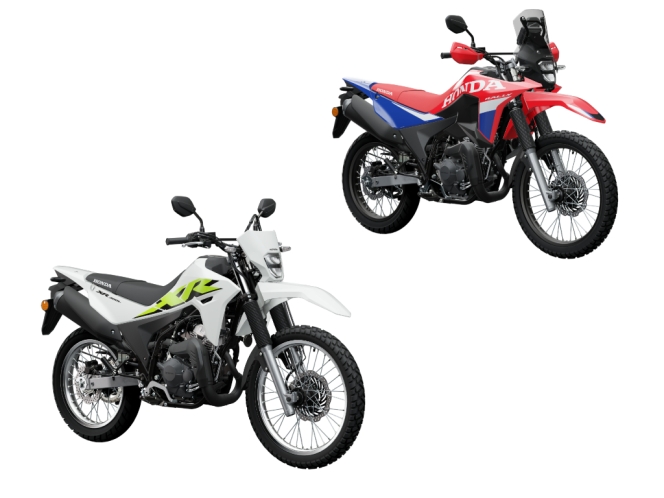
Honda Motorcycle & Scooter India, one of the leading two-wheeler manufacturers in the country, has announced pricing and opened bookings for the Honda XR300 L and Honda XR300 Rally. The announcement follows the initial unveiling of both models in July 2026 as part of the company's product expansion plans.
The XR300 L is priced at INR 183,000 ex-showroom Bengaluru, while the XR300 Rally is priced at INR 208,000 ex-showroom Bengaluru. Effective from 5 October 2026, bookings for both models have opened across the manufacturer's BigWing dealership network and online platform for a reservation amount of INR 5,000.
Both motorcycles are powered by a 293.5cc air-cooled engine equipped with an oil cooler; both variants come with torque control systems, rear suspension setups, front and rear disc brakes, switchable dual-channel ABS and an assist slipper clutch.
The XR300 L is designed for mixed city and off-road use and is offered in Extreme Red and Shasta White colour options. The XR300 Rally features bodywork designed for wind protection during long-distance riding, along with a TFT instrument cluster with smartphone connectivity.
The Rally variant is available in Extreme Red and True Black options. Both models form part of the manufacturer's domestic production initiative for local and export markets.
Triumph Motorcycles Introduces Bonneville T40, T40 Black And T4 Models In India
- By MT Bureau
- October 06, 2026
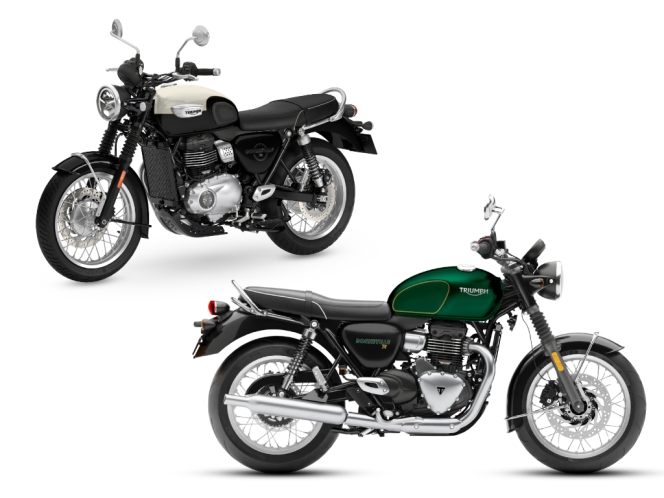
Triumph Motorcycles, one of the leading premium motorcycle manufacturers, has expanded its lineup in India with the launch of the Bonneville T40, T40 Black and T4 models, with pricing starting at INR 279,999 ex-showroom, Delhi, while the latter is priced at INR 254,999 ex-showroom, Delhi.
The new models feature traditional styling elements, including a teardrop fuel tank, round headlight, twin rear shock absorbers and spoked wheels with aluminium rims. The motorcycles are available in two-tone schemes with hand-painted coach lining and peashooter silencers. The bikes offer an accessible ergonomic setup, featuring a low seat height that can be reduced to 770 millimetres with an accessory seat.
All three variants are powered by a 350cc iteration of Triumph's TR Series engine. The engine produces 29 PS of power at 7,000 rpm and 31 Nm of torque at 5,500 rpm, tuned to deliver low-end torque and a distinct exhaust note.
The T40 and T40 Black feature a four-inch circular TFT instrument display with smartphone connectivity, including map navigation, phone and music controls. The models also come equipped with five ride modes, cruise control, cornering ABS and cornering traction control. The Bonneville T4 includes a colour LCD with turn-by-turn navigation, selectable ride modes, and dual-channel ABS.
Steve Sargent, Chief Product Officer, Triumph Motorcycles, said, “The Bonneville is one of the most significant motorcycles in Triumph's history, so introducing a new model carrying that name comes with a responsibility to get it right. From the outset, our ambition was not simply to create a smaller Bonneville, but to create a motorcycle that delivers the style, character and ownership experience riders expect from a genuine Bonneville. Bringing that experience to more riders is strategically important for Triumph, particularly as lower-capacity motorcycle categories continue to grow around the world."
"Working closely with Bajaj, we challenged ourselves to retain the details and qualities that make a Bonneville special, from the proportions and finish to traditional touches such as hand-painted coach lining, while also introducing a level of technology and rider-focused innovation not previously seen in this category. The result is a motorcycle that stays true to the values that have defined the Bonneville for generations while opening the experience to even more riders.” Sargent added.
The company has begun online bookings for the motorcycles starting 7 October 2026. Deliveries for the Bonneville T40 and T40 Black are scheduled to begin in the second week of November 2026, while deliveries for the Bonneville T4 will commence in the second week of January 2027.
Comments (0)
ADD COMMENT