

Solutions By Continental for 2-wheeler Market in India
- By Thalavai Venkatesan
- December 18, 2020
Relatively low cost of ownership and an increase in demand in urban and semi-urban areas are the primary drivers behind the growth of India’s 2-wheeler market. Post the COVID-19 era, there is a general sentiment among the consumers, considering 2-wheelers as the preferred alternative to public transport and shared mobility. The 2-wheeler segment is expected to play a vital role in boosting the automotive sector post- COVID-19 by providing affordable personal mobility alternatives while we observe social distancing.
As the 2-wheeler market continues to boom in India, it is essential to also focus on the safety aspects related to the vehicles.
According to the World Road Statistics Report 2018, India has the largest number of road accident deaths across 199 countries. A report by the National Crime Records Bureau (NCRB) shows that 2-wheeler deaths have increased on a year-on-year basis, rising by 38 percent from 2009 to 2019.
The Indian Government has implemented various new policies related to automotive safety in the last few years. Today’s consumer is also more conscious about safety and looks at key features that ensure safety instead of viewing it as an option confined to premium variants. Today, vehicle safety is transitioning from cost-addition to value addition.
The consumers are continually looking for technology upgrades in all the departments, be it safety or convenience. This has pushed us to be innovative and flexible in adapting globally proven safety technologies to local requirements in the form of effective products.

Anti- Lock Braking System (ABS)
ABS is a piece of safety equipment that prevents the wheels of a vehicle from locking up under emergency, panic, or harsh braking conditions. The introduction of ABS will significantly impact improved road safety, with other factors such as the safety belt and the introduction of speed limits playing a role alongside ABS’s spread. All 2-wheelers over 125-cc are mandated to have ABS as of April 2019 in India.
At Continental, we have a range of solutions in the ABS segment suited to all vehicle types. India has a range of lighter 2-wheelers, where ABS is not mandated. The MiniMAB - One Channel ABS for Motorcycles is suited to scooters and small motorcycles. The small and lightweight solution is easily adaptable to smaller vehicles because only one wheel speed sensor is required. The system prevents the front wheel from locking up and avoids falls or the vehicle from becoming unstable.
Beyond ABS:
As a technology company, Continental is at the forefront of safety technologies. We have all the relevant products for different demands such as ABS ride modes, traction control, optimised curve braking, motorcycle hold & go, and Advanced Rider Assistance Systems (ARAS).
These technologies have a lot of scopes to gain prominence in the safety department in India. ARAS include functionalities like,
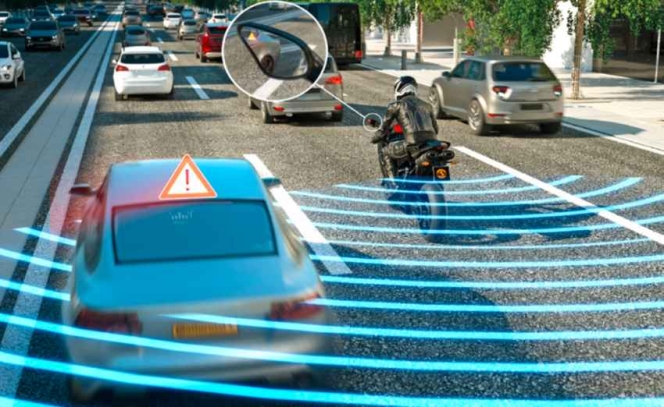
● Blind Spot Detection and Lane Change Assist: Warns the rider of vehicles driving in the blind spot area. The alert helps facilitate safe lane changes. The rearward-facing radar sensor monitors the road area behind and next to the motorcycle and warns if a lane change cannot be recommended.
● Emergency Brake Assist (EBA) and Forward Collision Warning: Supports the rider in avoiding run-up accidents by a radar-aided early threat assessment. It detects critical traffic situations and ensures optimum use of the available braking power. When a rear-end accident threatens, the motorcyclist will be alerted first before the EBA function supports his active braking system with slight pre-brake pressure.
● Intelligent Headlight Assist: The ARAS function Intelligent Headlight Assist (IHA) enables better vision at night. Motorcyclists can delegate the constant tedious task of changing from high to low beam to the electronic co-pilot. It detects the vehicles’ lights in front and oncoming vehicles and switches the high-beam headlamp on whenever possible to ensure optimum lighting of the road.
● Traffic Sign Assist: Detects traffic signs using a front camera and displays them to the rider. Failure to see a road sign displaying the permissible maximum speed can be expensive. Especially for people who rely on their driving license for their work, the consequences can be unpleasant. Traffic Sign Recognition has a display on the instrument panel to remind drivers of the current speed limit. This is achieved through multiple uses of the same camera, which is also used for the Lane Departure Warning system. When combined with high-performance software, it can even recognise speed limit signs. Digitised speed limit information of the onboard navigation system will be incorporated to be prepared for roads not assigned with speed limit signs.
● Adaptive Cruise Control: Relives the rider by automatically controlling throttle and brake to maintain the safe riding distance with the vehicle ahead.

Other technologies like Continental’s eHorizon for 2-wheelers is a cloud-based data management service that enables a variety of use-cases, increases safety, eco-efficiency, and enhances riding pleasure. The data, such as road geometry, traffic signs, or temporary events on the road, is collected and aggregated from various sources and transmitted back to the vehicle to either predictively inform the motorcyclist on relevant information on the route or to enhance vehicle functions directly.
This “swarm-intelligent system” uses technologies already present in vehicles, like camera systems, to classify road conditions like dry, wet, very wet (risk of aquaplaning), snowy, or icy. Based on that information, dynamic friction charts can be created and then used to forecast how well the tyres will grip the road stretch in question. I believe both these technologies have a good scope in the market, like India. Then again, a reliable ecosystem is vital to enable it.
We at Continental, with a strong legacy in-vehicle safety systems and inspired by its Vision Zero - Zero Fatalities, Zero Injuries, and Zero Crashes are committed to improving safety across the world awareness through various global and local forums. (MT)
NB: Thalavai Venkatesan is the Head of Sales & Key Account Management, Continental Automotive India. Views expressed are personal.
- Ultraviolette Automotive
- EICMA
- X47 Venom
- VX-100
- Niraj Rajmohan
- Narayan Subramaniam
- Tesseract
- Shockwave
- Qualcomm
Ultraviolette Marks Next Growth Phase Around X47 Venom
- By Nilesh Wadhwa
- October 26, 2026
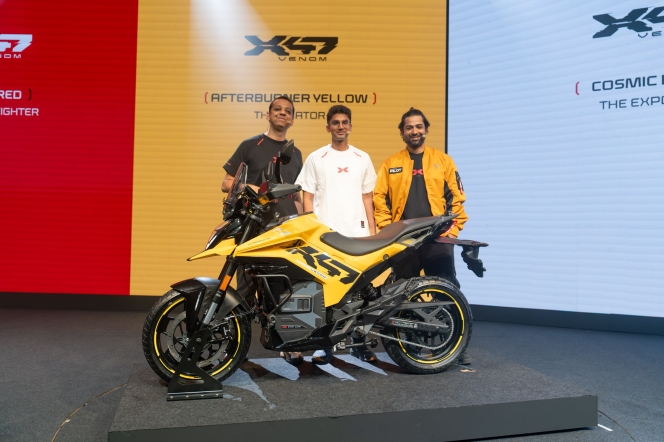
Bengaluru-based electric vehicle maker Ultraviolette Automotive has introduced the X47 Venom, a substantially upgraded successor to the X47 launched a year ago. Featuring a new 100V electrical architecture, improved performance, greater range, faster charging and enhanced safety, the motorcycle also marks the first production application of a technology platform intended to support the company’s expanding product portfolio.
Introduced on 22 October 2026, the X47 Venom delivers a claimed IDC range of 343 km, peak power of 30 kW (40 hp), wheel torque of 550 Nm and a top speed of 155 kmph. It accelerates from zero to 100 kmph in 5.9 seconds and weighs 180 kg, up to 20 kg less than its predecessor. The motorcycle supports 12 kW DC fast charging, which the company describes as a first for an electric two-wheeler in India.
Priced at an introductory INR 265,000 for the first 5,000 customers, deliveries are scheduled to begin in November 2026. A European launch is planned for 3 November at EICMA in Milan.
For the EV maker, the Venom represents more than a model upgrade. It introduces the VX-100, a 100V architecture designed to underpin its next generation of electric two-wheelers.
“The X47 Venom reflects our approach to engineering the entire motorcycle as one integrated system,” says Niraj Rajmohan, CTO and Co-Founder, Ultraviolette Automotive.
“Each subsystem has been developed in conjunction with the others to improve power density, optimise packaging and reduce weight. With 12 kW DC fast charging and multi-tiered electro-mechanical protection, including a pyro-fuse, we have advanced performance, convenience and safety together,” he said,
VX-100 to drive product expansion
Ultraviolette Automotive intends to deploy the VX-100 architecture across its upcoming portfolio, allowing technology developed for one vehicle to be adapted for others rather than requiring a separate electrical platform for every model.
“Over the next one year, you’ll see four new products coming with the same VX-100,” says Rajmohan.
The Tesseract electric scooter and Shockwave motorcycle are among the products identified for the next phase. The company is also working on the F77, although no timeline for an updated version has been disclosed.
The X47 was selected as the first application partly because it accounts for around 90 percent of Ultraviolette Automotive’s volumes, according to Rajmohan. Its crossover positioning also allows it to target riders across sports, adventure and street-motorcycle segments.
The common architecture is designed to accommodate different battery capacities, vehicle configurations and power levels. This modularity could help spread engineering costs across a wider portfolio and accelerate product development.
Till date, Ultraviolette Automotive has invested more than INR 5 billion in research and development, Rajmohan says. Its development process involves validating individual subsystems before integrating them into a complete vehicle.
“Just because a subsystem is ready doesn’t mean it is good enough to put on a vehicle, because it’s a safety-critical system,” he says.
The company’s test programme involves around 20 riders covering approximately 150–200 km a day, with motorcycles fast-charged between rides. The aim is to assess components under demanding conditions and validate the complete vehicle, including interactions between systems.
Powertrain and safety upgrades
The VX-100 combines a new battery system, a lighter motor and a redesigned motor control unit to improve performance, efficiency and packaging.
The SRB-11 battery is designed to deliver up to 20 percent higher energy density and twice the cooling performance. An optimised thermal path is intended to dissipate heat up to 50 percent faster, while a cast-aluminium enclosure provides structural protection.
Safety provisions include a battery management system monitoring cell voltage, temperature and current, alongside cell-level fuses. A pyro-fuse is designed to isolate the circuit within microseconds when a critical fault is detected. The battery pack carries an IP67 rating for protection against dust and water immersion.
The UV LIGHTFURY motor delivers 30 kW and uses soft magnetic composites to reduce mass and energy losses. Meanwhile, the new motor control unit is, according to the company, twice as compact as its predecessor and offers three times the power density.
The 12 kW DC fast-charging system incorporates safeguards against overcurrent, overvoltage, undervoltage, excessive temperature and short circuits.
Charging access remains critical to longer-distance electric motorcycle use. Ultraviolette Automotive has developed its Supernova DC charging network to address gaps at selected highway locations, while working with external providers, including Bolt.Earth.
Rajmohan says the company combines targeted infrastructure investment with access to third-party networks, rather than relying exclusively on proprietary chargers.
Extending rider assistance technology
The X47 Venom features Ultraviolette Automotive’s UV Hypersense radar system, which uses a 77 GHz rear radar with a claimed range of up to 200 metres. Designed to operate at lean angles of up to 20 degrees, it supports blind-spot monitoring, lane-change assistance, overtake alerts and rear-collision warnings.
Other features include a 7-inch TFT touchscreen, integrated front and rear dashcams, Mappls navigation, cruise control and park assist with a rear-camera feed. Connected functions under the VIOLETTE AI package include movement, fall and towing alerts, remote lockdown and crash alerts.
The company has also introduced B-MAX, a reusable rider-safety vest designed to protect the collar, back, chest, sides and hips. Ultraviolette Automotive claims 86 percent force attenuation and says the vest exceeds CE safety standards, with reuse possible up to five times, subject to its condition and intended use.
Beyond two-wheelers, the company has received enquiries from other industries interested in its technology, including motor controllers for drones. However, its immediate focus remains on electric motorcycles and scooters.
“We’re not thinking about any other companies for the purposes of commercialising the technology right now,” says Rajmohan, adding that complementary applications could be explored when the company has the capacity to support them.
Manufacturing for anticipated demand
Ultraviolette Automotive is expanding production capacity alongside its product pipeline. At its existing facility, it has added another vehicle assembly line and scaled up battery production. Rajmohan estimates the plant’s maximum annual capacity at approximately 50,000–60,000 units.
A new facility in Hosur is planned with the potential to scale to around 500,000 units annually, with the first phase expected to provide capacity for 250,000 units. Both plants will remain operational, offering flexibility to manufacture different vehicle types and battery packs.
The expansion reflects the company’s intention to prepare for future demand rather than wait until existing capacity becomes a constraint.
Rajmohan said monthly volumes had been approaching 1,000 units at the time of the interaction. Ultraviolette Automotive claims it has witnessed tens of thousands of bookings for the Shockwave and nearly 80,000 for the Tesseract. These are company-reported bookings, not delivered volumes and conversion into sales will be important to capacity utilisation.
The executive believes electric motorcycles could follow a growth trajectory similar to electric scooters, whose market penetration has increased as consumer acceptance and product availability have improved. He sees the next 36 months as potentially significant for electric motorcycles, although adoption will depend on affordability, infrastructure and consumer confidence.
Expanding the retail and service network
Ultraviolette Automotive had around 55 active locations and was targeting approximately 100 showrooms by the end of 2026 or during the first quarter of 2027. Rajmohan says the company has received more than 2,000 dealership applications but is screening prospective partners for automotive experience and service capability.
The strategy is to establish aftersales support before expanding sales in new markets. Rajmohan cites a partner in Whitefield, Bengaluru, which he says services around 3,000 vehicles a month and has experience as a Royal Enfield service partner.
Around 90 percent of Ultraviolette Automotive’s volumes come from India, with the remainder from international markets, according to Rajmohan. As the company expands geographically, service quality and repair capability will be important for vehicles combining batteries, electronics, radar and connected systems.
The company also plans to support existing products as it introduces the VX-100. Rajmohan says support for both the existing architecture and the new platform, including in Europe, is planned for more than 10 years.
Turning engineering into sustainable growth
Ultraviolette Automotive’s next phase will depend on converting its technology investments into customer acceptance, reliable deliveries and sustainable volumes. Rajmohan believes electric motorcycles can offer competitive ownership economics against internal-combustion alternatives, but identifies brand trust, longevity and resale value as continuing consumer concerns. The company points to battery warranty coverage of up to eight years as one way to address these issues.
Supply-chain costs present another challenge. Rajmohan acknowledges that increases in semiconductor and memory prices cannot simply be passed on to customers. Ultraviolette Automotive is working with suppliers and partners, including Qualcomm and TDK, while exploring alternative components and sourcing options.
The X47 Venom brings together the company’s priorities: improved performance, faster charging and additional safety technology, supported by an architecture intended to serve future products. Execution will be as important as engineering, particularly as manufacturing capacity and the retail network expand.
As CEO and Co-Founder Narayan Subramaniam said in the launch announcement, the VX-100 is intended to establish “a technology foundation for a new generation of products across segments and markets”.
The platform’s success will ultimately depend on how effectively Ultraviolette Automotive translates that foundation into competitive products, customer confidence and sustained growth.
Aprilia Unveils Limited-Edition RS 660 Phillip Island Tribute
- By MT Bureau
- October 24, 2026
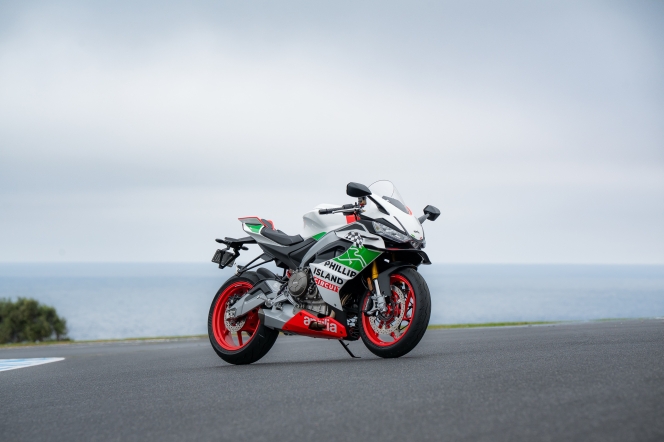
Piaggio Vehicles-owned motorcycle brand Aprilia has introduced the RS 660 Phillip Island Tribute, a limited-edition motorcycle produced to mark its victory record at the Australian circuit.
The vehicle will be on display at the EICMA exhibition in Milan from 5 to 8 November. The special edition commemorates Aprilia's 10 Grand Prix victories at Phillip Island, including the 2025 MotoGP win by Raúl Fernández on the RS-GP, which marked the manufacturer's 300th World Championship victory. The release coincides with the circuit's departure from the MotoGP calendar after 2027.
The motorcycle features a white, green and red livery incorporating the Phillip Island Circuit logo, track layout and chequered flag graphics on the side panels. The fuel tank displays a badge detailing Aprilia's victory count at the track, while the individual serial number is engraved on the steering head plate. The pillion seat cover is included as standard equipment.
Technically based on the standard RS 660, the motorcycle is powered by a front-mounted 660 cc parallel-twin engine delivering 105 horsepower at 10,400 rpm and 70 Nm of torque at 8,400 rpm, with a 35 kW restricted variant also available.
The engine acts as a load-bearing element within an aluminium frame. Electronics include a six-axis inertial platform managing traction control, wheelie control, engine brake control, cornering ABS, launch control, cruise control, adjustable engine mapping and a bidirectional quickshifter.
Ducati Intros Limited-Edition Formula 73 Motorcycle At INR 2 Million In India
- By MT Bureau
- October 23, 2026

Italian superbike maker Ducati has introduced the Formula 73 in India, a limited-series motorcycle restricted to 873 numbered units globally at INR 2 million (ex-showroom).
Interestingly, the entire allocation reserved for the Indian market has sold out.
The Formula 73 pays tribute to the 1973 750 Super Sport Desmo, incorporating a silver and aqua green livery, a vertical gold stripe on the fuel tank, clip-on handlebars with bar-end mirrors, a tapered tail, and billet aluminium components.
It is powered by an air-cooled 803 cc Desmodue L-twin engine with desmodromic distribution, the vehicle delivers 73 horsepower at 8,250 rpm and 65.2 Nm of torque at 7,000 rpm. The powertrain is paired with a Termignoni silencer and a Ride-by-Wire throttle system. The chassis utilises a steel trellis frame finished in aqua green, 17-inch spoked wheels fitted with Pirelli Diablo Rosso IV tyres and an electronic package featuring cornering braking systems, traction control, directional quick-shifting and dual riding modes.
Bipul Chandra, MD, Ducati India, said, "The Formula 73 is a rolling masterpiece that pays homage to one of the most significant motorcycles in our history, the 1973 750 Super Sport Desmo. We are incredibly proud to secure a highly exclusive allocation of these limited-edition motorcycles for our passionate Ducatisti in India. With only 873 units produced globally, the arrival of the Formula 73 offers a rare opportunity for Indian collectors to own a piece of timeless Italian heritage seamlessly blended with modern Ducati performance."
Hero MotoCorp Partners With Distrito Moto To Expand Operations In Guatemala
- By MT Bureau
- October 23, 2026
Hero MotoCorp, the world’s largest two-wheeler manufacturer, has signed a strategic partnership with ERMAR Sociedad Anónima, operating as Distrito Moto, to manage its sales and service network across Guatemala.
The partnership links Hero MotoCorp's vehicle manufacturing with ERMAR's retail operations in Central America. The network spans over 220 distribution points, incorporating more than 60 Distrito Moto sales locations and over 140 Tecno Fácil outlets across the country.
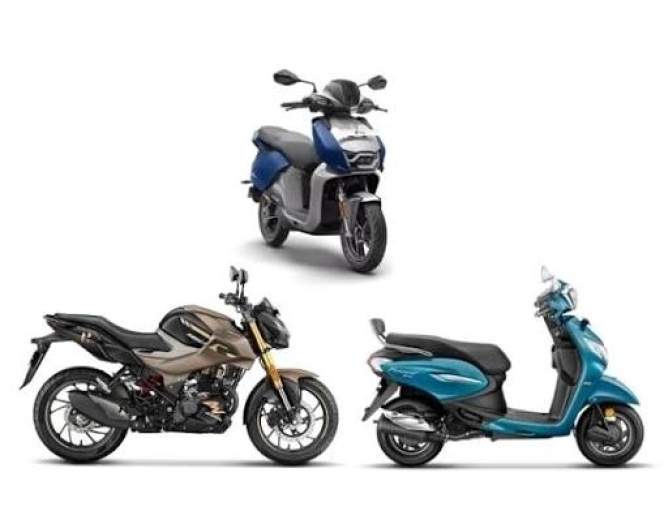
The operations provide vehicle distribution, replacement parts, service support and customer financing through Solvensa. Hero MotoCorp will provide a five-year or 60,000-kilometre warranty across its product line, which includes plans to introduce models such as the Hunk 250R, Xpulse 210, Hunk 150 Xtec ABS and Xoom 125.
Sanjay Bhan, Executive Vice-President of Global Business, Global Product Planning and Global Market Insights, Hero MotoCorp, said, "Guatemala is a strategic market where over 100,000 customers have placed their trust in Hero. Our partnership with Distrito Moto, backed by the strength of ILP Group and Distelsa, reinforces our long-term commitment to these riders and our growth ambitions in Latin America. With a global legacy of engineering excellence, world-class products and a proven track record of delivering quality, reliability and customer-centric experiences, Hero is well positioned to create greater value for riders in Guatemala. With the planned introduction of the Hunk 250R, Xpulse 210, Hunk 150 Xtec ABS and Xoom 125, we look forward to meeting the evolving aspirations of Guatemalan customers."
Javier Lainez, Commercial Head, Distrito Moto, said, "Our ambition is to make Hero ownership accessible and rewarding for more Guatemalans. Through competitive pricing, financing options from Solvensa and dedicated customer support, we want riders to feel confident at every step - from choosing their motorcycle to keeping it running reliably."
Comments (0)
ADD COMMENT