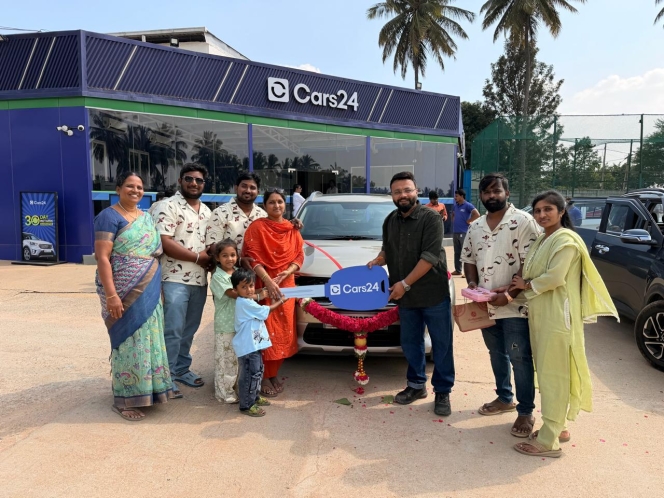
Cars24, a leading used car platform, has announced that it delivered 750 vehicles on 11 October, marking the first day of Navratri. The delivery volume represents a 58 percent increase compared to the same festival date in the previous year and 5x the volume of a standard Sunday transaction level.
Interestingly, first-time buyers accounted for 70 percent of total vehicle deliveries, with buyer ages ranging between 19 and 76 years. The platform recorded over 5 million user sessions on the same day for non-transactional vehicle lifecycle services, including insurance renewals, traffic fine settlements, Pollution Under Control Certificate checks and FASTag recharges.
More than 55 percent of delivered vehicles were processed through financing agreements. Sales registered under rural Regional Transport Offices grew at a faster rate than urban equivalents, accounting for over 40 percent of total vehicle sales, while 28 percent of deliveries expanded into new pin codes, including locations in Bhopal, Karnal, Visakhapatnam and Dehradun.
Petrol remained the primary fuel choice by sales volume, while CNG models achieved the highest growth rate alongside hybrid powertrains. SUVs recorded the highest volume expansion among body styles, led by models including the Tata Nexon and Punch.
Maruti Suzuki India models comprised over 40 percent of total vehicles sold, while automatic transmission variants accounted for one in three sales. Repeat customers generated over two-thirds of the day's platform transactions across sales and vehicle maintenance services.
Vikram Chopra, Founder, Cars24, said, "Navratri is when India brings home a new car, and yesterday 750 families did that with us. But what stayed with me was everything else on the dashboard. People cleared challans, renewed insurance and made sure their car was ready for the season. A car isn’t owned well on the day it’s bought. It’s owned well every year after. More than two-thirds of yesterday’s transactions came from owners who had turned to Cars24 before, and that tells us we’re becoming that place for them."
The sales performance on the opening day of Navratri provides an indicator of consumer demand trends, financing adoption, and regional market penetration across India's automotive sector ahead of Dussehra and Diwali.






Comments (0)
ADD COMMENT