

Daimler Truck Teams Up With Air Products, Amazon, Holcim, INEOS and Wiedmann & Winz.
- By MT Bureau
- July 27, 2024
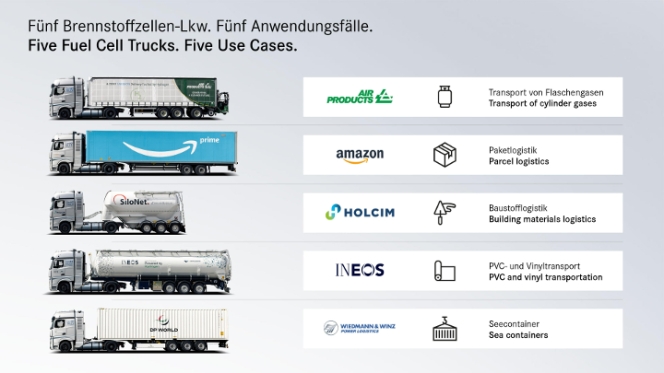
Daimler Truck has teamed up with Air Products, Amazon, Holcim, INEOS and Wiedmann & Winz to initial customer trials with five Mercedes-Benz GenH2 Trucks.
As one of the world’s largest commercial vehicle manufacturers with a commitment to COP28 in terms of sustainable transportation, the commercial vehicle major has initiated the initial customer trials of its GenH2 trucks on the basis of its belief that hydrogen-based drive technologies can be an optimal solution for very flexible and highly demanding applications in particular. Applications that are heavy-duty in nature and of the long-distance haulage kind.
Daimler Truck has moved to the initial customer trails after a rigorous testing phase on the test track and public roads of the Mercedes-Benz GenH2 Trucks. In an advanced development stage for deployment, the trucks – five semi-trailer tractors – are based on the characteristics of the conventional Mercedes-Benz Actros long-haul truck in terms of payload, range and performance.
Offering a payload of approximately 25 tonnes at a gross combination weight (GCW) of 40 tonnes, the hydrogen powered trucks are fitted with two special liquid hydrogen tanks and a powerful fuel-cell system by cellcentric, the Joint Venture of Daimler Truck and Volvo Group.
The fuel-cell system of the GenH2 Truck delivers 402 hp (2 x150 kW) whereas the battery provides an additional 536 hp (400 kW) temporarily. The storage capacity of the battery is low at 70 kWh since it is not intended to meet energy needs. It is mainly there on the truck to provide situational power support for the fuel cell during peak loads, for example, where additional power may be need to accelerate and drive uphill under full load.
The smaller and lighter battery not only facilitates a higher payload capacity, it is recharged with braking energy and excess fuel-cell energy.
The core element of the sophisticated operating strategy of the fuel-cell and battery system is a cooling and heating system that keeps all components at a suitable operating temperature, ensuring maximum durability. In a pre-series version, the two electric motors are designed for a total of 2 x 308 hp (230 kW) continuous power output and 2 x (442 hp) 330 kW of maximum power. The torque the GenH2 Truck delivers is 2 x 1,577 Nm or 2 x 2,071 Nm.
The two stainless-steel liquid-hydrogen tanks of the GenH2 Truck have a particularly high storage capacity of 88 kilograms (44 kg each). Consisting of two tubes, one within the other, that are vacuum isolated and connected to each other, the tanks store liquid hydrogen since the energy density is high. The earlier trails conducted by Daimler Truck have revealed that the H2 truck can travel up to 1,047 km with one tank full of the respective fuel.
Martin Daum, Chairman of the Board of Management of Daimler Truck, mentioned at the time of start of the trial in Woerth am Rhein where Daimler Truck has a truck test and development centre, “When it comes to decarbonizing transport, we are focusing on battery-electric and hydrogen-based drives. The transformation can only succeed if green energy is sufficiently and comprehensively available – and for this we need both technologies. With regard to hydrogen drives, we are now taking another important step towards series readiness: we are starting the trials of our Mercedes-Benz GenH2 Trucks in real-life daily transport operations with our customers. However, it is important to note that high-performance CO2-neutral vehicles alone will not be enough to make sustainable transportation successful. This also requires a corresponding charging and refueling infrastructure, as well as cost parity with conventional vehicles. Although policymakers and energy companies are already active here, we urgently need even more momentum, across entire Europe.”
Blue Energy Motors Joins PARIVARTAN Scheme To Deploy Electric Heavy-Duty Trucks
- By MT Bureau
- October 23, 2026
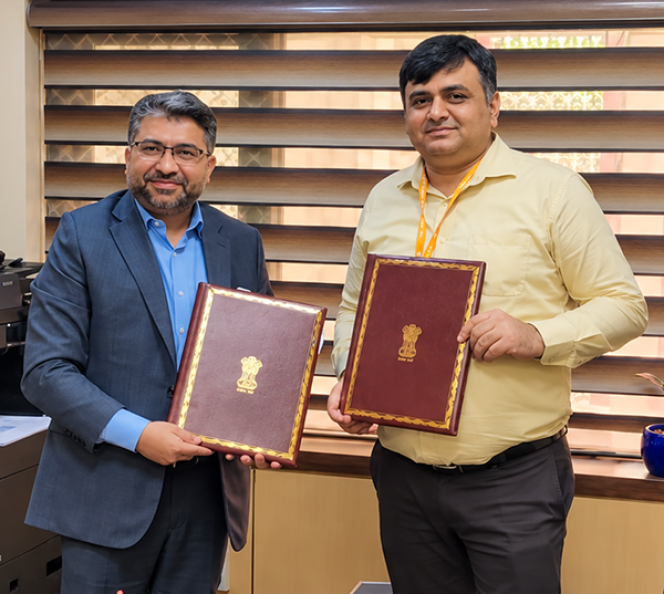
Pune-headquartered alternative commercial vehicle maker Blue Energy Motors has signed a Memorandum of Understanding (MoU) with the Ministry of Road Transport and Highways (MoRTH) under the PARIVARTAN Scheme. The partnership aims to facilitate the replacement of commercial vehicles with electric trucks within the Delhi-National Capital Region.
The initiative supports the transition to freight mobility options by incentivising the replacement of transport units. Blue Energy Motors deploys electric and liquefied natural gas truck platforms across freight routes, accumulating operational distance and reducing emissions.
Anirudh Bhuwalka, Founder & Managing Director, Blue Energy Motors, said, "The PARIVARTAN Scheme is an important step towards accelerating the transition to cleaner freight mobility in India. Our participation reflects Blue Energy Motors’ commitment to supporting the Government’s vision for sustainable transportation and enabling wider adoption of electric heavy-duty trucks. We believe that the right policy support, coupled with advanced technology and a strong domestic manufacturing ecosystem, can play a pivotal role in accelerating India’s transition towards zero-emission freight transportation."
SWITCH Mobility, PURPLE BUS Launch Vidarbha's First Electric Intercity Bus Service On Nagpur–Chandrapur Route
- By MT Bureau
- October 20, 2026
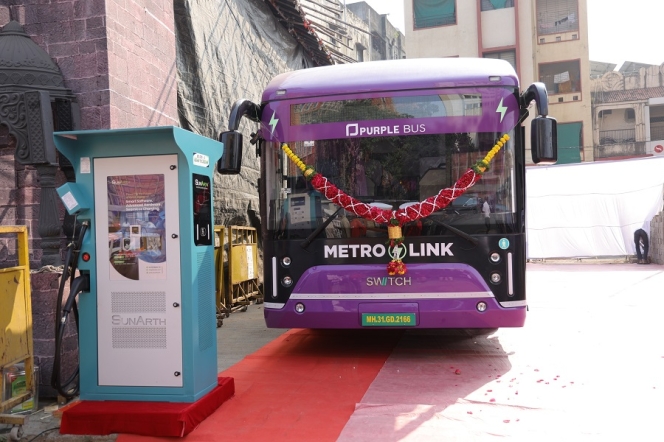
SWITCH Mobility Ltd, a global leader in electric buses and light commercial vehicles and part of the Hinduja Group, has joined forces with intercity operator PURPLE BUS to roll out the region's first electric bus service linking Nagpur and Chandrapur, widening the operator's Vidarbha footprint. Union Minister of Road Transport and Highways Nitin Gadkari oversaw the ceremonial dispatch of the inaugural six units, drawn from a 50-bus EiV12m intercity electric order placed by Purple Bus for deployments across Vidarbha.
Organisers chose Dussehra, a festival traditionally viewed as favourable for fresh ventures, as the launch date, a nod to the manufacturer's continuing push for safe, dependable and sustainable public transport in the region. Travellers between the two cities stand to gain better connectivity along with a safe, comfortable and eco-friendly way to travel.
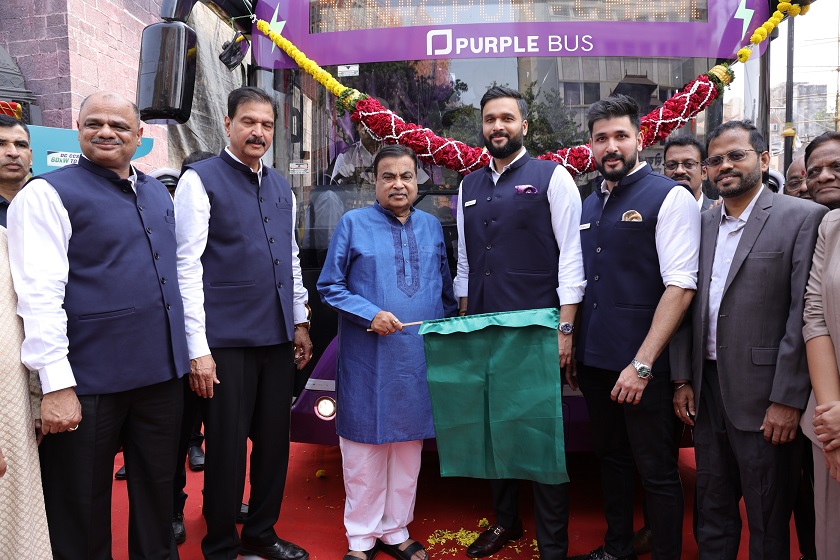
The Nagpur–Chandrapur service is the third intercity project this year between SWITCH Mobility and Prasanna Purple Mobility Solutions, building on electric coach launches along the Mumbai–Pune and Dombivli–Pune corridors in April 2026 and October 2026, respectively. The recurring tie-up points to rising operator confidence in electric buses for high-frequency intercity routes and to SWITCH Mobility's growing part in India's shift towards sustainable intercity travel.
The new route strengthens the partnership with Prasanna Purple Mobility Solutions and furthers the company's wider aim of making zero-emission public transport accessible in Indian cities and towns. Linking key Vidarbha centres, the service is expected to ease daily commutes, boost local economic activity and speed the move towards cleaner intercity mobility. The EiV12m coach, engineered for long-distance journeys, pairs 45 pushback seats and a 350 km per-charge range with fast-charging capability, advanced safety systems, a quiet ride and SWITCH iON connected technology for real-time monitoring.
Ganesh Mani, Chief Executive Officer, SWITCH Mobility, said, “Nagpur and Chandrapur share a close economic and cultural relationship, and strengthening this corridor with our partner Prasanna Purple Mobility Solutions is an important step in our mission to build future-ready public transport across India. Following our deployment on the Mumbai–Pune route earlier this year, we are glad to extend this partnership to Vidarbha and to contribute to the region’s growth by supporting the everyday movement of the people who depend on it. This launch reaffirms our commitment to sustainable, people-first mobility solutions in Maharashtra and beyond.”
Saurabh Patwadhan, Director, PURPLE BUS, said, “At PURPLE BUS, our goal is to make electric the default way people travel between cities, not the exception. We are building that future route by route, from Mumbai–Pune, one of India’s busiest corridors, to Nagpur–Chandrapur, where we now bring Vidarbha its first electric bus service. Our fleet has already covered more than one million kilometres (1,000,000 km) in electric intercity operations, and the data shows what many operators doubted: electric coaches deliver a lower total cost of ownership and a lower cost per passenger-kilometre than diesel. Our partnership with SWITCH Mobility has been central to proving that, and it gives us the confidence to scale sustainable intercity mobility across Maharashtra.”
Scania Opens New SEK 975 Million R&D Proving Ground In Södertälje
- By MT Bureau
- October 20, 2026
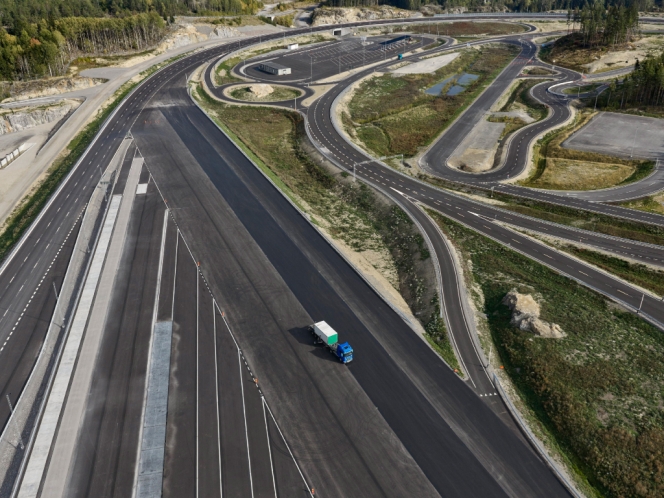
European commercial vehicle major Scania has inaugurated its research and development proving ground in Södertälje, representing an investment of SEK 975 million. The 85-hectare site includes 13 kilometres of paved road and 4 kilometres of gravel road to support testing across electrification, autonomous driving, safety systems and vehicle dynamics.
The facility incorporates three irrigated braking tracks constructed from asphalt, concrete and basalt tiles, enabling testing across varied friction surfaces and cornering conditions. The site also features specialised environments for evaluating driver assistance technology, including automatic emergency braking, lane support and blind-spot warning systems, alongside scenarios for autonomous vehicle development. The construction project integrated environmental measures, including ECO asphalt and renewable HVO100 fuel for logistics, avoiding approximately 30,900 tonnes of carbon dioxide equivalent emissions.
Christian Levin, President and CEO, TRATON GROUP and Scania, said, "The transformation of transport requires us to continuously strengthen the way we develop and validate new technologies. This investment is about building the capabilities we need for the future while ensuring that the solutions we bring to our customers have the safety, quality and performance they expect."
Sara Forsberg, CTO and Head of Brand Identity Development at Scania, said, "New technology only creates value when it performs in the real world. The R&D proving ground gives our engineers greater possibilities to test, learn and validate solutions under demanding conditions. It strengthens our ability to turn innovation into solutions that deliver real value for our customers."
Niklas Klingenberg, Head of Group R&D, TRATON GROUP, said, "Advanced testing and validation capabilities become increasingly necessary as we develop the next generation of transport solutions. The R&D Proving Ground is an important addition to our landscape and strengthens our ability to turn new technologies into proven solutions."
Eicher Trucks & Buses Opens Pro X Small Commercial Vehicle Dealership In Noida
- By MT Bureau
- October 19, 2026
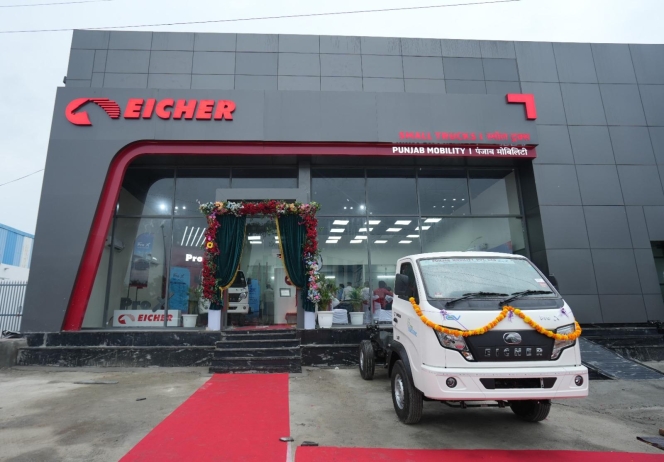
Eicher Trucks & Buses, a division of VE Commercial Vehicles, has inaugurated a 3S dealership facility in Noida for its Eicher Pro X small truck range. Operated by Punjab Mobility, the 7,000-square-foot facility is located on NH-34 at Dadri in Gautam Buddh Nagar, providing integrated sales, service and spare parts support.
The showroom will sell the 3-tonne and 3.5-tonne Gross Vehicle Weight range of small commercial vehicles across electric, diesel and compressed natural gas powertrain options.
The location provides access to industrial and logistics hubs across Noida, Greater Noida and the Dadri region, including the Multi-Modal Logistics Hub and the Dadri-Noida-Ghaziabad Industrial Region, with transport connectivity via the Eastern Peripheral Expressway, the Delhi-Meerut Expressway and the Yamuna Expressway.
Abhishek Chaudhary, Senior Vice-President of SCV Sales & Marketing, VE Commercial Vehicles, said, "The Eicher Pro X range is designed for the evolving needs of last-mile logistics, with a strong focus on efficiency, connectivity, driver comfort and uptime. With three energy-efficient powertrains, 100% connected technology and multiple configuration options, it is engineered for applications including e-commerce, parcel courier, FMCG and industrial goods movement. Punjab Mobility Private Limited’s presence strengthens our presence in Noida and brings the Pro X range and enhanced ownership support closer to customers across the Delhi-NCR region. Born electric-first, the Eicher Pro X offers customers in the NCR the opportunity to switch to electric trucks that are approved under the PARIVARTAN scheme."
The dealership infrastructure features digital vehicle configurators, dedicated workshop bays, electric vehicle charging infrastructure and EV-trained service personnel. To support vehicle uptime across the National Capital Region, the facility operates mobile service vans and breakdown assistance units alongside power backup systems.
Comments (0)
ADD COMMENT