

- EKA Mobility
- Pune
- Nitin Gadkari
- Devendra Fadnavis
- Sudhir Mehta
- Abhay Firodia
- Pinnacle Industries
- e-trucks
- e-buses
- electric vehicles
- bio-ethanol
- alternative fuels
- auto industry
- India
- manufacturing
Indian Auto Industry’s Journey To No. 1 Position And The Need For More CVs
- By Bhushan Mhapralkar
- November 03, 2026
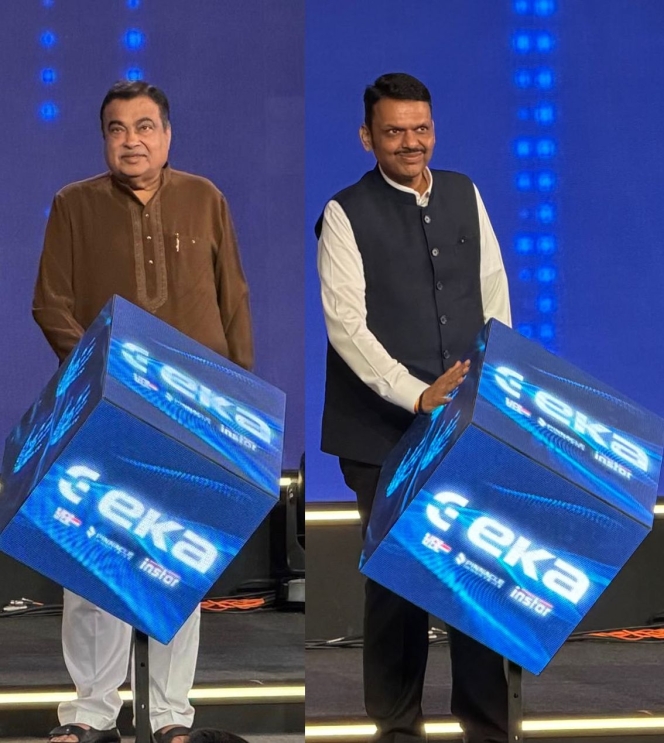
Describing the auto sector as the industrial backbone of India and India as the fastest growing economy in the world, the Union Transport and Highways Minister, Government of India, Nitin Gadkari, mentioned that from the time he assumed office he has been behind Abhay Firodia, Chairman, Force Motors, and Sudhir Mehta, Chairman, EKA Mobility, among others to promote electric mobility.
Stating that there is going to be a demand for 200,000 buses in the next two years in the country whereas the ability to make buses is limited to 60,000, Gadkari said, “I always told Sudhir whenever I met him that even you make as many buses, the demand for them will not be fulfilled.”
Emphasising that the demand of 200,000 buses is just for the domestic market whereas the potential for exports is much more, the union minister averred, “A big challenge the country faces is logistics costs. At 16 percent in comparison to the GDP, it was quite high. The improvement in road infrastructure has brought it down to nine percent as per a study conducted by IIT Madras, IIT Kanpur and IIM Bengaluru. Because of good roads, people are travelling in their personal vehicles more than they would earlier.”
Explaining that the reduction in fuel cost will further reduce logistics costs, the minister informed, “The cost of fossil fuel is very high. The shift from imported fuels to the ones that are procured locally will have a multiplying effect on the economy. The goal should be to make 100 percent indigenous electric vehicles.”
Drawing attention to the lithium-ion deposits been found in Jammu, he reasoned, “At the launch of an electric Mercedes-Benz car in India, the company chief told me that they will make and export electric vehicles from India.” Stating that two-wheeler manufacturers like Bajaj Auto are exporting 50 percent of their produce, Toyota and Suzuki are exporting cars to Japan, Gadkari observed, “Much progress will be made by the Indian auto industry in the future in areas like bio- and alternative fuels in its journey to the number one position in the world.” “Whatever I have said until now has proved correct,” he added.
Stating that pollution caused by fossil fuel vehicles has reduced human lifespan, the union transport and highways minister cited, “The auto industry is doing good on the innovation and research front. The start ups are doing a good job. The future of this sector looks very bright. Despite increasing their capacity to 100,000 units, manufacturers like EKA Mobility are going to experience a shortfall.”
Explaining that it has decided to increase the GCW of 60-tonne truck to 65-tonne to compensate for the five-tonnes battery weight, the union minister said, “Surpassing Japan, the Indian auto industry has become the world’s third largest with an increase in size from INR 15 trillion to INR 22 trillion.” Stating that he has had the good fortune of flagging off India’s first electric two-wheeler, three-wheeler, car and commercial vehicle, Gadkari, in his address at the EKA Mobility event in Pune, affirmed that the growth of the Indian auto industry will catapult it to the world’s number one position.
Describing the industry as the one that provides the most GST to the government and about 45 million jobs, the minister said, “India would have become truly ‘atmanirbhar’ when the auto industry will reach the number one position.” “I have been promoting bio- and alternative fuels since 2004 as the country with 22 lakh crore fossil fuel powered vehicles is the world’s third largest importer of crude,” he added.
Stating that there is a need to cut down crude import dependence by promoting ethanol, methanol and other alternative fuels, Gadkari informed, “India has received an order to export 500,000 tonnes of hydrogen.” “I use a Toyota hydrogen car to underline that it is possible to run vehicles on hydrogen fuel,” he added.
Referring to the reductio in lithium-ion battery prices over the last few years, the minister commented, “When I first flagged off an electric car in Delhi’s Taj Hotel, I was asked a question: What happens if it breaks down and who will push it to safety?” “The grow of electric vehicles in the country is limited by the supply constraint,” he added.
Urging Maharashtra Chief Minister, Devendra Fadnavis, who was also present at the event, to improve roadside amenities in the state, Gadkari said, “Please make the per unit charging rate during the day INR five. The State of Maharashtra is a progressive state and it should make electric vehicles more beneficial to its users in order to lower pollution.” “Hydrogen trucks have been launched in India. Flex-fuel vehicles will be launched soon and run on 100 percent bio-ethanol. The auto industry, I am confident, will travel on the path to indigenous fuels making for a true ‘atmanirbhar Bharat’ that is also a USD five trillion economy,” he added.
Making room for 50,000 e-buses in next three years
In response to Gadkari’s call for improving roadside amenities and reducing the per unit rate of electricity for electric vehicle users, Fadnavis informed that the State of Maharashtra needs approximately 50,000 electric buses over the next three to four years to meet growing demand for public transport electrification. “Of these, 10,000 buses are earmarked for Mumbai's civic body, 30,000 for the Maharashtra State Road Transport Corporation (MSRTC), and additional units for cities that include Pune and Nagpur,” he outlined.
Urging manufacturers to expand production capacity in response to the need, the Chief Minister emphasised, “In partnership with manufacturers like EKA Mobility, statewide highway EV charging network will be developed. The state will facilitate land allocation, statutory permissions, and underlying infrastructure, resolving bottlenecks that manufacturers face independently.”
Tata Motors Partners Turno For Electric Commercial Vehicles Financing
- By MT Bureau
- November 11, 2026
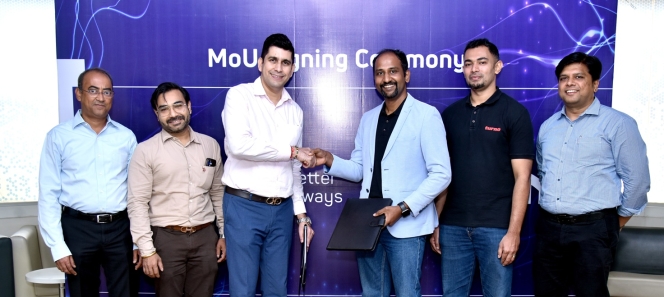
Tata Motors has signed a Memorandum of Understanding with Finzo EV Solutions, operating as Turno, to provide financing structures and buyback guarantees for its electric small commercial vehicles and pickups range.
Under the agreement, customers purchasing models across the Ace Pro EV, Ace EV 1000 and Intra EV Pickup lineups will gain access to loan disbursements, repayment schedules and a 25 percent assured buyback guarantee.
The partnership utilises Turno's battery intelligence and lifecycle management systems to establish vehicle residual values and resale processes. The offering complements Tata Motors' commercial vehicle infrastructure, which includes access to more than 25,000 public chargers across 150 cities, 200 dedicated electric vehicle support centers, its Fleet Edge connected platform and its Sampoorna Seva 2.0 lifecycle care program.
Varun Nair, Director, Turno, said, "At Turno, our mission is to accelerate the shift towards green, zero-emission mobility across India by making the EV ownership journey simpler and more rewarding. As electric commercial mobility gains momentum, customers need greater clarity and assurance around the value of their vehicle over its lifecycle. Our partnership with Tata Motors brings together customized financing and assured buyback support to address these needs and make the transition to electric mobility easier. By leveraging our expertise in battery intelligence and EV lifecycle management, along with our assured buyback programme, we are building greater certainty around the ownership and resale journey of electric commercial vehicles."
Pinaki Haldar, Vice-President and Business Head of SCVPU, Tata Motors, said, "Tata Motors is committed to democratising clean mobility and accelerating India’s transition towards sustainable last-mile logistics. While our e-SCVPU range is engineered to deliver superior performance, reliability, and operating economics, true adoption scales when vehicle ownership becomes simple, predictable, and worry-free. Our partnership with Turno strengthens our EV ecosystem by offering end-to-end ownership support to customers. By removing financing hurdles and safeguarding long-term resale value, we are empowering customers across the country to switch to zero-emission mobility with greater confidence."
CASE Construction Equipment Inaugurates New Facility In Faridabad To Boost NCR Operations
- By MT Bureau
- November 04, 2026
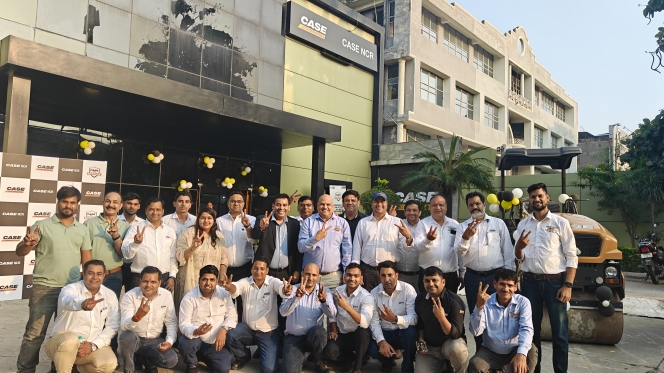
CASE Construction Equipment, a brand of CNH, has inaugurated new premises in Faridabad within the National Capital Region (NCR) to expand its customer support and service infrastructure.
The 6,000 sqft facility features double the parts storage capacity of the previous setup, a workshop capable of servicing 10 to 12 machines simultaneously and a dedicated equipment display area showcasing four CASE machine models.
The facility will serve customers across northern India, supporting parts availability and machine maintenance operations. During the inauguration event, which was attended by approximately 40 customers, the company completed two machine handovers and three parts invoicing transactions.
CASE has maintained operations in Faridabad since 2018, when it opened its first company-owned, company-operated showroom in India in the city.
Ravindra Ashtekar, Head of Network Development, CASE Construction Equipment, said, "NCR is an important market for construction equipment, with demand shaped by ongoing infrastructure development and a diverse range of customer requirements. Strengthening our presence in the region is therefore an important part of our efforts to remain accessible to customers and provide dependable support. The new premises bring together enhanced parts storage, workshop capacity and a dedicated machine display area, enabling us to further strengthen our service capabilities and customer engagement."
JBM Electric Vehicles Launches ECOLIFE e12 City Bus in Singapore
- By MT Bureau
- November 04, 2026
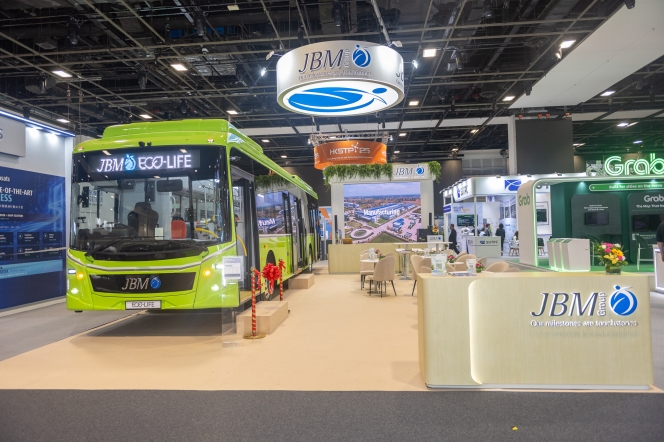
JBM Electric Vehicles has launched its all-electric city bus, the ECOLIFE e12, at Singapore Urban Mobility Week 2026. The vehicle was unveiled by Dr Shilpak Ambule, High Commissioner of India to the Republic of Singapore, alongside Nishant Arya, Chairman of JBM Electric Vehicles. The launch marks the first introduction of an electric bus in Singapore by an Indian manufacturer.
The ECOLIFE e12 features an aluminium monocoque body structure and incorporates an Intelligent Transport System compliant with Singapore regulatory standards. The vehicle is equipped with telematics for vehicle health monitoring, an Advanced Driver-Assistance System (ADAS), forward collision warning systems, lane departure warnings, pedestrian and cyclist collision detection, blind-spot monitoring, driver drowsiness detection, a 360-degree camera and a fire detection and suppression system.
To support its regional operations, JBM Electric Vehicles has established its Asia-Pacific headquarters in Singapore to handle sales, marketing, aftersales and operational activities. The company maintains an annual production capacity of 20,000 buses at its manufacturing facility in India and holds an order book of 10,000 electric buses for global deployment over the next two years.
Nishant Arya, Chairman of JBM Electric Vehicles, said, "Our mission is to decarbonize public transport by creating new and sustainable global benchmarks. At JBM EV, we believe that the future of green mobility lies in creating vehicles that seamlessly blend innovation, sustainability and user-centric design. Our electric mobility solutions are not just about reducing carbon footprints, they are about elevating the quality of life for individuals and communities by making transportation smarter, safer, and more accessible. We believe in the power of partnerships and collaboration to continuously improve, listening to the needs of our customers to develop solutions to address their pain points. We constantly evolve to provide new ideas and solutions in the e-mobility world. We invest to better support our customers by thinking global and acting local in meeting the challenges of today and tomorrow."
- Automotive Skills Development Council
- ASDC
- Daimler India Commercial Vehicles
- driver training
- CSR
- Vinkesh Gulati
- Torsten Schmidt
ASDC Partners Daimler India Commercial Vehicles Partner To Train 240 Heavy Commercial Vehicle Drivers
- By MT Bureau
- November 04, 2026
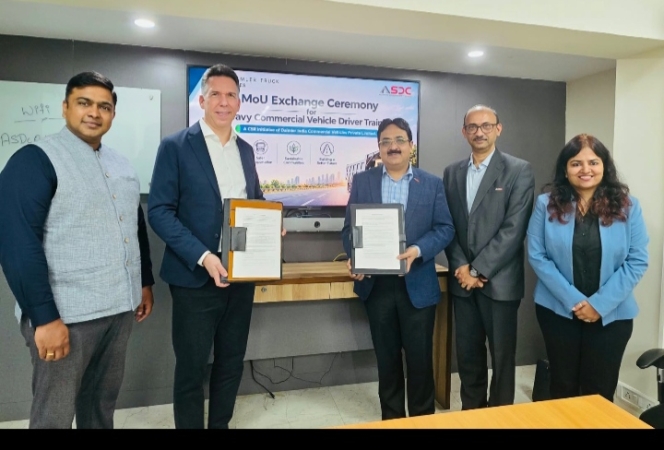
Automotive Skills Development Council (ASDC) has partnered with Daimler India Commercial Vehicles to launch a corporate social responsibility (CSR) initiative aimed at training and certifying 240 Heavy Commercial Vehicle drivers across Assam, Maharashtra, Jharkhand and Andhra Pradesh.
The programme focuses on expanding the pool of commercial vehicle drivers, improving road safety standards, and providing employment opportunities for candidates.
Under the implementation agreement, 60 candidates in each of the four states will participate in a residential training programme featuring classroom instruction, practical driving and simulator learning.
Daimler India Commercial Vehicles is providing training, residential facilities, meals, licensing support, assessments, certification, insurance and impact studies. ASDC will oversee industry linkages and placement support for certified drivers, alongside conducting three months of post-placement follow-up to track employment retention rates.
Vinkesh Gulati, Chairperson, ASDC, said, "Skilled commercial vehicle drivers are essential to India’s logistics network and economic growth. Skilling for road safety must be an integral part of their preparation, equipping drivers with defensive driving techniques, an understanding of traffic rules and the ability to handle heavy vehicles responsibly. Through this partnership with Daimler India Commercial Vehicles, we aim to prepare 240 young people for professional driving careers by combining practical training, recognised certification and employment assistance. Our goal is to create livelihood opportunities while developing competent, safety-conscious drivers who contribute to safer roads for everyone."
Torsten Schmidt, Managing Director and CEO, Daimler India Commercial Vehicles, said, "At DICV, we believe drivers are the backbone of India's economy, keeping goods moving and communities connected across the country. As the transport sector evolves, professionally trained, safety-conscious drivers are more important than ever. Through this initiative with ASDC, we are investing in skills that not only improve employability but also foster a culture of responsible driving and road safety. By equipping aspiring drivers with the right knowledge, practical expertise and a safety mindset, we are helping build a stronger logistics ecosystem while contributing to safer roads and a more resilient nation."
Comments (0)
ADD COMMENT