

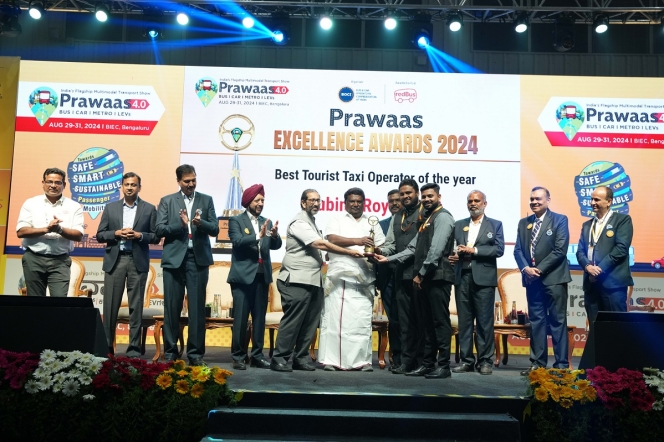
Prawaas 4.0, organised by the Bus and Car Operators Confederation of India (BOCI), successfully concluded on a high note.
Hosted in Bengaluru for the first time, the event saw over 6,153 operators, 171 exhibitors, 106 speakers, 15 sessions and over 40,000 expo footfalls from across 28 states and 8 Union Territories. The event was supported by the Ministry of Road Transport and Highways, Ministry of Heavy Industries, Ministry of Housing and Urban Affairs, Government of India.
From its inception in 2017, Prawaas has become the premier platform for the showcase of public transport innovation. This year’s exhibition showcased over 171 leading exhibitors, featuring national and international brands in passenger mobility showcasing the latest innovations. Emphasising ‘Safe, Smart, and Sustainable Passenger Mobility,’ the event highlighted significant advancements and underscored the industry’s commitment to continual progress.
Prawaas 4.0 brought together leading bus and car operators from across India in nine important segments – Intercity, Intracity, School Bus, Employee Transport, Tour Operators, Tourists Cabs, Maxi Cabs, PPP-SPVs and Critical Care. Participation from operators’ saw a large delegation from Karnataka, Tamil Nadu, Kerala, Maharashtra, Gujarat, Odisha, significant numbers from Madhya Pradesh, Himachal Pradesh, Chhattisgarh, Rajasthan, West Bengal and special delegation of more than 80 members from North East region.
The ‘BOCI YUWA – The Confluence of Generations for a Sustainable Future’ session brought together emerging leaders and seasoned experts from the Indian bus industry to strategise for the next 50 years, with expert moderation by Vijeta Soni, Co-Founder & CEO of Sciative Solutions and notable insights from panelists such as Prasanna Patwardhan, President of BOCI, and Nandal Kabra from Srinath Travels.
A notable highlight was the unveiling of the ‘RTO Manual’ by Anil Chhikara, Advisor to the Assam Government and Faculty at the Asian Institute of Transport Development, Delhi. This manual aims to provide clear guidance on resolving challenges, facilitating quicker and more effective solutions through a deeper understanding of the subject matter.
Awards
The Prawaas Excellence Awards and redBus People’s Choice Awards were the standout highlights of the event. The event culminated in a grand awards ceremony, often referred to as a ‘Festival of Transporters’, celebrating excellence across categories including the redBus People’s Choice Awards and the Prawaas Excellence Awards. These prestigious awards were presented by esteemed dignitaries along with Prakash Sangam, CEO of redBus, and Manoj Agarwala, Chief Business Officer of redBus. The People’s Choice Awards by redBus honoured three STUs: Andhra Pradesh State Road Transport Corporation (APSRTC) in the large size category, Himachal Road Transport Corporation (HRTC) in the medium size category, and Sikkim Nationalised Transport (SNT) in the small size category. Additionally, the Rising Star Awards spotlighted five emerging talents — ACLS Navigator, Highline Transports, PTC-SKYBUS, Sri Garuda Travels, and Radha Vallabh Travels — poised to shape the future of transportation.
The Prawaas Excellence Awards, honoured top operators across a range of categories, including Best Large Bus Operator of the Year (Fleet size 100+ Buses), Best Medium Bus Operator of the Year (Fleet size 10-99 Buses), Best Small Bus Operator of the Year (Fleet size up to 10 Buses), Best School Bus Operator of the Year (Fleet size minimum 5 Buses), Best Employee Bus Operator of the Year (Fleet size 20+ Buses), Best Employee Taxi Operator of the Year (Fleet size 20+ Taxis), Best Private Stage Carrier of the Year, Best Tourist Bus Operator of the Year (Fleet size 20+), Best Tourist Taxi Operator of the Year, and Woman Bus/Car Operator of the Year. These awards celebrated excellence in the transport sector, recognising exceptional service and innovation.
Prawaas 4.0 also saw major announcement such as Ashok Leyland introducing its Garud 15M bus chassis, designed for exceptional performance, while VE Commercial Vehicles (VECV) presented its 'passenger-centric' transportation solutions. Tata Motors unveiled its next-generation mobility offerings, and Sun Mobility, in collaboration with Veera Vahana, launched India’s first modular battery-swapping technology for heavy electric vehicles (HEVs), including buses and trucks. Nippon Paint India also displayed its innovative Futuristic ColourPod.
At the PRAWAAS Exhibitor Awards, the winners for Interactive & Best Managed exhibits included Volvo Eicher Commercial vehicles and Veera Vahana Udyog in the large category, AbhiBus and Spheros Motherson in the medium category, and Aditi Tracking in the small category. For Content & Information, JBM Electric Vehicles and Eberspaecher Suetrak Bus Climate Control System won in the large category, Bitla Software and Viva Composite Panel in the medium category, and Flixbus in the small category. In the Innovative Display category, Tata Motors and Nippon Paint were recognised in the large category, redBus and Urrja Bus Decor in the medium category, and Maruti Suzuki in the small category.
Eicher Trucks And Buses Launches AI-Powered Uptime NXT Services
- By MT Bureau
- October 13, 2026
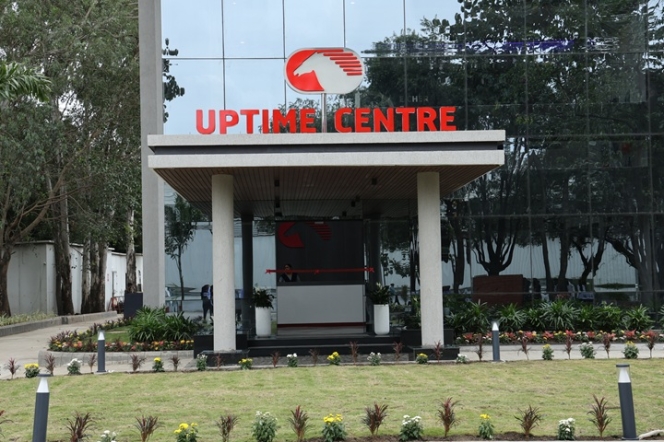
Eicher Trucks & Buses, a division of VE Commercial Vehicles, has introduced Uptime NXT Services supported by an AI-enabled (artificial intelligence) Uptime Centre. The initiative expands the company's aftermarket service ecosystem through connected vehicle data, predictive analytics and service support infrastructure to manage fleet operations.
The Uptime Centre functions as an operational hub connecting transport operators, technicians and engineering teams. Services delivered through the platform include fuel management advisory, driver performance scorecards, vehicle operation insights, remote immobiliser controls and proactive maintenance alerts.
The system integrates with the My Eicher application, which currently connects over 460,000 commercial vehicles across 200,000 fleet accounts to provide real-time vehicle tracking, trip tracking and maintenance monitoring.
B. Srinivas, MD and CEO, VE Commercial Vehicles, said, "For our customers, uptime directly impacts productivity, profitability and business continuity. At Eicher, our vision has therefore been to create an ecosystem that helps keep vehicles operating at their best - everyday. By bringing together connected technology, predictive insights, a responsive service network and strong aftermarket support, we are moving towards a more proactive approach to uptime — one that anticipates customer needs, minimises disruptions and enables customers to run their businesses with greater confidence and predictability. Our ambition is to make uptime a defining part of the Eicher ownership experience."
S S Gill, Chief Commercial Officer, VE Commercial Vehicles, said, "The new Uptime Centre brings together the people, technology and intelligence needed to manage uptime more proactively and at scale. The Uptime Control Tower gives our teams greater visibility across vehicle and service operations, while our Gen AI-powered platform bring actionable intelligence closer to our service teams and technicians. This enables faster diagnosis, better coordination and stronger First-Time-Right performance, helping us reduce disruptions and deliver a more seamless service experience for our customers."
The company first established a centralised Uptime Centre in 2019. The upgraded Uptime NXT architecture introduces an Uptime Control Tower for real-time monitoring of service operations and deploys generative artificial intelligence tools, designated as the Service One platform, to assist dealership technicians with fault diagnostics and repair procedures.
- Ashok Leyland
- Hinduja Group
- Union Bank of India
- Neelakantan
- Alok Kumar
- D S Madhusudhan
- Kapil Pandya
- K M Balaji
- Madhavi Deshmukh
Ashok Leyland Partners Union Bank Of India For Commercial Vehicle Financing
- By MT Bureau
- October 13, 2026
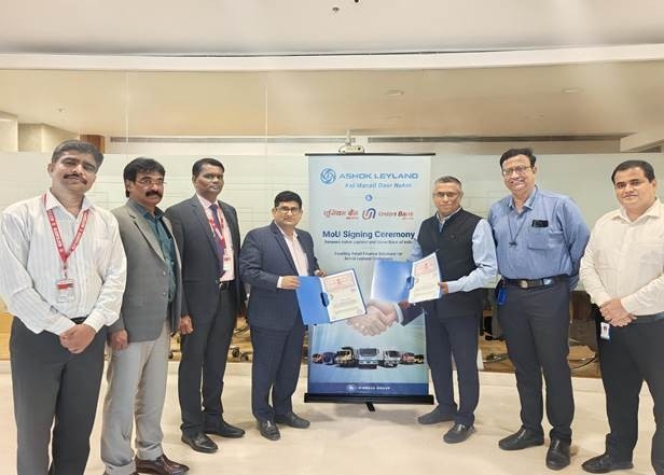
Chennai-headquartered commercial vehicle major Ashok Leyland, the flagship company of the Hinduja Group, has signed a Memorandum of Understanding with Union Bank of India to establish a vehicle financing agreement for purchasers of its commercial vehicles.
The agreement was signed by Neelakantan, Vice-President of Finance at Ashok Leyland and Alok Kumar, General Manager and Zonal Head at Union Bank of India, in the presence of D S Madhusudhan, Head of Sales Finance and Kapil Pandya, Head of Retail and Inventory Finance for Light Commercial Vehicles at Ashok Leyland.
As per the arrangement, Union Bank of India will provide end-to-end vehicle loans with structured repayment schedules across Ashok Leyland's line-up of trucks and buses.
K M Balaji, Whole-Time Director and CFO, Ashok Leyland, said, "Ashok Leyland is delighted to partner with Union Bank of India (UBI) to offer attractive and accessible financing solutions to our customers. This strategic partnership leveraging on UBI Network will further strengthen our market presence by enhancing access to our innovative range of commercial vehicles for businesses across the country. Built on advanced technology and engineered to deliver industry-leading total cost of ownership, our products are designed to drive greater efficiency, productivity and profitability for our customers."
Madhavi Deshmukh, Senior Vice-President and National Sales Head for Medium and Heavy Commercial Vehicles, Ashok Leyland, said, "At Ashok Leyland, we are committed to enabling our customers' growth through innovative products and seamless ownership experience. Our partnership with Union Bank of India (UBI) is a significant step towards making our industry-leading commercial vehicles more accessible with attractive and convenient financing solutions. Together, we aim to empower fleet operators and businesses with greater financial flexibility, while delivering superior value through our technologically advanced products and best-in-class total cost of ownership."
Alok Kumar, General Manager and Zonal Head, Union Bank of India, said, "Union Bank of India is pleased to partner with Ashok Leyland to offer seamless vehicle financing solutions. This collaboration underscores our commitment to enabling businesses with accessible and tailored financial solutions that simplify commercial vehicle ownership and facilitate sustainable growth. By enhancing access to convenient and customer-centric financing solutions, we aim to make vehicle ownership more seamless and accessible, while empowering our customers to strengthen their businesses and pursue new growth opportunities."
The partnership utilises Union Bank of India's national branch network to improve credit flow for transport operators, fleet owners and commercial enterprises acquiring vehicles ranging from light commercial models to heavy-duty trucks and passenger buses.
DRIVN And Purple Bus Expand Fleet Partnership To 276 Electric Intercity Coaches
- By MT Bureau
- October 12, 2026
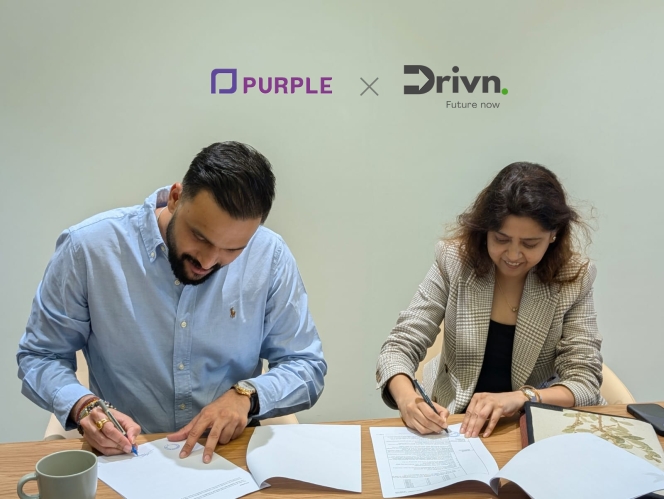
Electric commercial vehicle leasing platform DRIVN and private intercity bus operator Prasanna Purple Mobility Solutions, operating as Purple Bus, have expanded their electric fleet agreement to 276 buses.
The agreement increases the initial commitment of 100 electric buses, utilising an operating lease model and fleet management software.
The initial deployment covered intercity routes in Western and Southern India, including the Mumbai–Pune, Bengaluru–Chennai and Hyderabad–Vijayawada corridors. The expanded fleet under the Letter of Intent will cover additional routes, including Nagpur–Chandrapur, Nagpur–Amravati and Bengaluru–Tirupati.
DRIVN will supply asset financing, leasing, charging infrastructure management, real-time battery diagnostics and route performance analytics to support the deployment.
Alpna Jain, Co-Founder and Chief Business Officer, DRIVN, said, "Expanding our partnership with Purple Bus marks an important milestone for us at DRIVN. Increasing the initial agreement from 100 buses to a commitment of 276 reflects the strength of the relationship we have built with the team. Our focus is to simplify the transition to electric commercial vehicles by bringing together the financing, vehicles and tech capabilities operators need to run their fleets effectively. We look forward to continuing our work with Purple Bus as its requirements evolve."
Saurabh P Patwardhan, Director, Purple Bus, said, "Our experience with the initial deployment has reinforced a key learning: scaling electric mobility requires not only putting more electric buses on the road, but also building the right ecosystem around them. A nearly three-fold growth in the commitment from our partner reflects our confidence in that approach and our intention is to make electric mobility a larger part of our operations. DRIVN combines operational expertise with a strong technology platform, using real-time data and insights across routes, vehicles and fleet performance to support smarter deployment. We believe this combination will be critical to scaling electric intercity mobility sustainably and efficiently."
The partnership combines Purple Bus's route operations with DRIVN's leasing and data infrastructure to support the transition to electric intercity passenger transport in India.
Mahindra Commences Production Of MAXSEEDER Precision Zero-Till Seeding Machine
- By MT Bureau
- October 12, 2026
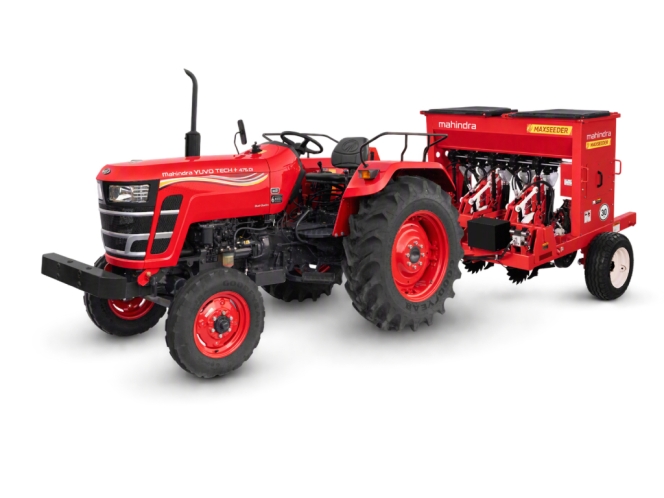
Mumbai-headquartered automotive major Mahindra & Mahindra has commenced commercial production and supply of the MAXSEEDER, a precision zero-till, multi-crop seeding machine manufactured under licence from Canadian firm Clean Seed Technologies.
Built at Mahindra's farm machinery plant in Pithampur, Madhya Pradesh, the machinery will launch initially through dealerships in Punjab and Haryana before expanding to other domestic and international agricultural markets.
The MAXSEEDER operates as a tractor-trailed unit compatible with tractors rated at 35 horsepower and above. Engineered for multi-crop seeding across wheat, rice, soybean, maize and cotton, the machine enables direct sowing into paddy residue to eliminate stubble burning.
It features five independent row units with adjustable spacing, multiple metering options and an Electronic Control Unit controlled via a smartphone application to regulate seed and fertiliser dispensing. The unit places urea approximately 1.5 inches below the seed line to improve nutrient uptake and lower input consumption.
Field trials conducted in Punjab and Haryana demonstrated the machine's ability to operate in heavy crop residue with minimal soil disturbance, reducing fuel, labour, and field preparation requirements ahead of planting cycles.
Veejay Nakra, President of the Farm Equipment Business at Mahindra & Mahindra, said, "Mahindra is proud to partner with Clean Seed to deliver sustainable, mechanisation solutions to farmers world over. The patented and innovative ‘zero-till’, multi-crop seeding machine – the MaxSeeder, combined with Mahindra’s world-class manufacturing, ensures benefits for both farmers and the environment. The collaboration also underscores Clean Seed’s confidence in Mahindra’s capabilities and our shared commitment to advancing access to modern farm machinery globally and in India, while showcasing Indian manufacturing excellence on the world stage."
Graeme Lempriere, Chairman and Chief Executive Officer of Clean Seed Capital Group, said, "Seeing our SMART Seeder MINI-MAX enter production at Mahindra is a proud milestone and a testament to years of innovation, collaboration and belief in our vision of delivering sustainable seeding and planting solutions for farmers in India and around the world. I am deeply impressed by Mahindra's scale and manufacturing capabilities and inspired by the commitment and passion the Mahindra team has brought to this project."

Comments (0)
ADD COMMENT