

Indian Automotive Records Wholesales Peak Across Segments In FY 2025-26
- By MT Bureau
- April 14, 2026
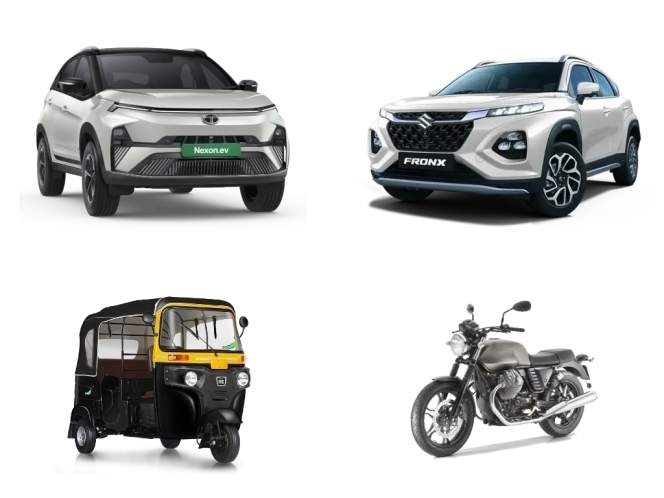
The Indian automotive industry concluded FY2025-26 with record-breaking results, with every vehicle category clocking its highest-ever annual sales, as per data released by the Society of Indian Automobile Manufacturers (SIAM).
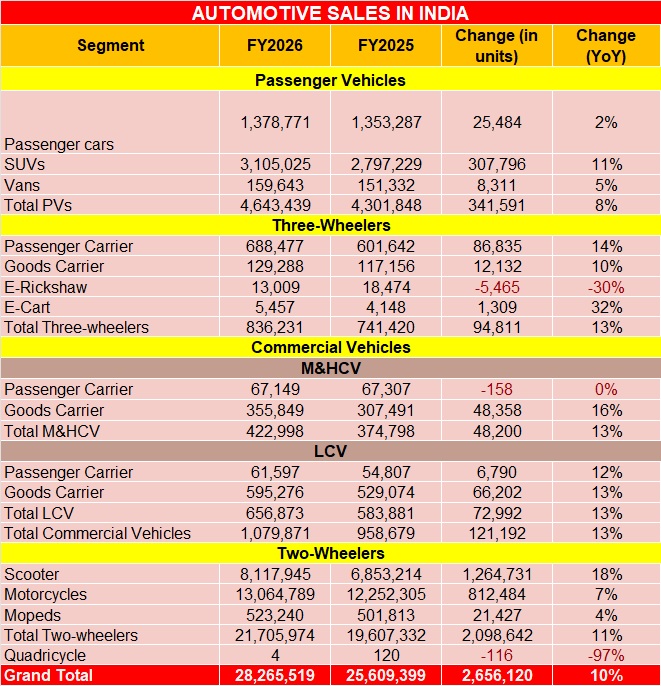
For FY2026, a total of 28 million vehicles were sold across segments in the country, clocking a 10 percent YoY growth, as compared to 26 million vehicles a year ago. The robust performance was seen in passenger vehicles, commercial vehicles, two-wheelers and three-wheelers, all achieving peak volumes, marking a definitive recovery 7 years after the previous industry high.
The passenger vehicle segment recorded sales of 4.64 million units for the full year, representing a growth of 7.9 percent. This performance was bolstered by a strong second half, which saw a 16.7 percent increase compared to the same period in the previous year. Growth was supported by GST rate reductions, personal income tax relief and lower financing costs resulting from repo rate cuts by the RBI.
Notably, electric passenger vehicle registrations rose by more than 80 percent. Exports in this segment reached 905,000 units, a 17.5 percent increase, with demand remaining steady in the Middle East, Africa and Latin America.
Commercial vehicles also reached a milestone with 1.08 million units sold, growing by 12.6 percent. The rollout of GST 2.0 reforms and increased capital expenditure provided the impetus for fleet operators to purchase new vehicles. In Q4 alone, the segment grew by 18.9 percent to 325,000 units.
Two and Three-Wheeler Momentum
The two-wheeler segment surpassed its previous peak from FY 2018-19, clocking 20.17 million units in FY2026, marking a 10.7 percent annual growth, primarily led by urban demand. Exports for two-wheelers reached a record 5.18 million units.
On the other hand, three-wheelers posted a growth of 12.8 percent with 836,000 units sold, driven by increased economic activity and the expansion of electric autorickshaws. Exports in the three-wheeler segment grew by 50.1 percent, largely due to increased volumes to Sri Lanka and African nations.
Market Outlook and Challenges
While the industry remains optimistic for FY2026-27, several global uncertainties persist. Fluctuations in crude oil and commodity prices, disruptions in shipping routes, and exchange rate volatility linked to the West Asia conflict remain primary concerns for manufacturers.
Shailesh Chandra, President, SIAM, said, “Though FY2025-26 started modestly, the Indian Auto industry has closed the year on a high note with every vehicle category viz. passenger vehicles, commercial vehicles, three-wheelers and two-wheelers, together posting their highest ever sales in a Financial Year, after seven years. The strong contributors to this growth have been the positive sentiments created through GST 2.0 reforms and multiple Repo Rate cuts during the year. Looking ahead, domestic demand and macroeconomic fundamentals remain robust as we step into FY2026-27, which should aid steady growth for the industry. However, uncertainties arising from the West Asia conflict need to be closely monitored, as it may have impacts on production, commodity prices, fuel prices, freight rates and the overall economy.”
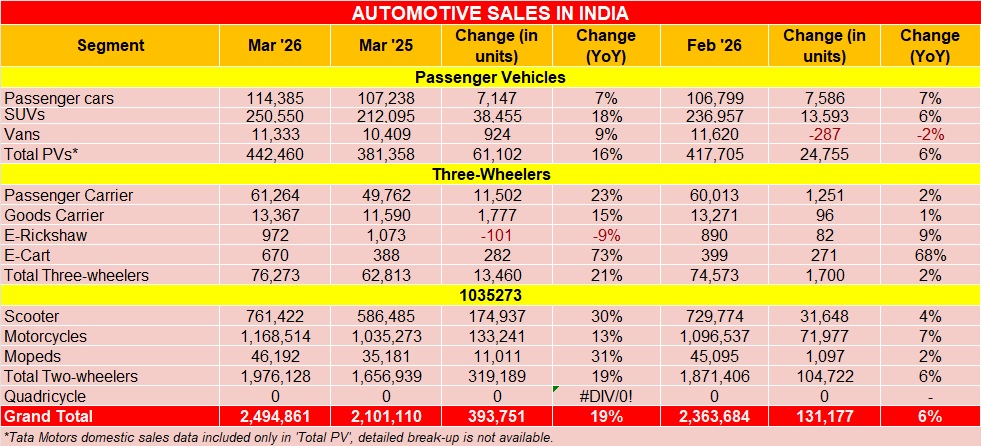
Rajesh Menon, Director General of SIAM, stated, “Each of the vehicle category, passenger vehicles, commercial vehicles, three wheelers and two wheelers posted their highest ever sales in the January to March Quarter with double digit growth compared to previous year’s quarter. In Q4 of 2025-26, passenger vehicles posted sales of 1.31 million units with a growth of 13.2 percent, commercial vehicles posted sales of 325,000 units with a growth of 18.9 percent, three-wheelers posted sales of 227,000 units with a growth of 26.7 percent and two-wheelers posted sales of 5.77 million units with a growth of 26.4 percent, compared to Q4 of 2024-25.”
Roland Berger Study Highlights EUR 20 Trillion Tech Market Potential By 2040
- By MT Bureau
- September 12, 2026
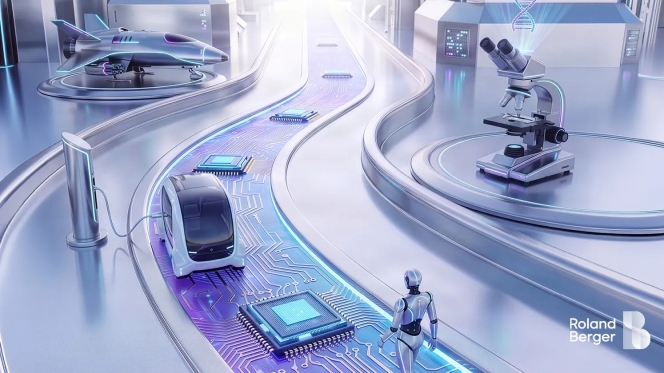
Thirty emerging technology fields will drive global economic growth over the next 15 years, with their total market value projected to expand from EUR 2.5 trillion to more than EUR 20 trillion by 2040 says a report by global consulting firm Roland Berger.
The research titled ‘The 2040 Technology Gameplan ’ finds that these sectors will account for 37 percent of global industrial value creation by 2040, up from 9 percent today.
The study identifies 14 core technology areas as critical for industrial growth, representing a market potential of EUR 16 trillion. Semiconductors, artificial intelligence (AI) systems and data centres are projected to constitute more than half of this total. Additional sectors highlighted include energy storage, quantum technologies and humanoid robotics.
Furthermore, the report points out that Europe could capture approximately 20 percent of the global market across these 14 primary technology sectors by 2040, equivalent to EUR 3 trillion in value creation. However, European industry has lost market share to the United States and China due to scaling constraints, capital limitations and institutional complexity.
To address these challenges, the analysis outlines three approaches tailored to specific technology fields: pursuing global leadership in areas such as quantum technology, medical technology, microgrids and carbon capture; leveraging domestic demand in sectors like autonomous defence, humanoid robotics and charging infrastructure; and attracting foreign technology providers to establish local operations for large language models and next-generation semiconductors.
Felix Mogge, Partner, Roland Berger, said, "Europe faces a clear mandate for action. Policymakers and industry leaders must work together to create the right conditions for investment and scaling. Otherwise, the value creation generated by the next wave of technology trends will take place elsewhere."
The study indicates that existing European regulatory frameworks, including the AI Act, the EU Battery Regulation, and the European Chips Act, have not fully achieved their targets. The findings call for EU-wide policies to support commercial scaling, capital availability, and industrial strategy across member states.
Stefan Riederle, Partner, Roland Berger, said, "Europe has the technologies and the talent to compete for global leadership in a number of fields. The challenge now is to choose the right strategy for each technology area and secure Europe’s long-term competitiveness."
- Hero Motors
- O P Munjal Holdings
- Hero Cycles
- BMW AG
- Ducati Motor Holding
- Enviolo International
- Formula Motorsport
- Hummingbird EV
- HWA AG
Hero Motors Sets Price Band At INR 79 To INR For INR 10 Billion IPO
- By MT Bureau
- September 10, 2026
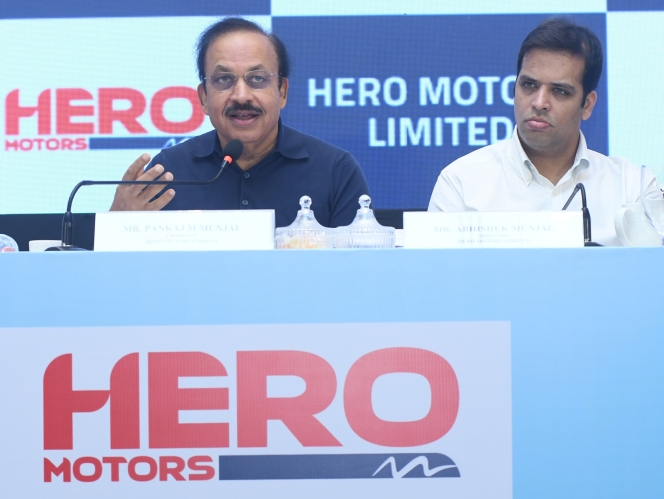
Hero Motors has fixed the price band for its initial public offering at INR 79 to INR 84 per equity share of face value INR 10 each. The offer will open for subscription on Wednesday, 16 September 2026, and close on Friday, 18 September 2026. Bidders can apply for a minimum lot of 178 equity shares and in multiples of 178 equity shares thereafter.
The company’s INR 10 billion public issue comprises a fresh issue of equity shares raising up to INR 6 billion alongside an offer-for-sale of up to INR 4 billion by promoters O P Munjal Holdings and Hero Cycles. Out of the fresh issue proceeds, the company will allocate INR 1.9 billion toward the repayment or prepayment of outstanding borrowings and INR 2 billion for capital expenditure to purchase equipment for capacity expansion at its Gautam Buddha Nagar facility in Uttar Pradesh. The remaining capital will fund inorganic growth acquisitions, strategic initiatives, and general corporate activities.
Hero Motors operates as an automotive technology company designing, developing, and manufacturing powertrain solutions for original equipment manufacturers across the United States, Europe, India and the ASEAN region. The company provides integrated system-level and component-level powertrain products, electric motors, integrated drive units, gear sets and continuously variable transmissions for electric and non-electric applications. Its client portfolio includes two-wheelers, performance cars, e-bikes, off-road vehicles, electric and hybrid automobiles, heavy-duty commercial transport, and electric vertical take-off and landing aircraft.
The company supplies global original equipment manufacturers and component firms including BMW AG, Ducati Motor Holding, Enviolo International, Formula Motorsport, Hummingbird EV and HWA AG.
The IPO is structured through the book-building process, allocating up to 50 percent of the net offer to qualified institutional buyers, a minimum of 15 percent to non-institutional bidders and a minimum of 35 percent to retail individual bidders.
Zuno General Insurance Launches Industry-First Fuel Guard Add-On For Blended Fuel Protection
- By MT Bureau
- September 10, 2026

Zuno General Insurance has launched Fuel Guard, an industry-first car insurance add-on. As per the new-age digital insurer, the product offers extra protection amid India’s growing adoption of approved blended fuels.
Fuel Guard covers specified engine and fuel-system components against accidental and unforeseen damage caused directly by manufacturer-approved blended fuel. It is available for private cars registered on or after 1 April 2023, provided the manufacturer has approved the fuel used.
Vehicles must follow the prescribed maintenance schedule and have no unauthorised engine or fuel-system modifications. The cover can be added to applicable private car package, standalone own damage and bundled policies, including three-year long-term policies. Zuno said the launch reinforces its customer-focused motor protection strategy, following offerings such as Zuno SmartDrive.
Shanai Ghosh, MD & CEO, Zuno General Insurance, said, "At its core, Fuel Guard is built around a simple idea: as the mobility ecosystem evolves, insurance protection needs to evolve with it. At Zuno, we continuously look at how changes in mobility are shaping customer expectations and ownership experiences. Fuel Guard reflects our effort to translate those insights into simple, practical solutions that make protection more relevant in everyday life."
Raptee.HV Opens Electric Mobility Centre At Rajalakshmi Engineering College
- By MT Bureau
- September 09, 2026
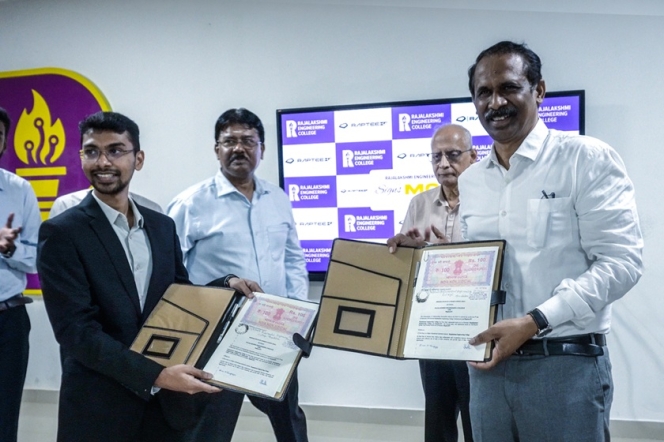
Chennai-headquartered electric vehicle company Raptee.HV has opened an electric mobility Centre of Excellence at Rajalakshmi Engineering College, establishing an industry-academia partnership focused on electric vehicle technology.
The new facility, inaugurated on World EV Day, is spread across 3,000 square feet and will operate under the Raptee.HV Academy initiative will introduce industrial exposure and prototyping tools to academic institutions.
The project represents an INR 5 million investment and accompanies a Memorandum of Understanding signed between Raptee.HV and Rajalakshmi Engineering College. The agreement covers industrial training, site visits, guest lectures, internships, academic courses and research projects.
It is designed for students across electrical, electronics and automotive engineering; the laboratory contains a Raptee.HV T30 motorcycle, core electric vehicle components, a stripped motorcycle fitted with digital twin technology and equipment for testing battery packs, electric motors, power electronics, charging systems, vehicle communications and diagnostics.
Dinesh Arjun, Co-Founder and CEO, Raptee.HV, said, "The next generation of mobility will be built by engineers who understand the machine from the cell to the software. But you cannot build that understanding from a classroom alone. You have to get your hands dirty, take systems apart, question how they work, experiment and build again. The HV Lab is our attempt to bring that experience into engineering education. If even a few students walk out of this lab wanting to build the next great EV technology, we have done our job."
Comments (0)
ADD COMMENT