

TAG Heuer Returns As Official Timekeeper Of Formula 1
- By MT Bureau
- January 08, 2025
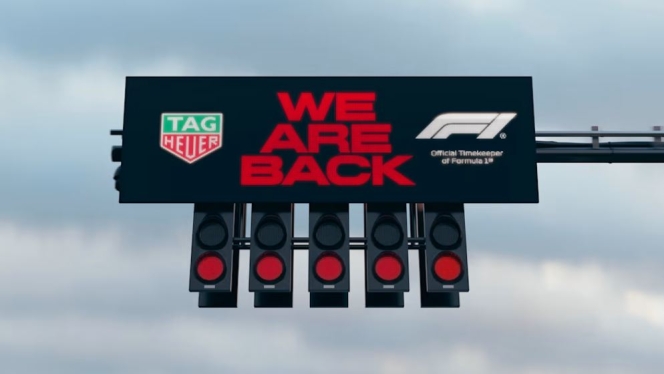
Formula 1 has announced that TAG Heuer will return to the sport as its Official Timekeeper as it signed a 10-year partnership with LVMH. Formula 1 also celebrates its 75th anniversary this year.
In its capacity as Formula 1's Official Timekeeper, TAG Heuer will be heavily visible on and off the track through trackside branding, Fan Zone and Paddock Club activations and new product lines that capture the thrill and drama of the sport. With 230 victories, 595 podiums, 8,882 points, 11 World Constructors' Championships and 14 World Drivers' Championships to its name from its affiliations with teams, TAG Heuer is among the most successful luxury brands ever to be linked to Formula 1. It was the first to have its logo appear on a Formula 1 car in 1969 and the first to sponsor a team in 1971.
When Ferrari required a timing system for their new test track, Fiorano, in Italy, in 1971, they selected Heuer, as the firm was then named, and this is how the brand's association with contemporary Formula 1 teams started. After the alliance ended in 1979, Heuer went on to have one of the longest partnerships in Formula 1 history with McLaren in 1985, where Lewis Hamilton, Mika Häkkinen and Ayrton Senna all competed for the team. After 30 years of cooperation, the partnership ended in 2016, when TAG Heuer teamed up with Red Bull.
Stefano Domenicali, President and CEO, Formula 1, said, “I am delighted to welcome TAG Heuer as the Official Timekeeper of Formula 1 as they start the next stage of their long history in our sport. With their focus on innovation, accuracy and excellence, they are a natural partner, and I am excited to see how our intertwining heritage can tell new stories for the future as we celebrate our 75th year.”
Antoine Pin, CEO, TAG Heuer, said, “In a sport defined by mental resilience, physical strength, strategy, innovation and performance, it is only natural for TAG Heuer to be at the very heart of Formula 1 as Official Timekeeper. With decades of history in F1 connecting us to the most successful drivers and teams of all time, we are honoured and privileged to be the name connected to the very thing that defines the winner: time. As Formula 1 and their exceptional team continue to build on the amazing work that has been done to create one of the greatest properties in sport, we are excited to be part of the journey and create new stories to enrich TAG Heuer.”
- Daimler Truck Holding
- Daimler Truck
- Vipin Sondhi
- Ashok Leyland
- JCB India
- KPMG
- Joe Kaeser
- John O'Leary
- Achim Puchert
- Mercedes-Benz Trucks
- BharatBenz
- Eva Scherer
- Wayne Eyre
- Claudia Nemat
- Britta Seeger
- Kurt Sievers
Daimler Truck Inducts, Wayne Eyre, Claudia Nemat, Brita Seeger And Vipin Sondhi To Its Supervisory Board
- By MT Bureau
- May 09, 2026
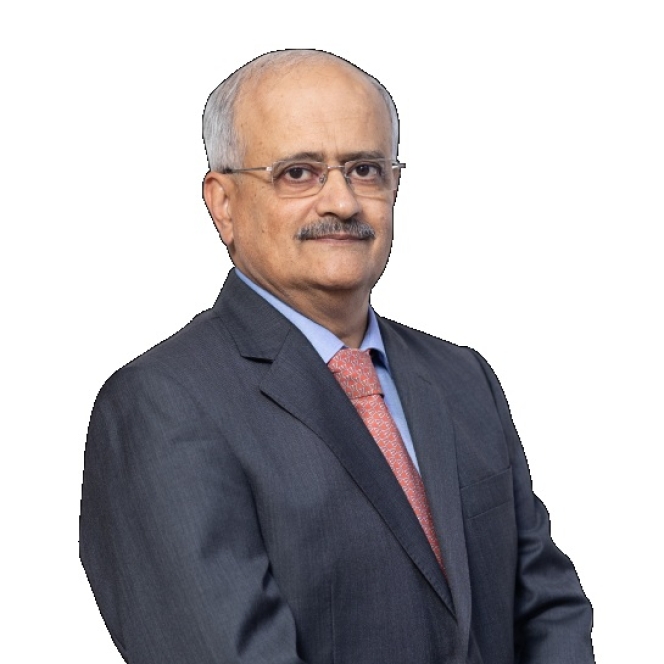
German automotive major Daimler Truck Holding has further strengthened its Leadership and Supervisory Board with new appointments.
The company announced that John O’Leary (North America), Achim Puchert (Mercedes-Benz Trucks and BharatBenz) and Eva Scherer (CFO) have been reappointed till 2028, 2031 and 2032, respectively.
Furthermore, following the departure of four shareholder representatives, the board has added Wayne Eyre, Claudia Nemat, Britta Seeger and Vipin Sondhi to bolster expertise in digital transformation and global growth markets.
Interestingly, Sondhi joins the German truck major and is expected to further strengthen and counsel the company on its global boards. Formerly, Sondhi was the top boss at Ashok Leyland and JCB India. He currently serves as the Chairperson of National Board for Quality Promotion (NBQP) and is advisor to several companies.
Additionally, Kurt Sievers was appointed to the newly established role of Lead Independent Director to reinforce oversight and investor relations.
Daimler Truck shareholders also backed the ‘Remuneration System 2027+’, which aligns executive pay with the company’s ‘Stronger 2030’ strategy. The new framework, effective from FY2027, emphasises share-based long-term compensation and ESG-related targets.
A mandatory auditor rotation was also approved. KPMG will remain the auditor for the 2026 fiscal year, with PricewaterhouseCoopers (PwC) set to take over the mandate starting in 2027.
“The reappointments of John, Achim and Eva provide the leadership team with the necessary time horizon to drive the company’s rewarding transformation with foresight and continuity,” said Joe Kaeser, Chairman of the Supervisory Board.
- Porsche AG
- Dr Michael Steiner
- Sajjad Khan
- Cayenne electric
- Porsche Digital Interaction
- Dr. Wolfgang Porsche
Porsche Restructures Executive Board And Car-IT Division
- By MT Bureau
- May 08, 2026
German luxury and high-performance vehicle manufacturing company Porsche is reducing its Executive Board divisions from 8 to 7 as part of a strategic realignment. The Car-IT division will be suspended and integrated into the Research and Development division effective 1 July 2026. Dr Michael Steiner, Member of the Executive Board for Research and Development, will lead the expanded department.
Sajjad Khan, who managed the Car-IT division for two and a half years, will step down from the Executive Board on 19 June. He will continue to work with the company through a software partnership model.
During his tenure, Khan led the development of connectivity and infotainment systems, including the introduction of the Porsche Digital Interaction design language in the Cayenne electric. These technologies are being rolled out to other models, with specific versions for the Chinese market being developed in Shanghai.
The restructuring is intended to adapt the company to current market conditions and increase the speed of software development.
Dr. Wolfgang Porsche, Chairman of the Supervisory Board of Porsche AG, said, “Porsche is in a challenging phase of transformation. We need to realign the company and are consistently adapting our structures under the leadership of Dr. Michael Leiters to the changed circumstances — including at Executive Board level. I would like to thank Sajjad Khan for taking on responsibility for the company. We will continue to benefit from his professional expertise and in-depth knowledge of our structures in the future.”
Sajjad Khan, stated, “I am proud of what we have achieved as a team over the past two and a half years. In a constantly evolving market environment, however, it is essential to continuously review and adapt structures and processes. Porsche’s outstanding engineering expertise, combined with agile, results-driven software development, provides an excellent foundation for the future development of software components.”
- 47th International Vienna Motor Symposium
- SAE
- Roadmap 3.0
- Beihang University
- Xiangyang Xu
- Mercedes-Benz EQS
- PowerCo SE
- Volkswagen
- Stefan Pischinger
- RWTH Aachen University
- Geely Auto
- Madame Ruiping Wang
- AVL
- Porsche
- Cayenne
- Horse Powertrain
- Alpine
- Philippe Krief
- Helmeut Eichlseder
- Graz University of Technology
- Niklas Klingenberg
- TRATON
- Schaeffler
- Matthias Zink
- CLEPA
- Bernhard Geringer
- Austrian Society of Automotive Engineers
- OVK
Vienna Motor Symposium Highlights Multi-Technology Approach To Decarbonisation
- By MT Bureau
- May 08, 2026
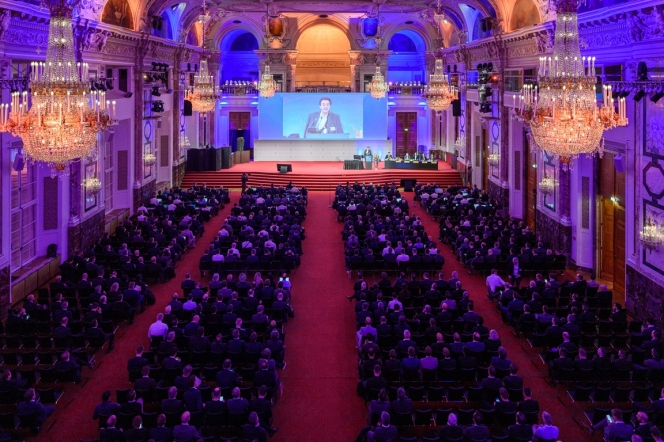
The 47th International Vienna Motor Symposium concluded at the Hofburg Palace, gathering 1,000 industry professionals and 50 exhibitors to discuss the future of propulsion. The event featured 100 presentations focused on achieving carbon neutrality through a range of technologies rather than a single solution.
A highlight of the symposium was the European premiere of China SAE’s Roadmap 3.0, a strategy charting China's automotive direction through to 2040. Professor Xiangyang Xu of Beihang University detailed the plan, which anticipates that 1/3rd of new vehicle registrations in 2040 will still feature electrified combustion engines.
Madame Ruiping Wang of Geely Auto supported this view, stating that every technological solution is required to reach neutrality goals.
In the electric vehicle segment, Mercedes-Benz demonstrated the range of the new EQS, completing a 620-kilometre journey from Stuttgart to Vienna with 21 percent battery charge remaining.
PowerCo SE, the battery subsidiary of Volkswagen, reported that serial production of its ‘standard cell’ began in Salzgitter in December 2025.
Stefan Pischinger of RWTH Aachen University projected that battery electric vehicles (BEVs) could reach a 45 percent global market share by 2035 under favourable conditions.
The symposium also highlighted advances in internal combustion engine efficiency and alternative fuels:
AVL List presented an engine achieving 48 percent thermal efficiency.
Porsche detailed a direct oil-cooling system for high-output electric motors in the Cayenne Electric Turbo.
Horse Powertrain introduced a petrol engine platform designed specifically for range-extended electric vehicles (REEVs), a segment that saw 1.2 million sales in China last year.
Alpine CEO Philippe Krief discussed the potential revival of in-wheel motors.
Hydrogen remains a focus for both direct combustion and fuel cell applications. Professor Helmut Eichlseder of Graz University of Technology emphasised the importance of hydrogen research for industrial resilience.
Industry leaders expressed concerns regarding European competitiveness. Niklas Klingenberg of TRATON noted the need for harder work to remain competitive in Europe, while Matthias Zink of Schaeffler and CLEPA spoke on the challenges of navigating EU legislative environments. The 48th International Vienna Motor Symposium is scheduled for 21–23 April 2027.
Professor Bernhard Geringer, President of the organising Austrian Society of Automotive Engineers (OVK), and host for the annual symposium, said, “The big picture – from cradle to grave in terms of energy and propulsion – is what matters most.”
Ferrari SC40 Secures Red Dot: Best Of The Best Award
- By MT Bureau
- May 08, 2026
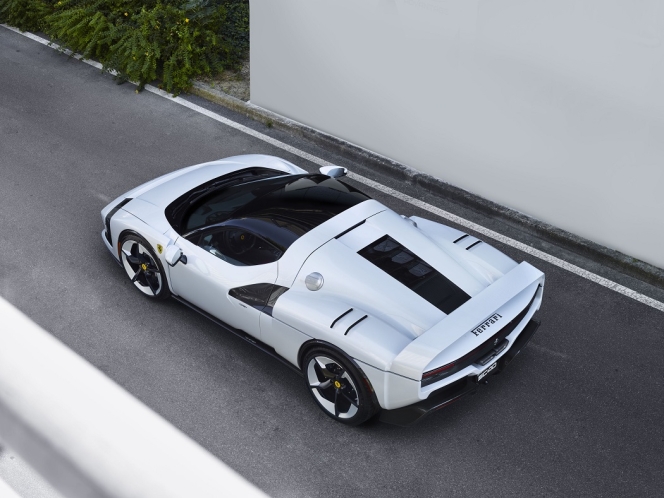
Ferrari has secured the highest distinction from Germany’s Red Dot Award organisation, as the Ferrari SC40 earned the Red Dot: Best of the Best honour within the Product Design category. Additional triumphs for the Ferrari Amalfi, 849 Testarossa, 849 Testarossa Spider, 296 Speciale and 296 Speciale A further reinforced the manufacturer’s design prowess.
Now in its 72nd year, the Red Dot Award stands as a premier industrial design competition celebrating breakthrough work. Ferrari’s cumulative tally over the past 12 years has reached 35 Red Dot wins, a feat no other automaker has matched since the prize was established in 1955. Since 2015, the jury has presented Ferrari with 13 Best of the Best awards, including for the FXX-K, 488 GTB, Ferrari J50, Portofino, Monza SP1, SF90 Stradale, Daytona SP3, Purosangue, Vision GT, Roma Spider, 12Cilindri and 12Cilindri Spider, F80 and the SC40.
This year’s Best of the Best accolade also draws attention to the exclusivity and remarkable value of the Special Projects programme, where a limited number of clients work directly with Maranello’s designers and aerodynamicists to create a personalised One-Off Ferrari.
Visitors to the Museo Ferrari in Maranello can currently view the car’s full-scale styling buck, a key artifact from the design process. The display reveals how the model’s proportions and surfaces took shape before production, emphasizing the defining volumes and graphic details that give the vehicle its identity. The buck serves as a tangible bridge between the initial design phase and the final One-Off creation.
Comments (0)
ADD COMMENT