

By T Murrali


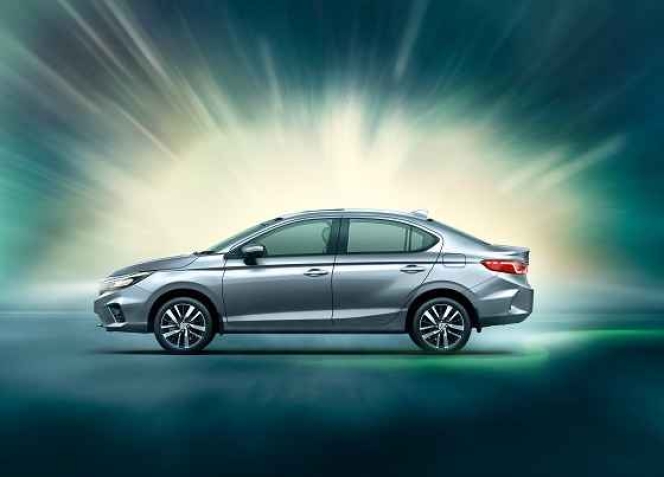
Taking much attention to the details to make the car more Indian, Honda Cars India Ltd (HCIL), has come out with its fifth generation Honda City in India. It was first introduced in India in January 1998. Now in its new avatar, the car that was launched recently, has retained its original authentic shape of the sedan while reinventing itself according to the needs and aspirations of its customers across India. Available in three grades V, VX and ZX, the price of the ASEAN NCAP 5-star rated car ranges from INR 10.9lakh to INR 14.65lakh.
Developed at Honda R&D Centre located in Tochigi, Japan following extensive market surveys in India, ASEAN countries and other markets for people’s driving needs and lifestyles, the new car has been introduced in both petrol and diesel, powered by ‘earth dreams technology’ range of BS-VI compliant powertrains.
The 1.5L i-VTEC DOHC petrol engine with VTC delivers 89 kW (121PS) @6600 rpm 145 Nm@1750 rpm torque, with quicker torque increase at lower engine speed. Mated with 6-speed manual transmission and the new 7-speed CVT (Continuously Variable Transmission) the vehicle offers fuel efficiency of 17.8 kmpl and 18.4 kmpl respectively.
Mated with 6-speed manual transmission the 1.5L i-DTEC diesel variant delivers 73 kW [100 PS] @ 3600 rpm power, 200 Nm @1750 rpm torque and fuel economy of 24.1 kmpl. Application of advanced exhaust gas after-treatment system with NSC (NOx Storage Catalyst) and DPF (Diesel Particulate Filter) has been done to meet the challenging target of particulate matter (PM) and nitrogen oxide (NOx) emission in case of diesel engines.
At the launch programme the Chief Engineer, Large Project Leader, Honda Motor Corporation, Satoru Azumi, said, failure was not an option as there was pressure of 1.3billion Indians in his mind. Honda equals City in India but the new Indian customers needed something more. “We decided that the new City should be able to stand out in traffic. Therefore, the design has to have presence. What we have created is an interior space that make the user feel more space than what is actually there. Innovation at Honda is about doing and creating things that are yet to be.”


The inspiration for the new City is ‘Standing on the edge,’ which is designed to stand out in the crowd. The character line with advanced lighting and sharp edge, presence of tyres, low centre of gravity and sleek cabin motion.
Child’s View
The process that the Honda team followed to design the car began with asking six year old children to draw their vision of a car; to their surprise all of them drew sedans. So the team started with recreating the child’s understanding of a car. For the exterior the team was guided by the concept of ‘Standing on the edge.’ The entire body is shaped with the sharp edge character line right from the front to the rear. The sharp horizontal character line on the sides of the car is inspired by Katana blade (a Japanese sword) designed on the concept of cutting edge light. The profile creates its signature presence during day and night as well.
The technique of using a lower and longer trunk for large size category sedan was applied to make the car look even longer, eventually making the City a fusion sedan. This was the ambition of the team. “I am really competing with six year old kids,” Azumi said.
Conceptualised to carry forward its legacy, deliver supremacy and exceed the previous benchmark by offering a superior value proposition to its customers, the new City has been expanded making it the longest and widest sedan in its segment. The car is 4549 mm in length (109mm more than earlier generation) and 1748 mm in width (53 mm more). The height of the new model stands at 1489 mm and wheelbase of 2600 mm.
For the interiors the design team followed Sokai (evacuation in Japanese parlance) concept that makes the surroundings easy to see while driving. It creates a cabin more open while being secure. The focus was to minimise visual noise so that there is no distraction for the driver. The front-hood invisible length has been reduced by 42 percent, improving visibility further.
For The Saree Clad Women
The graceful way of sitting by a saree clad woman is usually cross-legged. As the folds of the saree around the feet should not get crumbled, the design team created more legroom in the rear. In addition, it adopted a scooped out frame for the front seats to create additional space. This helped in increasing the foot space width by 26mm and 31mm in the forward direction. By adopting a new frame for the front seat, the rear seat legroom and knee clearance were expanded. Besides, it optimised the torso angle. Considering the hot and humid weather conditions in India the seats have been given breathable fabric.
Connected Services
To make it contemporary it takes a huge leap in Connected Car Services with Next Generation of Honda Connect available as a standard offering across all grades along with a 5-year free subscription. It is India’s first connected car with Alexa remote capability and is equipped with next-generation Honda connect with Telematics Control Unit (TCU) standard across all grades. It has over 32 features to provide a sense of safety, security, convenience and peace of mind for customers. By giving voice commands to Alexa, the cloud-based voice service from Amazon, customers can use 10 key features of Honda Connect to monitor and control their car from home. Hence, they can remotely access features such as car AC on/ off, door lock/ unlock, check fuel status, locate the car, and status from the car dashboard, for unparalleled comfort and convenience.
The new City comes with full LED headlamps with 9-LED array inline shell, integrated LED DRL, L-shaped LED turn signal and distinct Z- shape 3D wrap-around LED tail lamps with uniform edge light. It also has a one-touch electric sunroof, R-16 diamond-cut alloy wheels and shark fin antenna. In addition to the stylish exterior, its interiors are based on ‘Man Maximum Machine Minimum’ philosophy as it has enhanced knee room and legroom, rear-seat shoulder room, an ergonomically designed cockpit, multiple storage spaces and 506 litres of truck capacity.
 - Copy.jpg)
Safety
To enhance safety the new car has been designed with Advanced Compatibility Engineering (ACE) body for self-protection while mitigating damage to other vehicles in the event of a collision. It offers a host of active and passive advanced safety features like six airbags system, ABS with EBD and brake assist, vehicle stability assist with agile handling assist, hill start assist, Honda lane watch camera, multi-angle rear camera, emergency stop signal, tyre pressure monitoring system, ISOFIX compatible rear side seats with lower anchorages & top tether, and immobilizer with anti-theft alarm.
For the convenience of the users the car is equipped with an advanced smart key system with the walk-away auto-lock feature, remote engine start (in CVT) and keyless window remote operation, fully automatic climate control with max cool, click feel AC dials with red-blue elimination, rear AC vents with charging ports, driver seat height adjuster, LED map and rear reading lamps.
The ergonomically designed and thoughtfully laid instrument panel sports the 20.3 cm advanced touchscreen display audio which connects with Apple Car Play and Android Auto opening new ways of staying social and digital on the drive. The other features include 17.7cm HD full-color TFT meter with multi-function driver information interface with G-meter, digital speed and cruise control display, weblink smart connectivity, eight-speakers premium surround sound system, ambient lighting and LED interior lamps, steering-mounted paddle shifters for CVT.
Gaku Nakanishi, President & CEO, Honda Cars India, said, “Honda City has been our key pillar of business for more than 22 years, being one of the longest-running nameplates in the Indian automotive history. With cumulative sales of more than four million units worldwide, it has provided joy to almost eight lakh customers in India and many more aspiring to own the model. Each generation of the City has raised the bar on design, technology, quality, driving pleasure, comfort & safety, and has come with several industry firsts or segment-first features.”
Rajesh Goel, Sr Vice President & Director, Marketing & Sales, Honda Cars India, said, “City customers have always been very discerning and want a car that is a class above the rest. Hence multiple ‘industry-first’ and ‘best in segment features’ for Styling, Connectivity, Safety and Convenience have been offered as standard from the entry V variant of the All-New City, setting a new benchmark for the segment.”
The new City is available five colour options - radiant red metallic, platinum white pearl, modern steel metallic, lunar silver metallic and golden brown metallic. It comes with three years of unlimited kilometres warranty as a standard benefit to the customer. Additionally, customers can opt for an extended warranty for an additional two years unlimited/limited kilometres for extra peace of mind. The car offers a low cost of maintenance with a service interval of one year/ 10,000km whichever is earlier.
The fifth-generation car also offers a wide array of accessory choices to customers with wireless charger (with smartphone holder), front parking sensor with switch, legroom lamp, trunk spoiler with LED, front & rear bumper protector, Side airbag compatible seat cover, Door visor with chrome among many others. (MT)
Jeep Launches Compass 85th Anniversary Edition In India At INR 2.67 Million
- By MT Bureau
- August 17, 2026
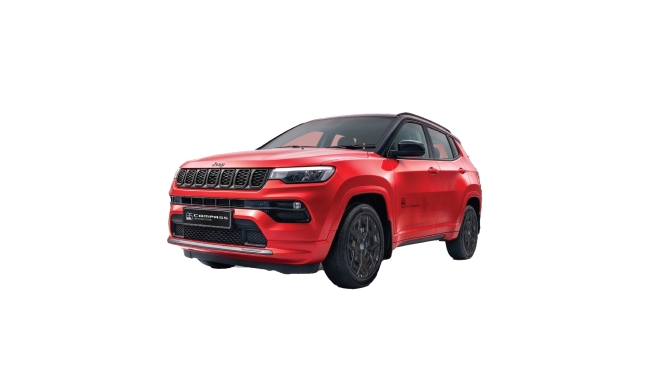
Stellantis-owned Jeep India has launched the Jeep Compass 85th Anniversary Edition, limited to 85 units at prices starting at INR 2.67 million (ex-showroom).
The anniversary edition incorporates visual updates to the exterior and interior of the vehicle platform. External changes include 18-inch alloy wheels finished in gloss black alongside anniversary badging. The interior cabin features a black colour scheme paired with gold accents and contrast trim detailing.
Kumar Priyesh, Business Head and Director of Automotive Brands, Stellantis India, said, "The Jeep Compass has always been central to the Jeep story in India, bringing the brand's legendary capability, design and authenticity to customers who expect more from their SUV. As Jeep celebrates 85 years globally, the Compass 85th Anniversary Edition gives this iconic nameplate a distinctive new expression. With exclusive anniversary-inspired styling, curated accessories and safety technologies, this special edition has been crafted for customers who seek a Compass that feels even more personal, intelligent and exclusive."
The vehicle is offered with optional accessory packages under the brand's personalisation options. These packages add functional and cabin features, including sunroof illumination, ambient lighting, a digital inner rear-view mirror and integrated front and rear dashcams. Bookings for the limited-run vehicle have opened across the company's dealership network and online sales platform.
Mercedes-Benz Opens New Dealership In Lucknow With T&T Motors
- By MT Bureau
- August 17, 2026
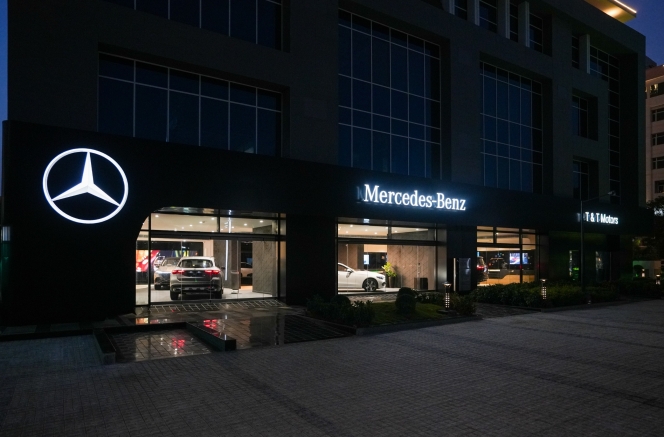
German luxury car brand Mercedes-Benz India has opened its new sales facility in Lucknow in partnership with dealership operator T&T Motors. The outlet expands the company's network in Uttar Pradesh to 10 touchpoints across cities including Lucknow, Noida, Ghaziabad, Agra, Kanpur and Varanasi, contributing to a national presence of over 150 locations across more than 60 cities.
The new facility occupies 9,000 square feet, including over 5,000 square feet of carpet area and was completed in five months. The showroom accommodates four vehicle display bays, private and semi-private consultation zones, a lounge section for vehicle lines and a dedicated delivery bay. To support battery electric vehicles, the location incorporates a 180 kW DC fast charger with two charging bays, backed by a staff of 88 employees.
Brendon Sissing, Vice-President of Sales and Marketing, Mercedes-Benz India, said, “Mercedes-Benz continues to strengthen its luxury retail footprint across India, reflecting our ‘Go to Customer’ strategy. The inauguration of T&T Motors’ new facility in Lucknow marks yet another important milestone in bringing world-class luxury products, services and experiences closer to our customers. Uttar Pradesh remains an important emerging market for Mercedes-Benz, and the growing aspiration for luxury mobility in Lucknow presents strong growth potential for Mercedes-Benz. Through modern luxury infrastructure, personalised consultations, digital capabilities and EV readiness, we are elevating luxury retail experience for our discerning customers in the city.”
- Mahindra & Mahindra
- Scorpio
- Mahindra Lifestyler
- Mahindra Scorpio Lifestyler
- Mahindra India Design Studio
- MIDS
- Mahindra Research Valley
- MRV
- Dr Veluswamy R
- Pratap Bose
- Nalinikanth Gollagunta
Mahindra Scorpio Lifestyler Global Pickup Breaks Cover, India Launch By April 2027
- By MT Bureau
- August 14, 2026
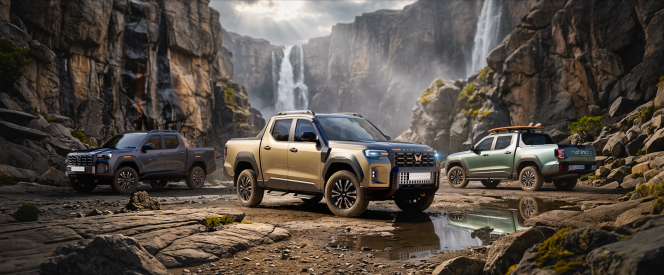
Mumbai-headquartered automotive major Mahindra & Mahindra has unveiled its first global pick up christened Lifestyler, which will be launched in India as the Mahindra Scorpio Lifestyler. The vehicle will go on sale by April 2027 with prices starting below INR 1.97 million ex-showroom.
First shown as a concept in Cape Town, South Africa, in August 2023, the pickup was designed at the Mahindra India Design Studio in Mumbai and developed at Mahindra Research Valley in Chennai. It is built on Mahindra’s next-generation body-on-frame architecture and is intended for both payload and lifestyle use. The company claims to have around 267 patents in terms of innovation for the Lifestyler.
Dr Velusamy R, President, Automotive Business, Mahindra & Mahindra, said, “From the outset, our vision was to create a world-class global pickup that raises the bar for the segment while remaining true to Mahindra's strengths in authentic capability and value. The Scorpio Lifestyler is a testament to the strong product development capabilities at Mahindra Research Valley (MRV). Built on our advanced next-generation body-on-frame architecture, it has been engineered to deliver the capability, durability, safety and refinement demanded by customers around the world.”
Pratap Bose, Chief Design and Creative Officer, Mahindra & Mahindra, said, “The Scorpio Lifestyler is inspired by how our customers work, play and explore. Combining bold exterior design, plush interiors and SUV-like comfort with unmistakable Mahindra toughness, it brings style and refinement to every journey. This philosophy is reflected in the three editions showcased today: Valley celebrates purposeful refinement, Reef embodies freedom and exploration, and Trail captures the spirit of boundless adventure. Together, they express our vision of a pickup that celebrates individuality while remaining rooted in capability, authenticity and the freedom to explore without limits.”
Nalinikanth Gollagunta, CEO, Automotive Division, Mahindra & Mahindra, said, “The Scorpio Lifestyler represents the convergence of global engineering and evolving customer aspirations. As we prepare for its India launch, we see a growing appetite among customers for a vehicle that delivers authentic capability without compromising on technology, safety, comfort or everyday usability. We are investing in building awareness, strengthening our network and creating the right ownership experience for this category. We believe the Scorpio Lifestyler has the potential to redefine expectations and shape the future of the pickup segment in India.”
While the technical details are still under the wraps, the company showcased three editions - the Valley Edition finished in Artemis Grey, the Reef Edition uses an Aquareef finish and the Trail Edition finished in Sahara Beige.
The Mahindra Lifestyler is aimed at the midsize lifestyle pickup segment in Australia and New Zealand, South Africa, Africa, the Middle East and Latin America. It has been developed to meet requirements for capability, durability, safety, technology and everyday use across those markets.
- Tata Motors
- Tata Motors Passenger Vehicles
- Shailesh Chandra
- electric vehicles
- Sierra
- Richard Molyneux
Tata Motors Passenger Vehicles Targets 40% EV Market Share In FY2027
- By Nilesh Wadhwa
- August 13, 2026
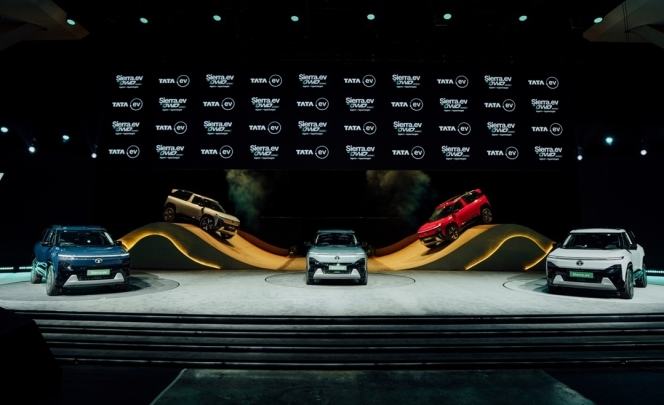
Tata Motors Passenger Vehicles, one of the leading automakers in the country, is charting a confident course for FY2027. The company is sees its multi-powertrain leadership, capacity flexibility and industry-outperformance ambitions to drive a strong H2 for fiscal 2027.
Shailesh Chandra, Managing Director and CEO, of Tata Motors Passenger Vehicles, struck a distinctly forward-looking tone in the company’s Q1 FY27 virtual conference, outlining a strategy built on sustained demand for alternative-energy vehicles, flexible manufacturing, product intensity and disciplined capital allocation even as the broader industry navigates inflationary and commodity headwinds.
He characterised the remainder of FY2027 as a period of continued outperformance relative to the passenger-vehicle industry. Tata Motors at 14.1 percent had already delivered growth roughly twice the industry average of 7.9 percent in FY2026 and a robust 45 percent in Q1 FY2027 as against the industry average of 25.9 percent.
The management expects this momentum to persist. Industry volumes are projected in the mid-double-digit range of 15-20 percent for the remainder of the year in some scenarios.
Tata Motors, on the other hand, is targeting sustained growth even if overall industry expansion moderates to single digits in the second half because of a high base effect from strong H2 FY2026 demand.
Inventory levels are meaningfully lower than a year earlier, creating scope for healthier retail offtake. Q2 is expected to be more challenging for the industry as a whole due to cost pressures, with the second half potentially tighter still for conventional passenger vehicles.
Chandra, however, intends to defend and expand market share through timely product refreshes, facelifts and new nameplates across both ICE and electric portfolios, while prioritising supply-side capacity increases. Waiting periods across the Tata Motors range currently stand at 4-6 weeks, reflecting healthy demand.
Hatchbacks continue to contribute around 15-20 percent of the mix, while SUVs remain the structural growth engine. Export plans include opening a significant new market next year, with a dual focus on ICE and EV products; recent export growth has been driven primarily by South Africa.
Alternative Energy Mix
The shift toward alternative powertrains is central to Chandra’s vision. Industry EV penetration has reached approximately 8 percent – the highest among passenger-vehicle markets – and is expected to climb toward 10 percent by end-FY2027.
Tata Motors’ own EV share of its portfolio has risen from around 38 percent and is targeted at upwards of 40 percent (for the remainder of the year), supported by strong customer acceptance. EV demand has jumped sharply (management noted a 3-4 times increase relative to February levels for the company), but supply remains the binding constraint rather than underlying demand. Chandra revealed that the strong demand for EVs versus supply-side constraints has led to waiting periods for EVs of around 4-6 weeks.
CNG demand is robust: industry CNG share stands near 22 percent, while Tata Motors’ mix is higher at around 27 percent. The outlook remains positive as the CNG station network expands from roughly 8,500 to 15,000-16,000 stations in the coming year. CAFÉ norms (particularly CAFÉ 3 and CAFÉ 4) will further accelerate the push toward alternative-energy vehicles; for OEMs with credible EV offerings, electrification is the most powerful compliance lever.
Sharing his perspective on hybrid technology, Chandra stated that its share in the overall PV segment has stabilised at a modest 2-2.5 percent share. Tata Motors remains ready to introduce hybrids if market conditions warrant, but current emphasis is clearly on CNG and pure electric.
In Q1 the combined CNG-plus-electric mix rose from 19-21 percent to 24 percent. Management is optimistic that EV volumes for the company could grow 70 percent in FY2027, even allowing for some high-base effects in the second half, with overall company growth of 10-15 percent still feasible.
Capacity, Cost Pressures and Capital Plans
For Tata Motors internal EV capacity is not a bottleneck since production systems are fungible and flexible; capacity has already been stepped up from 9,000 to 13,000-14,000 units and reached more than 15,000 units last month, with further increases planned.
Responding to lower-than-anticipated sales for the popular Sierra SUV, the company attributed the temporary production impact to constraints from casting and sheet-metal suppliers plus a five-day production loss at the Sanand plant due to heavy rains, but corrective actions are under way.
Profitability in the recent period was pressured primarily by commodity-price inflation (approximately 4-4.5 percent impact) plus roughly 1 percent from other factors. Cost-reduction initiatives have partially offset these headwinds; in a normalised quarter, margins would have expanded more significantly. Certain PLI benefits were deferred because of new-product launches but will be reapplied in due course.
However, it is important to note that Chandra has emphasised that CAPEX plans remain unchanged at around 6-8 percent of revenue, which will continue to be directed toward new products, technologies and capacity expansion. Management sees no need to revise the programme despite margin pressure.
On the E20 contamination issue raised in the market, Tata Motors has not experienced customer reports and was not among the OEMs that submitted data on the matter.
Jaguar Land Rover Perspective
Richard Molyneux, CFO of JLR, noted that the luxury brand is a truly global business with only a small percentage of sales in India. China remains challenging, production of legacy products (including Jaguar) has been wound down, and a fire plus broader global slowdown affected Range Rover output. Q1 is seasonally soft for JLR, but the team is optimistic about sequential improvement. India is viewed as a significant growth market going forward, supported by existing domestic assembly and imports, with plans to expand the brand’s presence rapidly.
Chandra’s message is one of controlled confidence. Tata Motors Passenger Vehicles enters the balance of FY2027 with lower inventories, a flexible multi-powertrain portfolio that is already capturing rising CNG and EV demand, fungible capacity that can scale with the market, and an intact investment programme focused on product and technology. While the industry faces near-term cost and base-effect challenges, the company’s leadership in alternative energy, combined with ongoing product intensity and supply-side focus, positions it to continue outgrowing the market and to deepen its role in India’s evolving mobility landscape.
Comments (0)
ADD COMMENT