

- Toyota Motor Corporation
- Toyota Kirloskar Motor
- Masakazu Yoshimura
- G. Shankara
- Ramesh Rao
- Kiran HJ
- M B Patil
- D K Shivakumar
Karnataka Chief Minister And Industry Minister Visit Toyota Motor Corporation In Japan
- By MT Bureau
- November 23, 2026
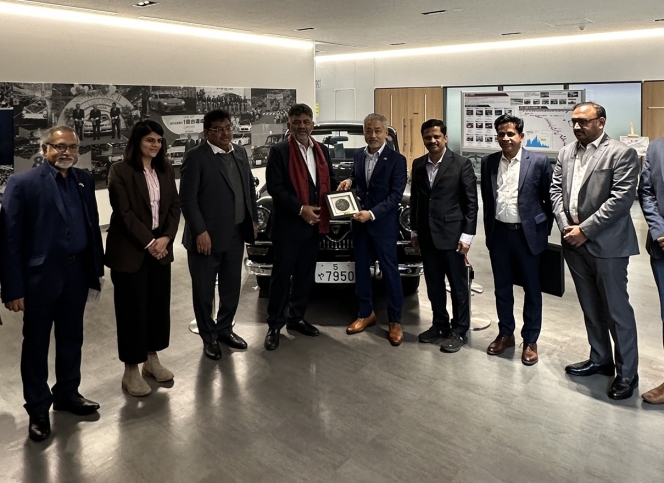
Karnataka Chief Minister D K Shivakumar and Industry Minister M B Patil, accompanied by officials from the Government of Karnataka, visited Toyota Motor Corporation in Japan to strengthen collaboration between the state and the automaker.
During the visit, the delegation observed manufacturing operations and technologies and interacted with production associates and engineers from India undergoing training in Japan.
The Chief Minister held discussions with Toyota leadership, including Masakazu Yoshimura, Regional Chief Executive Officer, G. Shankara, Chief Strategy Officer, Ramesh Rao, Vice-President and Kiran HJ, General Manager for External Affairs, Toyota Kirloskar Motor.
The delegation reviewed Toyota's investments, employment generation, skill development, technology transfer and manufacturing ecosystem in Karnataka, while reaffirming the state government's commitment to supporting investment, growth, employment and people development.
Masakazu Yoshimura, Regional Chief Executive Officer, Toyota Motor Corporation, said, “We sincerely appreciate the continued support and collaboration extended by the Government of Karnataka over the years. Karnataka has played a vital role in Toyota’s growth journey in India and we value the strong partnership built on shared aspirations for industrial development, innovation and economic progress. We remain committed to working closely with the Govt of Karnataka to create long-term value and contribute to its continued growth."
G. Shankara, Chief Strategy Officer, Toyota Kirloskar Motor, said, “Toyota's journey in Karnataka goes beyond manufacturing. We are dedicated to nurturing talent, creating meaningful opportunities and supporting community development through various initiatives. With the continued support of the Government of Karnataka, we look forward to deepening our engagement and contributing to Karnataka’s sustainable development.”
JSW Motors Inks MoU With ARAI To Engineer And Validate Vehicles For India
- By MT Bureau
- November 23, 2026
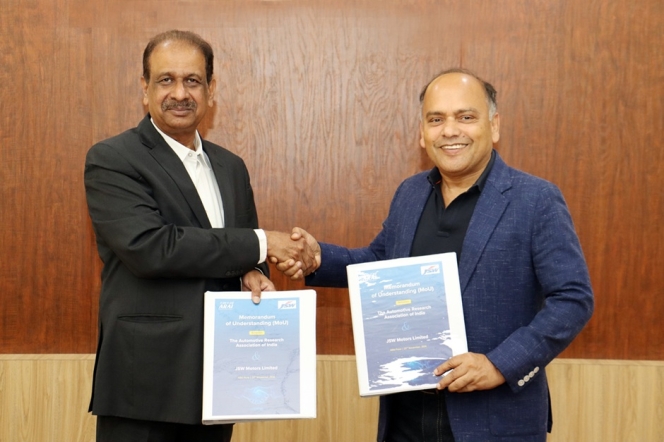
Mumbai-headquartered JSW Motors, the passenger vehicle arm of the JSW Group, has signed a Memorandum of Understanding (MoU) with the Automotive Research Association of India (ARAI) to design, validate and localise new energy vehicles for India.
The MoU was signed at ARAI headquarters in Kothrud, Pune, by JSW Motors Chief Executive Officer Ranjan Nayak and ARAI Director Dr. Reji Mathai. The agreement precedes the brand launch of JSW Motors and its SUV on 3 December 2026, which will be manufactured at its facility at AURIC in Chhatrapati Sambhajinagar, Maharashtra.
Under the agreement, the two organisations will collaborate across vehicle engineering, testing, validation and performance assessment, alongside driver assistance systems development, safety, cybersecurity and engineering compliance. The partnership also covers battery systems engineering and validation, homologation and certification, mobility technology development, engineering skill development and research and knowledge exchange.
Ranjan Nayak said, “At JSW Motors, our ambition is not just to manufacture vehicles, but to build a world-class Indian automobile company with strong indigenous engineering capabilities. Our partnership with ARAI is an important step in this journey, bringing together global technologies and Indian expertise in testing, validation, safety and innovation. Together, we aim to accelerate the development of next-generation mobility solutions designed for Indian conditions and competitive with the best in the world.”
Dr. Reji Mathai added, "ARAI's strength lies in its end-to-end automotive engineering, testing, validation and certification capabilities developed over decades of supporting India's mobility sector. Through this collaboration, ARAI brings its extensive capabilities in automotive R&D, testing, validation and certification, spanning emerging technologies such as ADAS and battery systems, as well as critical safety, quality and regulatory domains including functional safety, cybersecurity and homologation, to enable the development of next-generation new energy vehicles. We are pleased to partner with JSW Motors in creating globally competitive new energy vehicles while advancing innovation, safety and sustainable mobility in India."
Honda Unveils Avancier SUV With Next-Generation Hybrid System
- By MT Bureau
- November 23, 2026

Honda Motor Co., has unveiled the Avancier, a three-row sport utility vehicle (SUV) that becomes the first hybrid model to carry the updated H mark, a modular platform and the Honda Hybrid system.
The Avancier is scheduled for rollout across Asian markets, including Thailand, Japan and China. This marks Honda's plan to introduce 15 hybrid models worldwide by the end of the fiscal year ending 31 March 2030.
The new SUV gets multi-function lights, a grille, flush outer door handles and a tailgate spoiler with a concealed rear wiper. Inside, the three-row cabin features an instrument panel consolidated into a centre information display, a column shifter, armrests for second-row seats, a roof extending to the third row and lighting.
Cabin systems include heated and ventilated second-row seats, a 12-speaker BOSE sound system compatible with Dolby Atmos, voice recognition, over-the-air software updates and smartphone-based Remote In-Cabin View and Remote Surround View under the MyCabin programme.
Built on a modular platform designed for parts commonality across the engine room and rear underbody while tailoring areas such as the rear cabin, the Avancier pairs the Honda Hybrid two-motor system with the Motion Management System, Honda S+ Shift, and DualPower eAWD, which drives the front and rear wheels independently via separate motors under the MyMotion programme.
Hyundai Verna Scores 5-Star In Bharat NCAP Rating
- By MT Bureau
- November 20, 2026

Hyundai Motor India, one of the leading passenger vehicle manufacturers, has announced that the Hyundai Verna has received a 5-star safety rating under the Bharat New Car Assessment Programme (BNCAP) across adult and child occupant protection assessments.
The sedan, introduced in March 2026, becomes the first vehicle in its segment to earn the rating under the programme.
The Verna comes with more than 75 safety features and 35 standard features. Equipment comprises Hyundai SmartSense Level 2 advanced driver assistance systems with 20 functions, seven airbags covering driver, passenger, side, curtain and centre side positions, a dashcam, rain sensing wipers, electronic stability control with vehicle stability management, hill start assist control, anti-lock braking system with electronic brakeforce distribution, all-wheel disc brakes, electronic parking brake with auto hold, blind spot view monitor, surround view monitor, tyre pressure monitoring system, ISOFIX child seat anchors, rear parking sensors and three-point seatbelts with reminders across all seats.
Tarun Garg, MD and CEO, Hyundai Motor India, said, “At Hyundai Motor India, safety remains at the core of our product philosophy. The 5-Star Bharat NCAP rating achieved by the new Hyundai Verna is a testament to our commitment to providing the highest standards of occupant protection and advanced safety technologies to Indian customers. The new Verna delivers an exceptional combination of style, technology, performance and safety. This recognition further strengthens customer confidence in Hyundai's engineering excellence and our vision of making safer mobility accessible to all.”
- WTiCabs
- Ashok Vashist
- Navi Mumbai International Airport
- Noida International Airport
- Open Network for Digital Commerce
- ONDC
WTiCabs Eyes India's Growing Airport Mobility Market
- By Sharad Matade
- November 20, 2026
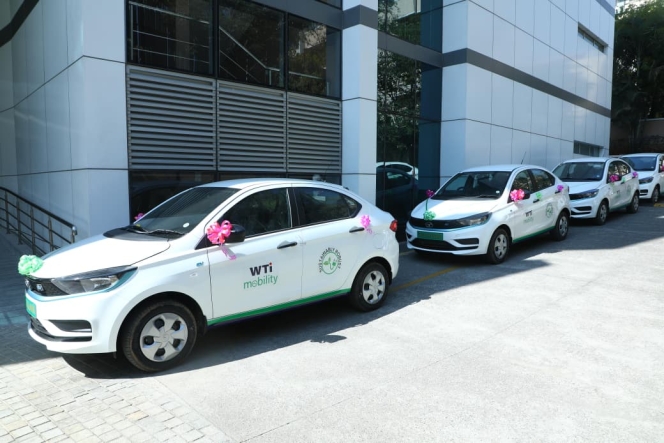
Over the past decade, India's aviation industry has invested a lot in expanding capacity. New terminals, more runways, and new airports are changing how people travel. More passengers are flying, airlines are adding routes, and air travel is reaching more cities. Still, for many, the trip becomes less predictable after leaving the airport.
Finding a reliable cab, dealing with fluctuating fares and negotiating congested pickup areas can take much of the convenience out of flying. This problem becomes more pronounced during peak hours, late-night arrivals, and long-distance airport transfers.
For Ashok Vashist, Founder and CEO of WTiCabs, this disconnect between air travel and ground transportation represents an opportunity to build a more organised mobility business. "Airport mobility in India has improved significantly on the airside. Terminals are larger, faster and better designed. The weak link remains the last 30 to 60 kilometres," says Vashist.
 He argues that the real problem isn't just not having enough vehicles. It's about poor coordination between transport providers, uneven service standards, and no predictable experience for passengers. "The airport journey does not end at the terminal exit. It ends at the passenger's door, and that is where the industry still has the most work to do," he says.
To address this gap, mobility companies need to go beyond the usual taxi-booking model. They should focus on advance reservations, better fleet management, and being accountable for their operations.
Why passengers are moving towards pre-booked transfers
As India's airports are built farther from city centres, ground transportation is becoming a more important part of travel.
Airports like Navi Mumbai International Airport and Noida International Airport will serve big urban areas, but because they are far from city centres, reliable connections matter even more. For people travelling longer distances, not knowing if they’ll find a ride after landing can be a real hassle.
WTiCabs has noticed that customer behaviour is changing, especially among corporate travellers and those booking early-morning, late-night, or outstation trips.
"The shift is clearly visible. Rising traffic brings more first-time and Tier 2 flyers, and more business travellers flying more often. Both groups want the same thing on the ground: certainty about whether the car will be there, what it will cost and who is driving," says Vashist.
The difference between on-demand and pre-booked rides matters more as airport trips get longer and more time-sensitive. "On longer, higher-value trips, passengers are far less willing to gamble on whether a ride will be available," he says.
WTiCabs offers a simple approach: customers book ahead, get confirmation of their car and driver, and know the fare before they travel. This is different from services that match passengers with drivers only when they book.
However, it's easier to promise reliability in airport transport than to actually deliver it. Traffic in Delhi NCR, Mumbai, and Bengaluru can change quickly. Flight delays, early arrivals, changes in pickup spots, and limits on waiting time at airport curbs make things even more complicated.
Vashist puts the consequences into perspective. "A 15-minute delay on a city ride is an inconvenience. On an airport drop, it can mean a missed flight."
WTiCabs responds by using travel time estimates, sending vehicles before scheduled pickups, tracking incoming flights, and keeping backup cars and drivers in busy areas. The goal is to be flexible enough to handle problems before they affect passengers.
Making reliability commercially viable
In airport mobility, service failures can be very costly. If a car is late, a passenger might miss a flight. Last-minute cancellations can also hurt relationships with corporate clients.
Vashist believes the business must therefore be organised around confirmed commitments rather than vehicle availability at a particular moment. "The WTicabs model is built on one principle: the airport trip is a commitment, not a request. Every booking is confirmed with a car and driver in advance, not at the last minute," he says.
The company’s model includes assigning drivers in advance, confirming fares, linking pickups to flight times, and having a 24/7 team to monitor trips. Customers get their car and driver details before the trip, and backup options are ready in case of breakdowns or delays.
The approach draws on WTi's experience in employee transportation, a segment in which punctuality and service-level commitments are central to daily operations. Since 2019, the company has served more than 500 corporate customers across employee transportation, corporate car rentals, airport transfers and outstation travel, according to Vashist.
This experience matters because corporate mobility is about more than just arranging a car. Companies want verified drivers, clear billing, safety measures for employees, and reliable service in every location.
WTiCabs provides fixed fares, GST-compliant invoices, monthly billing, live tracking, SOS features, and dedicated account managers. Companies can also choose electric vehicles if they want to lower their business travel carbon footprint.
The economics behind the fleet
For fleet operators, using vehicles efficiently is just as important as getting bookings. If a car drops someone at the airport and returns empty, it racks up unproductive kilometres and hurts profits.
That’s why WTiCabs combines airport transfers with corporate trips, outstation journeys, and retail demand, instead of running separate fleets for each. Technology helps make this possible. Customers can book through the app, website, or WhatsApp, and corporate clients have a special portal that follows their travel policies. "Technology is what allows WTicabs to keep its promise at scale," says Vashist.
With real-time tracking, passengers and corporate travel teams can see where vehicles are, who the driver is, and when the car will arrive. A central command centre also watches live airport trips and gets alerts if a car is running late.
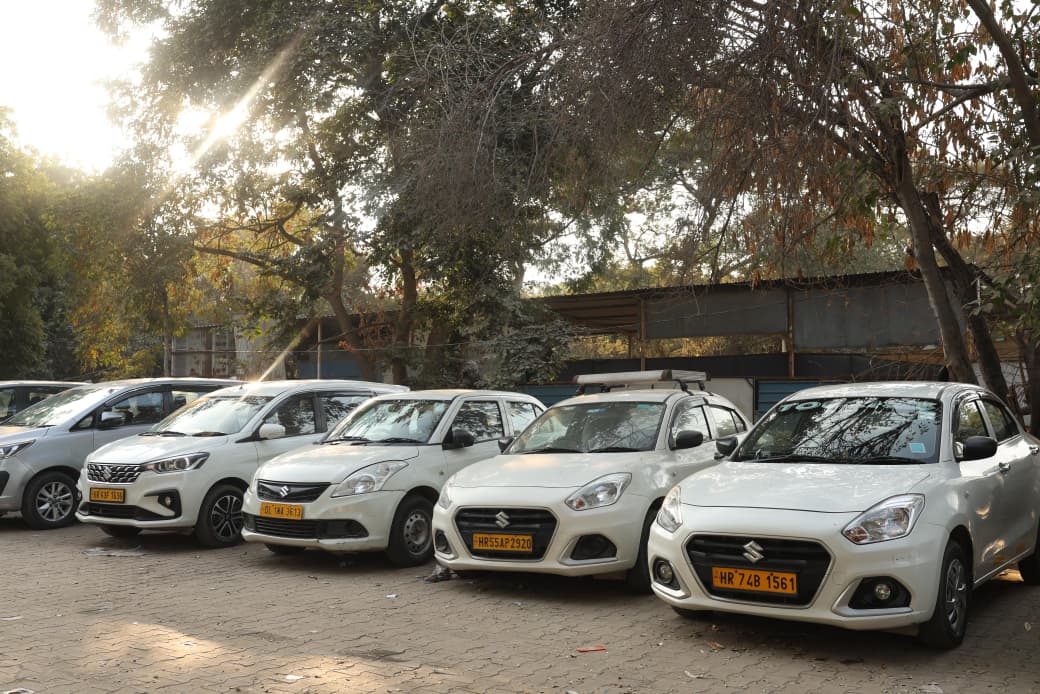 Historical trip data is also used to estimate journey times across different routes and periods of the day. This helps the company position vehicles, allocate drivers and identify opportunities to match airport drop-offs with return pickups. The commercial logic is important in a business where fuel, driver costs, vehicle maintenance and idle time all affect profitability.
Vashist identifies pricing, utilisation and driver retention as the three principal levers for maintaining sustainable margins. "The industry has learnt that the cheapest fare is not a sustainable business if it comes with cancellations and poor service. Customers remember a missed flight far longer than a saving of a hundred rupees," he says.
Rather than compete exclusively on price, the company is looking to balance corporate contracts with retail and leisure bookings. Corporate demand provides a relatively stable weekday base, while individual customers can help absorb available capacity during weekends and peak travel periods. Driver retention is another part of the equation. High turnover can affect service consistency and increase recruitment and training costs. "Drivers who earn steadily and are treated well stay longer, deliver better service and cost less to replace," Vashist explains.
This is a key issue for organised fleet operators, especially as more companies compete for experienced drivers in the mobility sector.
Corporate travel remains the anchor.
App-based aggregators have changed how people book short rides, but WTiCabs sees a different chance with customers who need managed transportation. "The opportunity is significant and still largely unorganised," says Vashist, noting that safety, billing, and vehicle quality standards are still limited in much of India's airport ground transport market.
Corporate travel is still the main focus for the company, thanks to repeat bookings and steady demand. Business tourism, meetings, conferences, premium leisure travel, and family trips are also promising areas.
The requirements vary. Corporate customers need policy compliance, consolidated billing and employee safety. Event organisers may require dozens of vehicles operating to a coordinated schedule. Hotels and travel management companies, meanwhile, need dependable transportation partners that can deliver services under their own brands.
For WTiCabs, the ability to serve a customer across airport transfers, employee transportation, city travel, outstation journeys and car rentals offers an opportunity to build longer-term relationships rather than compete for individual bookings. The premium segment is also gaining importance. Senior travellers, families and business executives are often willing to pay for trained chauffeurs, predictable fares and assistance at pickup points.
So, the company’s strategy isn’t just about doing more airport transfers. It’s about meeting a broader range of corporate and premium mobility needs.
Partnerships could reshape airport connectivity.
The fragmentation of airport transportation is not a problem that individual operators can resolve on their own. Airports, airlines, public transport providers and mobility companies will need to work together if passengers are to experience a more seamless journey. "What is missing is not capacity but coordination. Each player performs its role well in isolation, but the passenger is left to stitch the journey together," says Vashist.
He believes airports should provide clearly marked pickup zones for organised operators and share real-time arrival information. Airlines could offer ground transfers alongside flight reservations, while mobility providers should integrate with airline, airport and travel platforms through open APIs. Airport metro services also need better connections with feeder transportation to make it easier for passengers to combine public transport with cab services. "The goal should be one booking, one payment and one point of accountability for the full door-to-door journey," he says.
Vashist points to frameworks such as the Open Network for Digital Commerce (ONDC) as examples of how interoperability could help create a more integrated mobility environment.
For WTiCabs, partnerships with airports, airlines, hotels and travel management companies could open additional distribution channels. Airlines could offer ground transportation through ticketing or loyalty programmes, while hotels could provide airport transfers under their own brands. Such arrangements could help organised operators secure bookings earlier and improve demand visibility, although their success would depend on commercial agreements and the ability to maintain consistent service standards.
Expansion strategy: Following the airport opportunity
WTiCabs is based in New Delhi, and Delhi NCR is its biggest market. The company now wants to expand in Mumbai, Pune, and Bengaluru, with a special focus on the Mumbai-Pune-Lonavala corridor.
The Mumbai area is especially important because Navi Mumbai International Airport will add another big aviation hub. The growth of Noida International Airport will also create new ground transport needs in the National Capital Region. Outside the big cities, the company is looking at Tier 2 cities where more people are flying, but organised ground transport is still catching up.
But choosing new markets isn’t just about passenger numbers. The company also looks at corporate and industrial demand, intercity travel, driver availability, local rules, and whether vehicles can be used efficiently. "We prefer to enter a market with corporate anchor clients and then build retail demand on top, rather than relying only on discount-led retail growth," says Vashist.
This is a careful way to expand. Building a base of corporate customers before growing retail operations gives a more stable foundation for using the fleet and developing the market.
An increasingly electric and integrated future
Looking ahead, Vashist thinks India's airport mobility market will become more organised, use more electric vehicles, and connect more with the wider travel industry. "Pre-booked transfers will become the default for a large share of business and long-distance airport travel," he says.
Electric vehicles will play a bigger role as charging stations improve at major airports. Linking ground transport with flight bookings could also make advance transfers a regular part of travel planning.
Over the next three to five years, WTiCabs wants to grow in Delhi NCR, Mumbai, Pune, and Bengaluru, enter more fast-growing airport areas, expand corporate and premium services, add more electric vehicles, and build partnerships in the travel industry. But Vashist says that infrastructure and shared standards are just as important as private investment.
"The changes with the greatest impact would be dedicated, well-managed pickup zones for organised operators at every major airport; real-time data sharing between airports, airlines and mobility providers; charging infrastructure at and around airports; and common service standards for safety and reliability," he says.
For India’s mobility industry, the opportunity isn’t just about moving passengers from place to place anymore. It’s about creating a reliable ground transport network to support the growing aviation market.
WTiCabs is aiming for this space, focusing on its experience in corporate mobility, tech-driven fleet management, and pre-booked airport transfers. Whether the company can turn this strategy into a bigger market share will depend on how well it executes, manages its fleet, and how quickly India’s airport transport market becomes more organised.

Comments (0)
ADD COMMENT