

Škoda Auto India To Premiere The All-New Kylaq On 6 November 2024
- By MT Bureau
- October 21, 2024
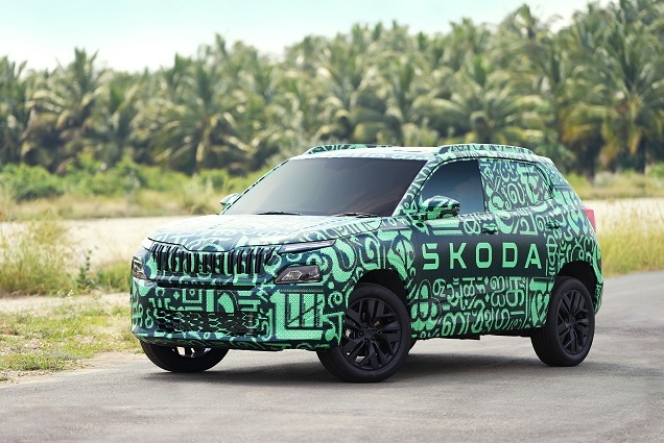
Škoda Auto has officially announced that its highly anticipated Kylaq will make its world debut in India on 6 November 2024. The launch of the Kylaq will see Škoda Auto entering a ‘New Era’ in India, which is the most important market for the brand outside Europe.
The Kylaq is powered by the tried-and-true 1.0 TSI engine, which is paired to either a six-speed manual or automatic gearbox. The engine generates 85 kW and 178 Nm of torque. The car uses the same MQB-A0-IN platform as the Kushaq and Slavia. These two vehicles have previously received a complete 5-star rating in Global NCAP testing for adults and children. The Kylaq comes standard with over 25 active and passive safety features, including six airbags, traction and stability control, anti-lock brakes, Electronic Brake Distribution, Brake Disc Wiping, Roll Over Protection, Motor Slip Regulation, Electronic Differential Lock, Passenger airbag deactivation, Multi Collision Braking and ISOFIX seats, among many others.
The Kylaq has been tested throughout 800,000 kilometres of Indian terrain, including urban, highway, hilly and rugged routes. This all-new compact SUV has been tested in temperatures ranging from -10 to +85 degrees Celsius and at elevations ranging from sea level to 3,000 metres above sea level. To assure complete monsoon readiness and optimum weather resistance, 100 random samples of the Kylaq were subjected to 25-30 litres per minute/square metre of water at an angle of up to 16 degrees. This guarantees that no water enters the Kylaq under heavy monsoon conditions. The Kylaq has also undergone a vehicle shaking test to verify that the interiors stay silent and rattle-free across all road surfaces. To make sure there is no discolouration, distortion or loss of functionality in intense sunlight or other environmental conditions, the Kylaq has also been exposed to open weather for two years.
Piyush Arora, Managing Director and CEO, Škoda Auto Volkswagen India, said, “I’m proud to present Kylaq – the first compact SUV from Škoda India. Kylaq is designed and made with high levels of localisation, thereby strengthening our ‘Make in India’ commitment. It represents the Group’s DNA of driving dynamic, safety and comfort, along with the practical features desired by our value conscious customers. I’m sure the product will resonate with Indian customers’ mindset. Kylaq, designed and engineered in India, for India, will be a gamechanger.”
Jiří Dytrych, Head of Product Management, Škoda Auto, shared, “It is a moment of great pride for me and our team to see the Kylaq getting closer to making its world debut in India. The MQB-A0-IN was conceived to be a highly flexible, modular and versatile platform. You all know the Kushaq and Slavia to be much larger, above 4-metre cars. Both these cars have been pivotal in the growing focus on having safer cars in India. At the development stage itself, this platform was conceived to also accommodate an under 4-metre car like the Kylaq and has the same spirit of unmatched driving dynamics, leading safety and proven quality. We take safety a notch higher with a best-in-segment hot-formed steel for the front crash module, to ensure best cabin safety. The key features of the car are always space and comfort for the driver and passengers. The Kylaq will offer first-in-class six-way adjustable driver and passenger seats with ventilation function. The Kylaq will lead our presence, in the fastest-growing and most competitive segment in India.”
Jan Bures, Executive Director – Sales, Marketing and Digital, Škoda Auto Volkswagen India, said, “The Kylaq is just around the corner from making its debut in the world. It has been developed and even named keeping in mind evolving customer trends and aspirations in India. The under 4m segment makes up nearly 30 percent of the marketshare in the Indian passenger car sector. And the Kylaq, we believe, is adept at tapping this segment. It will also take us to new markets among tier 3 and 4 centres and bring new customers into our fold. With the response to this pre-production version, I will say with comfort and confidence that the Kylaq is on track to make its debut soon and will enable us to achieve further growth and inroads into the Indian market.”
Petr Janeba, Brand Director, Škoda Auto India, shared, “Expanding our portfolio is a key part of our growth strategy, which will enable us to welcome more customers into the Škoda family. We committed to adding a new SUV – Kylaq -- to our offerings, and we are well on track for our biggest-ever launch in India. This is a huge milestone in our India journey and will enable us to double our addressable market share. From the teasers shared, you can tell that this will be a stunning-looking SUV. The Kylaq is now undergoing the final set of testing, and as a result, we cannot reveal the car in all its glory, yet. The Kylaq is the car that will democratise European technology in India. Among other things, it has over 25 active and passive safety features standard across all its variants, and about 30 in specific variants. The Kylaq is almost ready for its debut and will lead the charts when it comes to safety and dynamics.”
Kia India Clocks Highest-Ever Monthly Sales Of 32,017 Units In September 2026
- By MT Bureau
- October 01, 2026
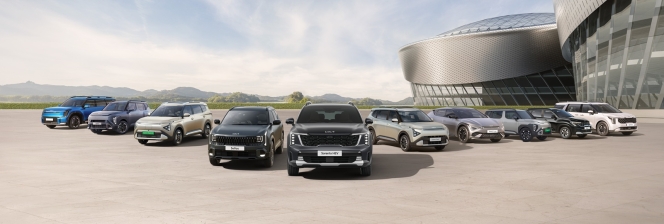
Kia India, one of the leading passenger vehicle manufacturers, has reported its best-ever monthly wholesale performance of 32,017 units in September 2026, representing a 41 percent increase compared to 22,700 units sold last year.
For Q3 of CY2026, the company recorded sales of 89,259 units, reflecting a 38.5 percent growth over 64,443 units for the same period last year.
In terms of YTD (January – September 2026) cumulative sales reached 253,008 units, marking a 22.5 percent increase from 206,582 units reported during the corresponding period in 2025.
Kia India attributed the robust performance to healthy demand across its portfolio incuding Seltos and Sonet models, alongside contributions from the Carens, Carens Clavis, Clavis EV, Syros EV and Sorento, which is offered in diesel and hybrid powertrain options. The company's powertrain options now span petrol, diesel, CNG, hybrid, and electric configurations across its product range.
Atul Sood, Senior Vice-President of Sales and Marketing, Kia India, said, "Our strong performance in September and across the third quarter reflects the continued trust of our customers and the strength of Kia’s evolving portfolio. The Seltos and Sonet continue to be key contributors to our growth, while the strong response to the Sorento and Syros EV reinforces our strategy of expanding into new segments and powertrain categories in line with evolving customer aspirations. As mobility needs become increasingly diverse, we are focused on providing meaningful choice across conventional, CNG, hybrid and electric powertrains, supported by ownership solutions that address real customer needs. We remain committed to building on this momentum through distinctive products, advanced technologies and differentiated experiences designed around the needs of Indian customers."
At present, Kia India operates a retail and service network comprising 915 touchpoints across 425 cities, alongside 137 certified pre-owned outlets across the country.
Toyota Kirloskar Motor Sells 25,027 PVs In September 2026
- By MT Bureau
- October 01, 2026
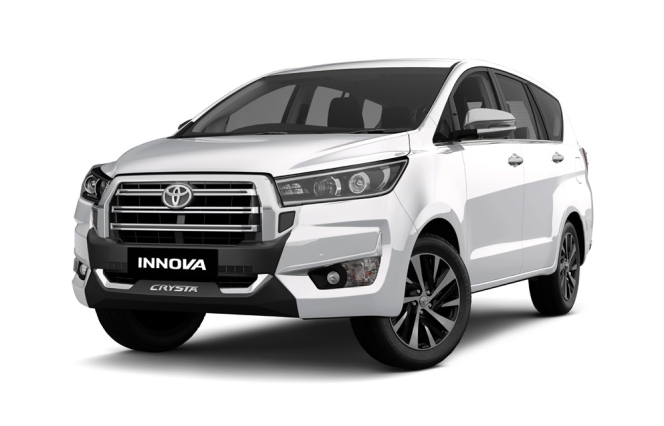
Toyota Kirloskar Motor (TKM), one of the leading passenger vehicle manufacturers, has reported its total wholesales of 28,218 units in September 2026, comprising 25,027 units sold in the domestic market and 3,191 units exported.
For the YTD period (January – September 2026), the automaker reported cumulative total sales of 294,914 units, representing an 8 percent increase compared to 272,824 units sold last year.
Domestic sales for the 9-month period rose 9 percent to 269,619 units, up from 247,081 units in the previous year, while exports reached 25,295 units, compared to 25,743 units a year ago.
Sabari Manohar, Executive Vice-President of Sales-Service-Used Car Business, Toyota Kirloskar Motor, said, "September witnessed continued customer interest across segments, supported by our focus on quality, durability and reliability. As we enter the festive season, we remain committed to strengthening customer engagement and working closely with our dealer partners to deliver enhanced mobility experiences and address evolving customer needs."
Nissan Motor India Reports Sales Of 3,300 Units In September 2026
- By MT Bureau
- October 01, 2026
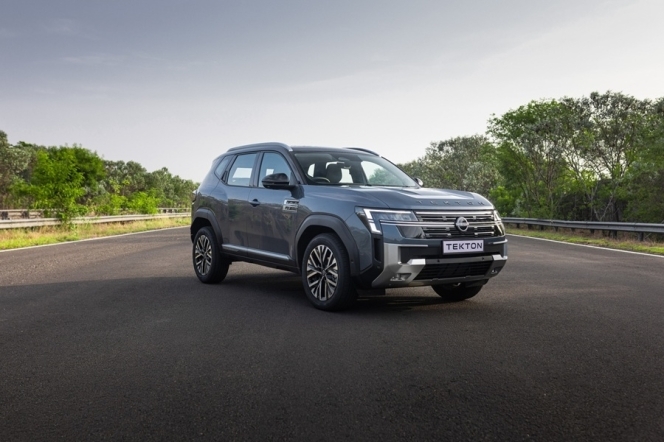
Nissan Motor India, one of the leading passenger vehicle manufacturers, has announced its wholesales for September 2026.
The company sold 10,025 units last month, comprising 3,300 units in the domestic market, up 100 percent YoY, as against 1,652 units last year. Exports, on the other hand, came to 6,725 units.
Deliveries during the month were supported by sales across the company's SUV portfolio, including the Nissan Tekton, Magnite, and Gravite, alongside expansion of its retail network.
Saurabh Vatsa, Managing Director, Nissan Motor India, said, "Our domestic volumes nearly doubled year-on-year in September, validating Nissan’s product-led strategy, the strength and capability of our network, the contribution of our finance and business partners, and the increasing confidence of Indian customers in the Nissan brand. The growing volumes in the domestic market give us a strong foundation to build scale in India. We would also like to acknowledge the continued support of our international dealers, distributors and customers across overseas markets, who are enabling us to deliver a robust export performance. We are confident about the opportunity ahead and remain committed to accelerating our momentum through distinctive products and a stronger network for customers who value the Nissan brand and its products."
Tata Motors Passenger Vehicles Records Sales Of 68,810 Units In September 2026
- By MT Bureau
- October 01, 2026
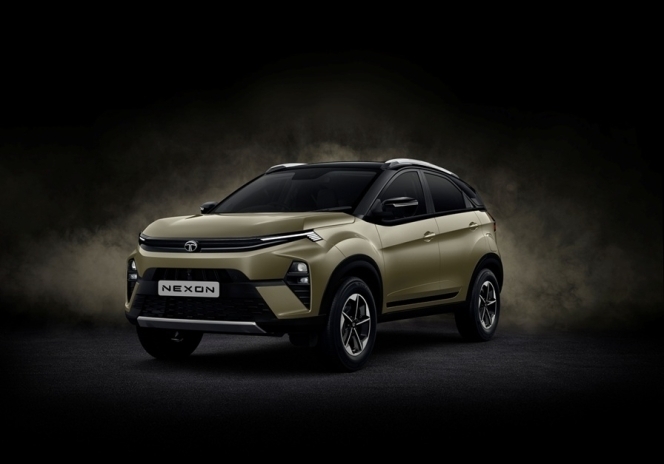
Mumbai-headquartered automotive major Tata Motors Passenger Vehicles has announced its wholesales for September 2026 and Q2 FY2027.
The company reported sold 70,210 passenger vehicles last month, up 15 percent YoY, as against 60,907 units last year. In the domestic market sales grew 15 percent YoY to 68,810 units from 59,667 units a year ago, while exports grew by 13 percent to 1,400 units. Monthly electric vehicle dispatches reached 15,384 units, representing a 67 percent increase over 9,191 units in September 2025.
In Q2 FY2027, the wholesales touched 201,723 units, up 40 percent YoY, as against 144,397 units for the same period last year. The domestic market saw a healthy uptick of 40 percent YoY at 140,189 units, while exports clocked 20 percent YoY growth to 5,049 units. Electric vehicle sales, comprising domestic and export volumes, came at 47,150 units for the quarter, reflecting a 90 percent YoY increase over 24,855 units.
Interestingly, for Q2 FY2027, electric vehicles accounted for 23 percent of the company’s total sales volume, while CNG models contributed 28 percent, bringing the combined volume of alternative powertrains to 51 percent of overall deliveries.
Shailesh Chandra, MD and CEO, Tata Motors Passenger Vehicles, said, “In Q2 FY27, passenger vehicle demand sustained the strong momentum seen following GST 2.0, despite the quarter being seasonally softer. Industry Vahan volumes grew around 24 percent YoY, led by increasing adoption of greener powertrains, providing a promising backdrop for the forthcoming festive season. For Tata Motors Passenger Vehicles, Q2 FY27 was our highest-ever quarter, with sales of 201,723 units and industry-beating growth of 40 percent YoY. We ended the quarter on a strong note, crossing the 70,000-unit sales milestone in September and look forward to carrying this momentum as we enter the festive period. Our greener powertrain portfolio continued to be a significant growth driver. EVs recorded their highest-ever quarterly sales of over 47,000 units, growing 90 percent YoY, with EV penetration in our portfolio rising sharply to 23 percent, compared with around 8 percent for the industry. CNG also delivered its highest-ever quarterly sales and accounted for 28 percent of our volumes. Together, EV and CNG now contribute 51 percent of our sales, reflecting the rapid shift in customer preference towards greener mobility.”
“Customer response remained strong across our portfolio, with Punch emerging as India’s highest-selling SUV during the quarter. Building on the momentum of our Q1 launches, we further strengthened our portfolio with Curvv SeriesX, Sierra Legend Series and the all-new Tata Aeris. We also unveiled our new customer-facing identity, TATA.CARS, reflecting the evolution of our brand in step with the aspirations of today’s Indian car buyer. Looking ahead, we remain optimistic about the festive season, supported by a strong order book and healthy customer traction across the portfolio. As we progressively scale up production, our focus will be on fully leveraging this demand, sustaining our growth momentum and further strengthening our competitive position in the market,” added Chandra.
Comments (0)
ADD COMMENT