

Mercedes-Benz India And Zoho launch SKYLine Dealer Management System
- By TT News
- October 28, 2025

Mercedes-Benz India has introduced a transformative new Dealer Management System named SKYLine, a custom platform developed in collaboration with Zoho. This system represents a significant technological leap, engineered entirely in India to meet the specific demands of the local luxury automotive market. SKYLine is built to overhaul the entire customer service journey, creating a seamless and digitally integrated experience from the moment a vehicle is booked for service until it is returned to its owner.
The platform marks a strategic departure from older, fragmented systems by implementing a modern, decentralised architecture. A key feature of this new approach is that each Mercedes-Benz dealership across India now operates on its own dedicated instance of Zoho CRM. This grants individual locations a high degree of operational autonomy while still ensuring they adhere to the brand’s centrally governed standards and processes. A critical technical achievement was the system's ability to integrate flawlessly with the manufacturer's existing European headquarters infrastructure without requiring any modifications to those core systems, facilitated by a sophisticated co-developed middleware layer.
By digitising the complete service lifecycle, SKYLine introduces unprecedented operational efficiency and transparency. The system manages a comprehensive suite of processes, including service booking, digital check-in, vehicle inspection and job card creation. It also enables skill-based assignment of technicians, allows for live job tracking and automates customer communications. This connected workflow eliminates previous inefficiencies, creating a cohesive and paperless journey for the customer. The platform's scope extends beyond core services to also streamline other dealership operations, such as managing courtesy car availability through visual dashboards and centralising processes for the growing pre-owned vehicle business.
The deployment of SKYLine was supported by an extensive rollout programme involving thousands of man-days dedicated to user training and testing to ensure widespread and effective adoption. Orchestrated by Zoho’s Enterprise Business Solutions team, the project stands as one of the most technically sophisticated and strategically important Dealer Management System implementations in the region, fundamentally modernising the customer ownership experience for Mercedes-Benz in India.
Santosh Iyer, Managing Director & CEO, Mercedes-Benz India, said, “SKYLine represents a significant step towards managing our customer service operations, being a key lever that will significantly enhance customer’s experience. This bespoke DMS is built by Zoho for our dealer partners, making it seamless and highly integrated into our global systems, redefining customer journey. With SKYLine, we are setting a new benchmark in customer experience by blending technology with personalised service. We are proud that Zoho developed a world-class, highly secured and local ‘no code-no source’ platform like SKYLine for the Indian customers, underlining the unmatched prowess of Indian technological innovation, having international adaptability. SKYLine brings transparency, efficiency and control into every service interaction, empowering customers while delivering an elevated experience which they desire from Mercedes-Benz.”
Mani Vembu, CEO, Zoho, said, “SKYLine is a technology marvel born of close collaboration and co-creation. When Mercedes-Benz India came to us with a vision that had no off-the-shelf solution, we saw an opportunity to build something truly unique. Together, we have built a decentralised platform that empowers each dealership with autonomy while maintaining central control and real-time HQ integration. To meet these complex needs, we co-developed middleware capabilities alongside our evolving Qntrl platform, enabling seamless communication across legacy protocols. This project reflects what’s possible when product teams and customers come together with a shared sense of purpose and a commitment to solving real-world challenges.”
Tata Motors Partners PETRONAS Lubricants India For Used-Oil Recycling Pilot
- By MT Bureau
- September 09, 2026
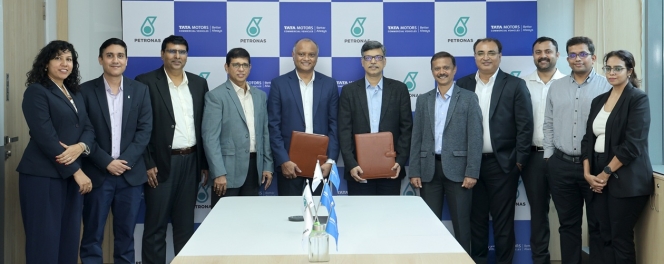
Tata Motors and PETRONAS Lubricants India have inked a Memorandum of Understanding (MoU) to establish a collection and recycling program for used automotive lubricants.
The two companies will launch the pilot project simultaneously across Maharashtra and Tamil Nadu to evaluate a scalable model for lubricant waste management.
The initiative creates a traceable system for collecting, storing and processing used lubricants through registered recycling channels, with the goal of converting collected waste into re-refined base oil.
Tata Motors will utilise its authorised service centre network to facilitate collection, while PETRONAS Lubricants India will oversee the logistics and transfer of used oil to certified re-refiners. The collaboration aligns with India's Extended Producer Responsibility regulations governing hazardous waste disposal.
Binu Chandy, India Managing Director at PETRONAS Lubricants India, said, "Achieving true circularity in used oil begins when re-refined base oil is reintegrated into finished lubricants. Our collaboration with Tata Motors marks an important step toward building a scalable model for used oil circularity and reflects the strength of our channel network as we work to significantly reduce our carbon footprint across operations."
Vikram Agrawal, Head of Spares and Non-Vehicle Business, Tata Motors, said, "At Tata Motors, practices and partnerships promoting sustainability are integral to advancing circular economy principles and creating meaningful environmental impact across the automotive value chain. Through our collaboration with PETRONAS Lubricants India, we are taking a significant step towards establishing a structured framework for the collection, recovery, and recycling of used automotive lubricants. This pilot initiative aligns closely with our commitment to responsible resource stewardship and supports India's broader sustainability ambitions. By bringing together the complementary strengths and expertise of our two organisations, we aim to assess the viability of a scalable used-oil recycling model that can drive long-term value and contribute to industry-wide progress."
Sensata Unveils OmniNode High-Voltage Power Distribution System For Electric CVs
- By MT Bureau
- September 09, 2026
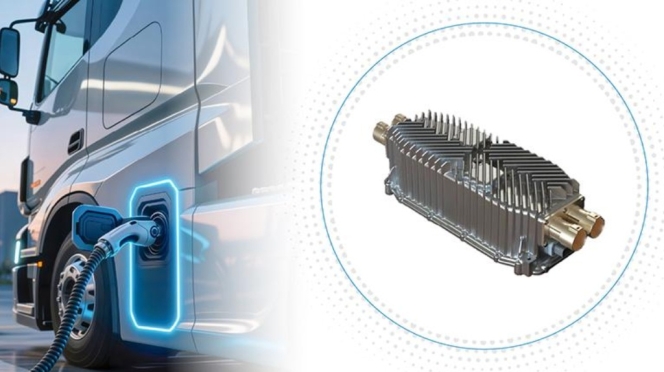
Sensata Technologies has introduced OmniNode, a power distribution system designed to consolidate high-voltage components for commercial electric vehicles. The platform integrates switching, circuit protection, current sensing, diagnostics, communications and DC charging capabilities into a single unit.
The modular platform targets Class 5 and above battery electric trucks and buses, as well as off-road commercial machinery. By combining contactors, fuses and sensors into a single system, OmniNode claims it replaces setups reliant on multiple discrete components.
The standardised architecture is engineered to reduce integration complexity, shorten OEM development cycles and streamline validation across multiple vehicle platforms.
Brian Wilkie, Executive Vice-President and President of Aerospace, Defense and Commercial Equipment, Sensata Technologies, said, "Commercial vehicle manufacturers are under pressure to scale electrification programs while managing increasing system complexity. With the OmniNode, we are delivering an integrated, off-the-shelf approach that helps engineers simplify power distribution architecture, accelerate development timelines and bring greater consistency and efficiency to vehicle platform design."
The system allows automakers to standardise power distribution hardware across diverse commercial vehicle fleets while maintaining application-specific configurations. The approach aims to reduce engineering overhead and simplify component sourcing for high-voltage commercial vehicle architectures.
Nissan and Honda Conclude Agreement To Standardise Next-Generation SDV ECUs And Software
- By MT Bureau
- September 01, 2026
Japanese automakers Nissan Motor Co and Honda Motor Co have entered into a joint development agreement to standardise electronic control units (ECUs) alongside the in-vehicle operating system, middleware and vehicle control software for next-generation software-defined vehicles (SDVs).
The electrical and electronic architecture incorporating the standardised components is scheduled for deployment in next-generation SDVs produced by both companies from fiscal year 2029 onward. The initiative forms part of a strategic partnership between the two automakers targeting carbon neutrality and traffic safety goals.
As per the agreement, Nissan and Honda will establish common technical specifications for multiple core ECUs within the vehicle architecture. The joint development program encompasses the in-vehicle operating system layer along with key elements of the middleware and vehicle control software.
The collaboration is designed to combine engineering resources to increase development speed and achieve investment efficiencies. The partners to reduce individual research and development costs while generating economies of scale across their vehicle lineups by standardising foundational software and hardware layers.
LG Innotek To Supply Camera Modules For Zoox Robotaxi Fleet
- By MT Bureau
- August 31, 2026
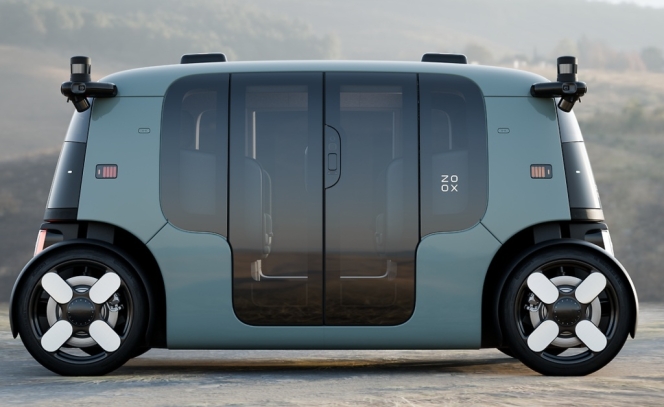
LG Innotek has expanded its partnership with Zoox to supply camera modules for the serial production of its purpose-built robotaxis. The agreement marks an extension of the multi-year relationship between the two companies as Zoox scales up its autonomous vehicle manufacturing.
It was last year, Zoox opened a serial production facility in Hayward, California, to manufacture its robotaxis and launched a ride-hailing service in Las Vegas.
As per the agreement, LG Innotek will supply high-resolution automotive cameras as part of the robotaxi's sensor suite, which provides 360-degree coverage through overlapping fields of view.
The camera modules feature five fields of view depending on their mounting positions across the vehicle. Built with optical design technology adapted from mobile camera modules, the units are waterproofed to operate under varied environmental conditions. The components are currently being fitted to Zoox robotaxis as part of the vehicle's core perception hardware system.
Comments (0)
ADD COMMENT