

- Skoda Auto Volkswagen India
- SAVWIPL
- Technology Centre Pune
- Volkswagen Group
- Taigun
- Kushaq
- Kylaq
- Piyush Arora
Skoda Auto Volkswagen India Expands Pune R&D Operations
- By MT Bureau
- April 30, 2026

Skoda Auto Volkswagen India (SAVWIPL) has opened a new 33,000 sqft wing at its Technology Centre Pune (TCP) in Baner. The facility is designed to house 250 engineers, bringing the total engineering workforce to more than 450 across its Pune sites.
The expansion aims to increase capacity for vehicle development, platform engineering and software solutions. Staff at the Baner site will also focus on sustainable mobility and connected technologies. This centre acts as a hub for both domestic and international projects within the Volkswagen Group.
The Technology Centre Pune has previously managed the development of models for the Indian market, including the Volkswagen Taigun, the Skoda Kushaq and the Skoda Kylaq sub-4-meter SUV. The new wing is intended to improve localisation and speed up the adaptation of global platforms for local requirements.
Piyush Arora, Managing Director & CEO, Skoda Auto Volkswagen India, said, “The expansion of our R&D footprint in Pune marks another important milestone in our India journey. With the new Baner wing, we are creating additional capacity in a dynamic urban location while building on the strong foundation of our Technology Centre Pune in Chakan. As part of its long-term roadmap, TCP is set to expand its competencies in digitalization, automation, and advanced safety technologies. This combined engineering ecosystem allows us to deliver global-quality solutions with higher speed, greater localisation, and a sharper understanding of customer requirements in India and the world. It further underlines India’s position as a strategic development and competency hub for the Volkswagen Group.”
The company started the Technology Centre Pune in 2019 at its Chakan plant. This latest expansion in Baner is part of a roadmap to increase competencies in automation and safety technologies while maintaining the Group's standards for the subcontinent and export markets.
- Dubai Future Foundation
- DP World
- SHIFFT
- Oxa
- Dubai Research
- Development and Innovation Programme
- Khalifa Al Qama
- Ibrahim Al Najjar
- Paul Newman
DP World Joins Self-Driving Logistics Joint Venture SHIFFT As First Strategic Partner
- By MT Bureau
- November 09, 2026
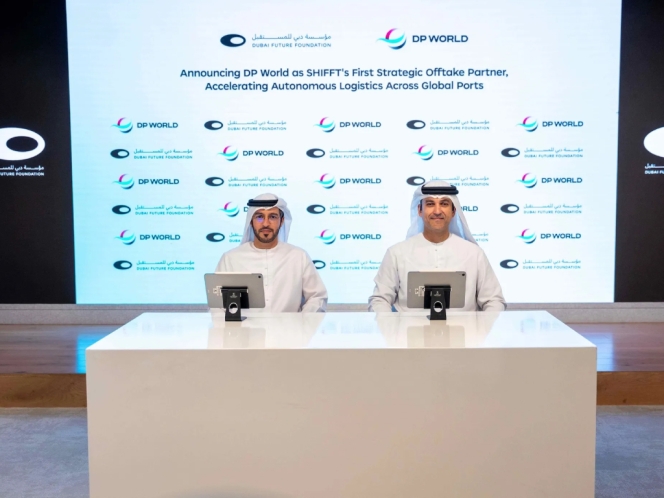
Dubai Future Foundation has announced DP World as the first strategic partner of SHIFFT, a self-driving logistics joint venture established in collaboration with autonomous vehicle technology company Oxa under the Dubai Research, Development and Innovation Programme.
The partnership focuses on developing and deploying autonomous logistics solutions across ports, terminals and industrial zones, beginning at Jebel Ali Port. The scope includes vehicle integration, autonomous driving functions, safety frameworks, fleet management, routing, digital twins, situational intelligence and operational performance optimisation.
At present, DP World operates more than 900 vehicles at Jebel Ali Port for inter-terminal container movement, alongside thousands of vehicles across its global network of over 60 ports and terminals.
Khalifa Al Qama, Chief of Research, Development and Innovation, Dubai Future Foundation, said, "The selection of DP World as the first strategic partner of SHIFFT marks an important step in developing and implementing autonomous logistics solutions from Dubai. This collaboration brings together world-leading operational expertise and advanced technologies to develop practical solutions that can be deployed and scaled globally."
Ibrahim Al Najjar, Senior Vice-President of Information Technology, DP World GCC, said, "For our customers and partners, autonomous technology translates into more predictable, resilient supply chains that keep cargo moving reliably and at speed. It also creates opportunities for our people to build future-ready skills, while strengthening Dubai’s competitiveness as a destination for trade and investment. By co-developing these technologies here, around real operational needs, we are setting new benchmarks that will benefit the wider industry."
Paul Newman, Founder and CEO, Oxa, said, "This collaboration aims to transform industrial vehicles into an intelligent, autonomous digital workforce capable of operating efficiently in complex, mixed-use environments. By working with DP World, SHIFFT is helping to elevate operational fleet performance and strengthen the long-term resilience of supply chains."
Acconeer Bags $520,000 Automotive Radar Order
- By MT Bureau
- November 09, 2026
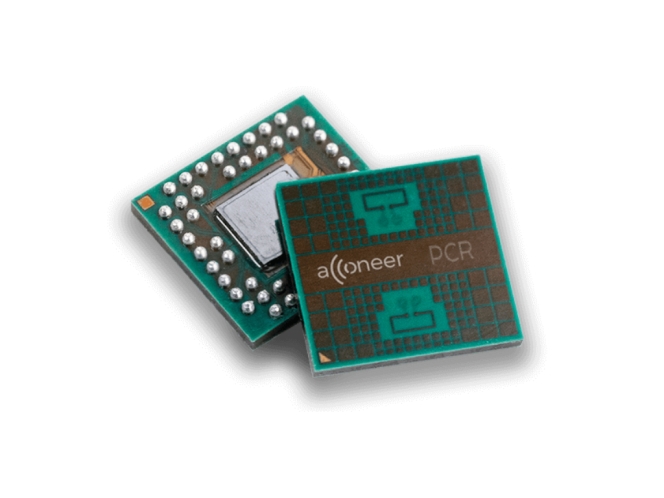
Acconeer has secured an order valued at USD 520,000 for its A121 pulsed coherent radar sensor for mass production applications within the automotive sector. The purchase order was placed by a Japanese distributor, with product deliveries scheduled for the first half of 2027.
The A121 sensor operates on 60GHz pulsed coherent radar technology integrated within a 28 mm² surface area footprint, providing distance measurement, motion detection and object presence sensing functions.
The supply contract follows growth across Acconeer's automotive product portfolio, which also includes the A212 sensor model. The company announced that the information was submitted for publication pursuant to requirements under the EU Market Abuse Regulation.
"We are seeing strong growth within the automotive industry, driven both by our new A212 sensor – for which deliveries quadrupled in the third quarter compared to the previous quarter – and by our established A121 sensor, with volumes increasing as new models and customers are launched," said Ted Hansson, CEO, Acconeer.
Intangles Launches AIS-140-Certified Product Portfolio For India’s Commercial Vehicle Sector
- By MT Bureau
- November 05, 2026
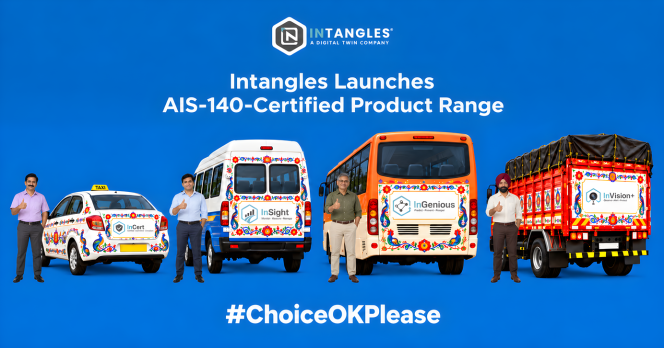
Intangles has launched an AIS-140-certified product portfolio in India across four distinct configurations: InCert, InSight, InGenious and InVision+. The product lineup supports commercial vehicle segments ranging from three-wheelers and cabs to light, medium and heavy commercial vehicles and buses.
The portfolio integrates India's AIS-140 vehicle tracking and emergency alert requirements with predictive fleet intelligence. InCert provides certified tracking, trip management, geofencing, and driver alerts. InSight adds driver behaviour reporting, fuel consumption insights and fault codes with repair guidance. InGenious introduces predictive vehicle health monitoring, fuel management, and automated operations tools. InVision+ combines the certified hardware with AI-powered video telematics using dual cameras and in-cabin voice alerts.
All four versions run on Intangles' InRoute fleet intelligence platform. The devices are available through field sales channels and the company's direct-to-consumer platform, InCentral, which handles compatibility checks, purchases, and VLTD certificate generation.
Anup Patil, CEO, Intangles, said, "The size of a fleet should not determine whether an operator can access predictive intelligence. A vehicle off the road can significantly affect a business, whether it owns five vehicles or five hundred. With a certified device already installed and connected whenever the vehicle runs, operators should be able to choose the value it delivers to their business. Intangles’ new range brings this promise to life through #ChoiceOkPlease, giving operators the flexibility and freedom to choose a solution that meets compliance requirements and addresses their everyday operational challenges."
- Affordable Robotic & Automation
- ARAPL
- ARAPL RaaS
- Humro
- Atlas AC2000
- Humro Maia2000
- Robinson Philipose
- Melind Padole
ARAPL Subsidiary Humro Secures US Department Of War Approval For Autonomous Industrial Vehicles
- By MT Bureau
- November 03, 2026
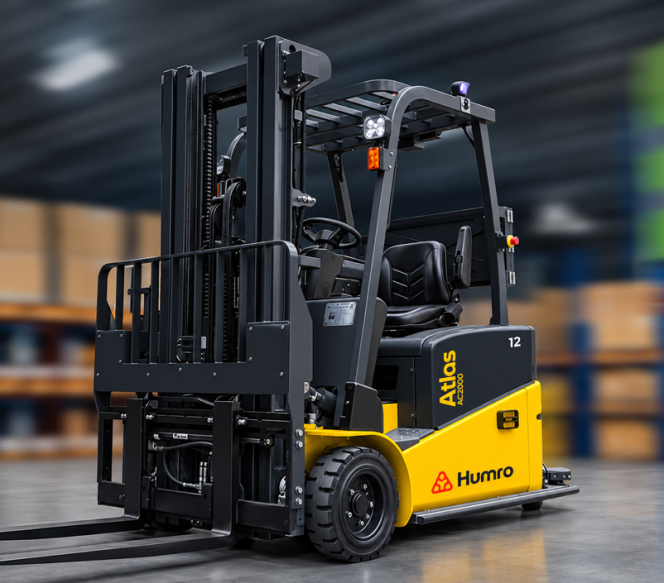
Affordable Robotic & Automation (ARAPL) has announced that its subsidiary ARAPL RaaS, operating under the Humro brand, has received Conditional Approval from the US Department of War for its specified autonomous industrial vehicles under the US Federal Communications Commission (FCC) framework.
The approval, issued by the FCC following national security assessments, covers Humro’s Maia2000 autonomous pallet trucks and Atlas AC2000 autonomous forklifts. The decision grants the specified devices exemption from FCC Covered List restrictions, which were introduced in July 2026 for foreign-produced robotic devices.
Humro is among 13 global robotics operators, and the only Indian entity, to receive conditional authorization under the updated guidelines. The approval enables the company to enter the US material-handling market, subject to compliance with onshoring plans, local manufacturing commitments over the next two years, and equipment authorisation requirements.
Robinson Philipose, Co-Founder and Chief Executive Officer, Humro, said, "This is a significant milestone for Humro and an important validation of our technology and our commitment to building globally competitive robotics solutions. Being among the first few robotics companies worldwide to receive Conditional Approval under the revised US regulatory framework is a matter of great pride for us."
"Following the regulatory changes, our team worked relentlessly to replace certain key components that did not meet the revised guidelines. This also required us to make corresponding changes to our technology to ensure compliance. We completed the modifications, submitted our application and secured FCC approval within a remarkably short period. This demonstrates the agility and technical capabilities of our team. The approval strengthens our position as we look to expand our international footprint and take our autonomous material-handling solutions to customers in the US. We see considerable potential for robotics to transform warehouse, manufacturing and logistics operations. As part of the Conditional Approval, we are also committed to commencing manufacturing in the US in phases over the next two years. We are actively looking to partner with like-minded local players to establish our manufacturing operations in the country," Philipose.
Melind Padole, Founder and Director, ARAPL Group, said, "These are exciting times, with our teams in the US and India expanding rapidly. Securing FCC approval within such a short period demonstrates the strength of our team and the capabilities of our products. As we prepare to commence manufacturing in the US in line with FCC requirements, we have also begun working towards meeting the requirements of the Buy American Act (BAA) and the Trade Agreements Act (TAA). In parallel, we are developing a new technology platform based on Vision-Language Action models. Our next-generation robots will be more human-like in their ability to perceive, understand and interact with their surroundings, and will incorporate reinforcement learning capabilities. This will enable them to learn from experience, adapt to changing environments and perform increasingly complex tasks."
Comments (0)
ADD COMMENT