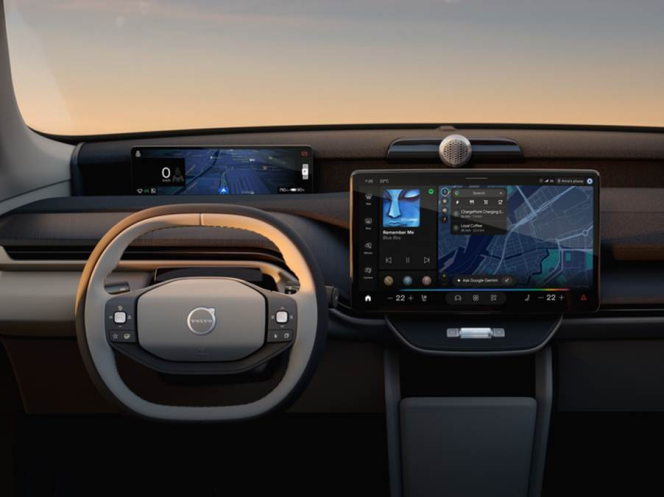
Accenture and Google Cloud have announced that Volvo Cars has signed on as the lead industry partner for Horizon, an open-source software development platform designed for car makers and automotive suppliers to build, test and deploy software on the Android Automotive Operating System.
The Horizon platform unifies cloud-native development tools, virtual testing environments and artificial intelligence workflows. Volvo Cars is migrating its global software development environment for the Android Automotive Operating System to the platform to accelerate engineering processes and virtual testing across its global development teams.
Insights gathered from Volvo Cars' deployment will be used by Accenture and Google Cloud to refine the platform and expand its generative artificial intelligence features for automotive and industrial manufacturers.
According to metrics provided by Accenture and Google Cloud, testing speeds using virtual Cuttlefish-based Android Automotive environments can improve by up to 9 times, while infotainment feature development costs can decrease by up to 40 percent. Software build times, which previously required up to two hours, can yield feedback within minutes through caching and build pipeline optimisation.
Remote access to virtual and physical device farms allows engineers to test software without requiring local physical test equipment, while virtual workbenches enable developers to set up development environments in seconds.
Gregor Zetsche, Head of Connected Experience, Volvo Cars, said, "We’re building some of the most complex products in the world, which requires a development environment built to match. As Horizon’s lead industry partner, we can directly solve our toughest engineering challenges and empower our teams to deliver new experiences faster than ever."
Juergen Reers, Global Automotive & Mobility Lead, Accenture, said, "Horizon enables a faster, more flexible and efficient way to deliver software-defined vehicle features. Its standardised, repeatable and scalable processes help deliver reliable, high-quality software products, while significantly reducing time to market. Horizon will allow Volvo Cars’ engineers to focus on what matters most: creating differentiated vehicle experiences and continuously delivering new value to drivers through software at high speed."
Henry Bzeih, Global Director for the Automotive Industry, Google Cloud, said, "Software now defines the automotive brand. Horizon on Google Cloud gives Volvo Cars the ability to move faster while releasing high-quality software and features on a cadence that matches the expectations of modern mobility. This is how next generation digital experiences reach drivers at agile speed."
Accenture and Google Cloud are working with additional automotive and industrial organisations to expand adoption of the Horizon platform across international markets.







Comments (0)
ADD COMMENT