

Jaguar Land Rover Develops New Technology To Reduce Motion Sickness
- By MT Bureau
- August 06, 2020
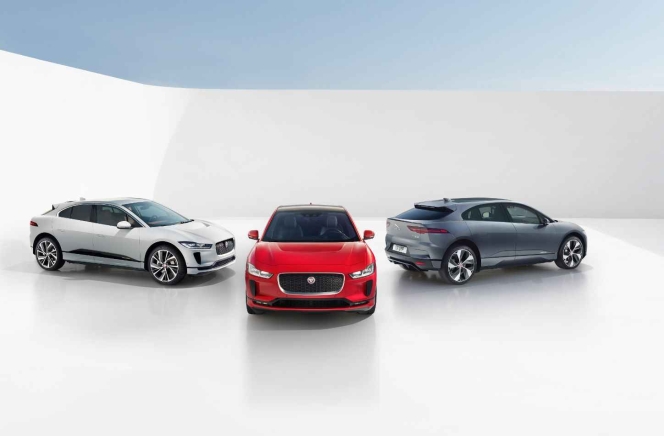
Jaguar Land Rover is pioneering software that will reduce motion sickness by adapting the driving style of future autonomous vehicles. This will help its customers with the most refined and comfortable ride possible.

Motion sickness, which affects more than 70 per cent of people, is often caused when the eyes observe information different from that sensed by the inner ear, skin or body – commonly when reading on long journeys in a vehicle. Using the new system, acceleration, braking and lane positioning – all contributory factors to motion sickness – can be optimised to avoid inducing nausea in passengers.

As a result of the project, engineers are now able to develop more refined advanced driver-assistance systems (ADAS) features on future Jaguar and Land Rover models, such as adaptive cruise control and lane monitoring systems. The in-depth knowledge is helping Jaguar Land Rover design and manufacture capable and advanced vehicles, both now and in the future.
During the first phase of the project, a personalised ‘wellness score’ was developed which could reduce the impact of motion sickness by up to 60 percent. Experts at Jaguar Land Rover’s specialist software engineering facility in Shannon have now implemented that score into self-driving software.
The intelligent software combines 20,000 real-world and virtually-simulated test miles to calculate a set of parameters for driving dynamics to be rated against. Advanced machine learning then ensures the car can optimise its driving style based on data gathered from every mile driven by the autonomous fleet.
This technology can then be used to teach each Jaguar and Land Rover vehicle how to drive autonomously, while maintaining the individual characteristics of each model, whether that’s the thoroughbred performance of a Jaguar or the legendary capability of a Land Rover. All helping Jaguar Land Rover’s continued development of the ultimate cabin experience in an autonomous, electric and connected future.
Jaguar and Land Rover models offer adaptive dynamics across its range of vehicles which help to remove low frequency motion from the road, which can lead to nausea. By altering the ride settings every 10 milliseconds, this ensures passengers always experience high levels of comfort, while also maintaining the dynamic performance DNA of every Jaguar and Land Rover model. (MT)
NB: Photo is representational.
Coretura And Accenture Partner To Develop Software-Defined Commercial Vehicle Platform
- By MT Bureau
- June 25, 2026
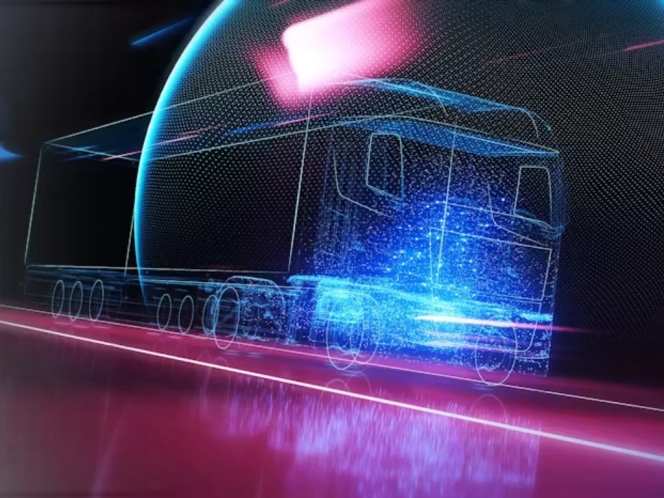
Coretura, a 50:50 joint venture between Daimler Truck and Volvo Group, has entered into an engineering agreement with Accenture to accelerate the development of a software platform for commercial vehicles.
The company, headquartered in Gothenburg, Sweden, currently employs over 100 engineers. It continues to recruit specialists in system architecture, high-performance computing and cloud infrastructure to support its roadmap, which targets the delivery of its first commercialised products towards the end of the decade.
Coretura intends to create a single software platform, language and standard for trucks, buses and other heavy-duty transport vehicles. The platform is designed to support vehicle lifecycles of more than 15 years, moving the industry away from projects that require custom software development for each new vehicle.
As the engineering partner, Accenture will support development across several areas, including:
- Electrical and Electronic (E/E) architecture
- Software abstraction and hardware integration
- Embedded software, middleware, and cybersecurity
- Functional safety and cloud infrastructure
The platform aims to provide a reusable software stack to lower costs and standardise time-to-market for global manufacturers. For fleet operators, the system is designed to allow for continuous software updates and performance upgrades delivered over the air.
Johan Lunden, CEO, Coretura, said, “Our purpose is to advance mobility at the speed of ideas, and that takes depth. Building a full-stack SDV platform demands expertise across embedded software, middleware, cybersecurity, and functional safety, all designed for vehicles with lifecycles measured in decades. Accenture’s reinvention capabilities let us move faster without compromising the standards our customers depend on. This is acceleration, not course correction.”
Rainer Oder, SDV Embedded Software Lead, Accenture, added, “Helping the industry advance software-defined vehicles is a priority for Accenture. Our landmark collaboration with Coretura is designed to change embedded software engineering for automotive platforms. Together, we are looking to solve the challenges of a fully software-defined architecture – addressing critical areas such as hardware abstraction, API management and AI-based engineering optimisations.”
- The ePlane Company
- e200X
- eVTOL
- Prof. Satya Chakravarthy
- Vishesh Rajaram
- Speciale Invest
- Eash Sundaram
- JetBlue
- Aditya Ghosh
- Homage
- Akasa Air
- IIT Madras
- Nvidia
- Jense Huang
- Bharat Innovates 2026
The ePlane Company Completes Assembly Of e200X eVTOL Aircraft
- By MT Bureau
- June 24, 2026
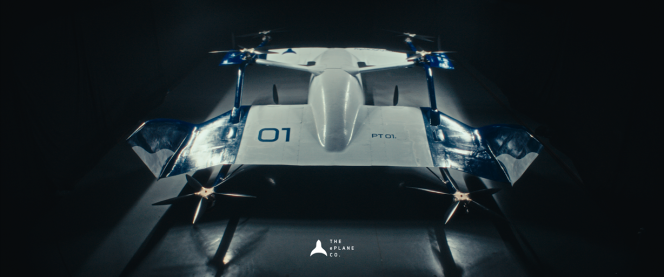
The ePlane Company has announced the completion of its full-scale electric vertical takeoff and landing (eVTOL) aircraft, the e200X. Designated PT-01, the prototype has successfully integrated all core subsystems into a single structure, marking the transition from design and simulation to physical testing.
The e200X is designed as a single airframe versatile enough to serve three distinct markets – Passenger Air Taxi, Urban Cargo Carrier and Air Ambulance.
The company emphasises that the aircraft was designed to be compact, allowing it to integrate into existing urban infrastructure without requiring significant city redesigns.
Developed at the company's own facilities in Chennai, the e200X features in-house development of major components, including propellers, airframe structure, landing gear and battery pack.
This vertical integration provides the company with control over performance, manufacturing costs, and iteration speed, having reached this milestone on approximately USD 21 million in funding.
With assembly complete, the e200X will now undergo ground testing, flight testing and certification.
Prof. Satya Chakravarthy, Founder, The ePlane Company, said, "We set out to build an electric aircraft to a world-class benchmark, engineered and manufactured in depth in India for the World. We deliberately designed the e200X to be compact, because an aircraft that asks a city to rebuild itself around it will not solve the problem it was built to solve. The same airframe can move people as an air taxi, carry goods as a cargo aircraft, and save lives as an air ambulance, and it can do all three using the infrastructure cities already have. That combination of real capability and capital efficiency is how we intend to compete, and win, in markets around the world.”
The company’s board includes prominent figures such as Vishesh Rajaram (Speciale Invest), Eash Sundaram (JetBlue) and Aditya Ghosh (Homage, Akasa Air). The venture, incubated at IIT Madras, has also received international recognition, including being showcased at Bharat Innovates 2026 and featured in Nvidia Founder Jensen Huang’s GTC keynote.
Xiaomi YUZ GT EV Completes First Official Autonomous Lap At Nurburgring
- By MT Bureau
- June 24, 2026
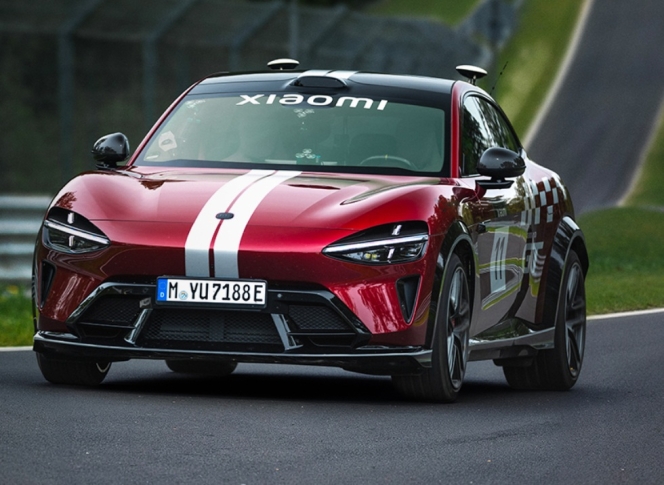
Chinese technology company Xiaomi has marked a new milestone for its automotive product offering with its electric vehicle.
The company has announced a significant milestone in autonomous vehicle technology by completing the first official autonomous lap of the Nurburgring Nordschleife circuit in Germany with the Xiaomi YU7 GT, equipped with a Track Package, navigating the 20.8 km circuit without a human driver, recording a lap time of 10:29.483.
Following this performance, the Nurburgring has introduced a new official vehicle category: Autonomous Driving (under Electric Vehicles).
The Xiaomi YU7 GT autonomously navigated all 73 corners of the Nordschleife, managing 300 metres of elevation change and varying road surface conditions. The performance was driven by Xiaomi’s autonomous driving system, which integrates the Xiaomi XLA architecture and the MiMo-Embodied foundation model introduced in March 2026. The end-to-end architecture enabled the vehicle to coordinate steering, braking and power delivery in real-time, maintaining stability under high-speed and high-load conditions.
Xiaomi’s autonomous driving programme has evolved since the 2024 launch of Xiaomi HAD. The current system moves beyond simple behaviour imitation toward autonomous decision-making and deeper environmental interpretation. The company stated that the Nurburgring project serves as a critical testing ground to collect data for refining vehicle dynamics modelling, control strategy optimisation and safety redundancy mechanisms.
This achievement underscores Xiaomi’s commitment to advancing artificial intelligence in the automotive sector through rigorous real-world validation.
- QuantumScape Corporation
- Honda Motor Co
- solid-state lithium-metal battery
- Atsushi Ogawa
- QS Technology
- Dr. Siva Sivaram
QuantumScape And Honda R&D Sign Joint Research Agreement For Solid-State Battery Tech
- By MT Bureau
- June 24, 2026
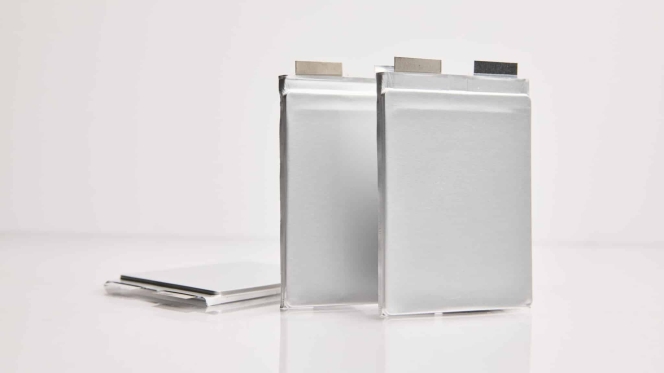
QuantumScape Corporation has announced a multi-year joint research agreement with Honda R&D Co., a subsidiary of Honda Motor Co.
The collaboration focuses on advancing QuantumScape’s solid-state lithium-metal battery platform, including the development of associated manufacturing processes.
This agreement follows a successful technology evaluation period during which Honda conducted a technical study and competitive benchmarking of QuantumScape’s battery platform.
Atsushi Ogawa, Chief Operating Officer, Research Center of Excellence, Honda R&D Co, said, “QS technology demonstrated compelling and unique advantages during our evaluation. We see potential for QS technology to add value across a range of applications, including automotive, and we are excited to move forward into the next phase of our partnership.”
Dr. Siva Sivaram, CEO and President, QuantumScape, added, “Honda is a leading global automaker renowned for its engineering excellence and product quality across automotive and other applications worldwide, and its evaluation represents one of the most rigorous assessments of our technology to date. This agreement reflects the growing confidence in QS solid-state lithium-metal batteries to enable safer, higher-density energy storage.”
Comments (0)
ADD COMMENT