

Nissan India Appoints Abhishek Arora As Director For Dealer Network Development and Customer Training
- By MT Bureau
- November 28, 2024

Japanese automaker Nissan Motor India (NMIPL) has given additional responsibility of Director - Dealer Network Development and Customer Quality Training (DND-CQT) to Abhishek Arora effective 14 November 2024.
Arora will continue to focus on his current role as Director – Transformation & New Projects. In his new role, he will be responsible to lead channel development and management for the brand as well as drive strategic initiatives linked to network development and business to ensure Nissan’s future readiness.
The company said he has deep expertise in managing premium automotive networks and is set to bring significant value to Nissan’s India CBU business, further strengthening its market presence.
Arora had joined Nissan in September 2024 as Director - Transformation and New Projects and was given interim charge of Director - DNDCQT in October 2024. He is now set to lead the DND-CQT function full time and continue to manage transformation projects.
Prior to joining Nissan India, he led key functions such as network development, business management, sales training and others at Audi India. He has also worked with General Motors, Tata Motors, and Honda Motorcycles in various roles.
Saurabh Vatsa, MD, Nissan Motor India (NMIPL), said, “We are delighted to welcome Abhishek Arora at Nissan as Director – DND-CQT in addition to his current responsibilities in driving Transformation Projects. We are confident that his extensive experience and strategic leadership in the premium automotive space will play an important role in strengthening our network capabilities. His leadership will ensure that we are well-positioned to execute our upcoming product launches and further enhance customer experience as we work towards long-term growth and success in this dynamic market with a mix of localized and CBU products.”
- VEHICLE FINANCING
- PASSENGER VEHICLE LOANS
- TWO-WHEELER LOANS
- TRANSUNION CIBIL
- VEHICLE PREMIUMISATION
- EV FINANCING
- NBFCs
- CREDIT GROWTH
- AUTO LOANS
- CONSUMER CREDIT
Vehicle Premiumisation Drives 49 Percent Rise in Passenger Vehicle Loan Sizes: TransUnion CIBIL
- By Gaurav Nandi
- October 29, 2026
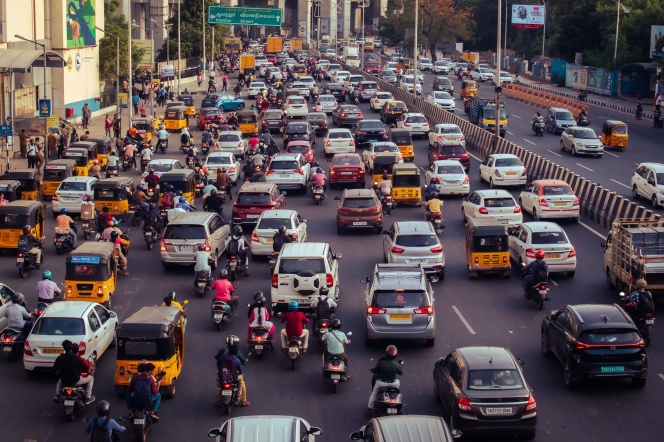
The average passenger vehicle loan ticket size in India has increased by approximately 49 percent over seven years with vehicle price inflation and a shift towards higher-value models both contributing to the rise, according to TransUnion CIBIL.
The increase compares with estimated inflation of 30–31 percent over the same period, indicating that consumers' preference for better-equipped vehicles and a changing vehicle mix have contributed to the growth in financing amounts.
“Of course, there is the premiumisation play which is coming in. The underlying value of the vehicles has also gone up, which has led to this premiumisation that we are seeing beyond the normal inflation rate," said Managing Director Bhavesh Jain during an interaction with Motoring Trends on the sidelines of its presentation of its Shifting Gears 2026: How Credit Drives India's Mobility report.
Jain said the shift in consumer preferences from entry-level cars towards entry-level sport utility vehicles (SUVs) had also contributed to the increase. Higher prices for base-model cars were another factor.
The report found that the outstanding passenger vehicle loan portfolio including used-car financing had expanded 2.6 times since June 2019 to approximately INR 1,110 billion.
The average blended passenger vehicle loan ticket size stood at around INR 820,000, up nearly 50 percent from June 2019.
NBFCs dominate
Non-banking financial companies (NBFCs) account for approximately 73 percent of active two-wheeler loans, up from 63 percent in June 2019. The concentration has raised questions about financing costs and repayment risks for borrowers, particularly in semi-urban and rural markets.
Jain said borrowers could choose between banks and NBFCs with accessibility playing an important role in determining their financing options.
“Today, the consumer has choices. The consumer can choose between any of the lender types,” Jain said, adding that vehicle purchases and financing in semi-urban and rural markets were often facilitated through dealerships.
TransUnion CIBIL said loan portfolio quality had improved across lender categories over the seven-year period.
Two-wheeler loans with payments overdue by more than 90 days accounted for 1.4 percent of the portfolio. However, the executive did not provide a separate comparison of delinquency rates between NBFCs and banks during the discussion.
The report's findings indicate that the two-wheeler financing market has expanded alongside an improvement in borrower credit profiles. The share of new-to-credit customers among two-wheeler loan originations fell from approximately 60 percent in 2019 to 39 percent in the first half of 2026.
Entry point
The declining share of first-time credit borrowers in two-wheeler financing reflects a shift in how younger consumers enter the formal credit system, according to Jain.
Consumer durable loans including phone financing have increasingly become the first credit product for younger borrowers before they move on to vehicle financing.
“Today, consumer durable financing brings in the bulk of new-to-credit borrowers,” Jain said.
He added that consumers often take a consumer durable loan before purchasing a two-wheeler and may return to the same category of financing after acquiring the vehicle.
In metropolitan and urban markets, 68 percent of two-wheeler customers over the preceding three to four years had subsequently taken at least one consumption-related credit product including a consumer durable loan, personal loan or credit card, Jain said.
Although gold loans may also feature in borrowers' credit histories, Jain identified consumer durable and phone financing as the primary entry points for many younger consumers.
The trend suggests that two-wheeler financing is increasingly serving borrowers who already have established relationships with formal lenders rather than acting as their first exposure to credit.
EV financing grows
TransUnion CIBIL said it does not currently have sufficient visibility to distinguish loans for electric vehicles (EVs) from financing for conventional vehicles in its reported two-wheeler and passenger vehicle loan categories.
Jain said banks and NBFCs had introduced programmes focused on EV financing and that the segment was growing. He estimated that electric vehicles accounted for approximately 6–7 percent of two-wheeler sales.
However, the bureau's current data does not separately identify EV loans, preventing it from quantifying the segment's share of vehicle financing or tracking its delinquency trends independently.
Jain said the broader financing figures included both conventional and electric vehicles, noting that approximately six out of 10 two-wheelers and nine out of 10 passenger vehicles purchased in India were financed.
He added that the company would seek greater visibility into EV financing as the segment expands.
The credit bureau also said it could not determine how many financed two-wheelers were being purchased specifically for income generation including use in the gig economy.
Jain said two-wheelers served multiple purposes but the bureau did not have data identifying the end use of individual vehicles.
As vehicle financing expands, the distinction between personal mobility, income-generating use and borrowers' wider credit relationships remains an area where more granular data could help lenders better understand demand and assess financing needs.
Report insights
TransUnion CIBIL recorded 63 lakh two-wheeler loan originations in the first half of 2026, the highest first-half figure since 2019. The company had recorded 69 lakh originations in the six months ended December 2025.
The outstanding portfolio serves approximately 3.3 crore borrowers, nearly twice the number recorded in June 2019.
Borrowers below 30 years accounted for 43 percent of two-wheeler loan originations, while men represented 79 percent of new originations.
The report also found that two-wheeler financing often precedes further borrowing. Approximately two-thirds of customers continued to access credit after taking a two-wheeler loan.
Within three years, 41 percent had taken a consumer durable loan and 21 percent had obtained a personal loan exceeding INR 50,000. The average interval before taking another credit product was 12–18 months.
These findings indicate that two-wheeler borrowers represent a potential customer base for lenders offering additional financial products.
PV financing grows
The passenger vehicle loan portfolio serves approximately 2.5 crore active consumers with the borrower base increasing 1.7 times since June 2019.
Used-car loans accounted for 24 percent of passenger vehicle loan originations. Although originations moderated following an increase in delinquencies in 2024, the segment subsequently improved and remained above earlier levels on an indexed basis.
The report also found that 47 percent of passenger vehicle borrowers held a consumer durable loan, personal loan or credit card when taking vehicle financing. Approximately 7 percent had an existing two-wheeler loan, indicating some overlap between the two borrower segments.
TransUnion CIBIL identified four broad categories of passenger vehicle borrowers including first-time vehicle buyers, repeat buyers, consumers moving towards higher-value cars and borrowers transitioning from two-wheelers to passenger vehicles.
First-time buyers accounted for 37 percent of originations, while repeat passenger vehicle borrowers represented 31 percent. Customers moving towards higher-value cars and those graduating from two-wheelers each accounted for 11 percent.
Credit profiles varied across these groups. Among consumers transitioning from two-wheelers to passenger vehicles, 22 percent belonged to the below-prime segment. By comparison, 19 percent of first-time vehicle buyers were classified as super-prime borrowers.
Delinquency rates also differed by borrower category. Below-prime customers moving from two-wheelers to passenger vehicles recorded a delinquency rate of 4.7 percent compared with approximately 3.5 percent for repeat passenger vehicle borrowers.
The findings highlight the importance of assessing borrowers according to their credit histories and borrowing patterns, rather than relying solely on broad credit score classifications as India's vehicle financing market continues to expand.
- PRE-OWNED LUXURY CARS
- LUXURY SUV DEMAND
- FESTIVE SEASON SALES
- USED CAR MARKET
- MERCEDES-BENZ
- BMW
- AUDI
- AUTOMOTIVE INDUSTRY
- LUXURY CAR BUYERS
- AUTO BEST EMPERIO
SUVs Draw Up To 70 Percent Of Festive Pre-Owned Luxury Car Enquiries
- By Gaurav Nandi
- October 27, 2026
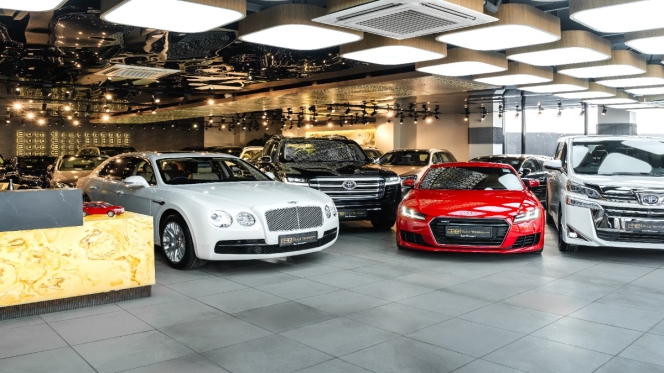
Sport utility vehicles accounted for an estimated 65–70 percent of pre-owned luxury car enquiries this festive season, according to a survey by AutoBest Emperio, a pre-owned luxury car dealership. Most of the interest is concentrated in the INR 3–6 million price range for two- to four-year-old Mercedes-Benz, BMW and Audi models.
The New Delhi-based dealership said enquiries typically rise by 20–30 percent during the festive period compared with an average non-festive month. The average festive-season transaction is around INR 4.5–5 million.
Founder Avneet Singh Kohli, however, cautioned against reading too much into the jump in footfall. “Enquiries and actual sales are two very different things. A lot of people start exploring their options during this period, while some are still comparing prices or waiting for the right car to come along,” he said in an exclusive interaction with Motoring Trends.
Survey At A Glance
|
Finding |
Figure |
|
Rise in festive-season enquiries vs a non-festive month |
20–30 percent |
|
Share of enquiries for SUVs |
65–70 percent |
|
Key price bracket |
INR 3–6 million |
|
Average festive-season transaction |
INR 4.5–5 million |
|
Buyers purchasing their first luxury car |
25–30 percent |
|
Buyers upgrading from Toyota, Hyundai, Kia, Volkswagen or Skoda |
30–35 percent |
|
Preferred vehicle age |
2–4 years |
For a buyer with a budget of INR 4–5 million, the choice is increasingly between a brand-new premium car and a two- to four-year-old Mercedes-Benz, BMW or Audi. The pre-owned option can offer more performance, more features and a stronger badge at a comparable price.
The first owner has already absorbed the steepest depreciation. According to AutoBest Emperio, buyers now compare the two options on overall value rather than on sticker price alone.
“The biggest change we are seeing is that buying a pre-owned luxury car is no longer viewed simply as a cheaper way of owning a luxury brand. Customers are looking at it as a smarter way of buying,” Kohli said.
He added, “If you can get a three-year-old Mercedes, BMW or Audi with a clean history, low kilometres and the right warranty support for the price of a new premium car, the value proposition becomes very difficult to ignore.”
Enquiries v sales
The festive season rarely changes what a buyer wants, Kohli said, but it often decides when they buy. Customers who have weighed an upgrade for months tend to close the deal once the right car, financing and exchange offer come together. “The festive season adds another trigger because people are already in a buying mindset,” he added.
Still, a 20–30 percent rise in enquiries does not translate into an equal rise in sales. Luxury buyers are particular about model, colour, kilometres and condition, so conversion depends on the quality of enquiries and whether the right car is in stock.
Nor does the season guarantee bigger tickets. “I would not say that every festive season automatically brings higher-value transactions,” Kohli noted. Transaction values depend on the mix of cars sold, he added, and the dealership's focus is on converting genuine buyers and protecting margins rather than chasing volumes at any cost.
SUVs lead
SUVs' share of enquiries reflects their road presence, practicality and the sense of a clear step up from a buyer's current car. The Mercedes-Benz GLC and GLE, BMW X3 and X5 and Audi Q5 and Q7 are drawing the most interest. Sedans retain a steady following led by the Mercedes-Benz E-Class and BMW 5 Series.
Kohli said Mercedes-Benz and BMW continue to attract buyers but resale value hinges on the specific variant, service history, kilometres and condition. Depreciation can be sharp when a new generation arrives or the new-car price shifts significantly.
That creates bargains for buyers but risk for dealers. “The biggest risk in our business is buying a car at a price that leaves very little room for market movement,” Kohli said. A car that sits in inventory too long, he explained, loses margin to holding costs and further depreciation.
First-time buyers’ sentiment
An estimated 25–30 percent of festive-season customers are buying their first luxury car and another 30–35 percent are trading up from brands such as Toyota, Hyundai, Kia, Volkswagen and Skoda. Many see the pre-owned market as the way to make that move within their existing budget.
For these buyers, Kohli said, the purchase price is often not the main hurdle. “They may be comfortable paying for the car but they want to know what servicing, insurance, tyres and unexpected repairs could cost them,” he said. Financing costs and warranty coverage add to the hesitation, especially when the alternative is a new mainstream car.
His answer is transparency on the car's history, condition and likely running costs. “It is better for someone to make an informed purchase than to buy in excitement and regret it later,” he said.
Demand spread
Delhi-NCR remains AutoBest Emperio's core market but enquiries are also coming from Chandigarh, Punjab, Haryana, Mumbai, Bengaluru and Hyderabad. Buyers are more willing to consider a car located in another city provided they can see inspection reports, service records and documentation upfront.
That reflects a wider shift as the pre-owned luxury market becomes more organised. Festive offers and financing help close deals, the dealership said, but buyers spending INR 3–6 million also want clarity on condition, kilometres, ownership records and warranty support.
Pre-owned luxury electric vehicles are a segment Kohli called ‘worth watching’ but buyers approach them differently. Battery health, potential repair costs, range, charging convenience and battery warranty weigh heavily and fast-moving technology can leave a once-flagship model outclassed within a few years.
Until valuations become more consistent, Kohli said, he would stock EVs more selectively than petrol and diesel luxury cars. “Buyers need proper information about battery condition and warranty coverage before making a decision,” he said.
As the festive season peaks, pre-owned luxury cars are emerging as a considered upgrade rather than a compromise. Demand is concentrated in SUVs but sales will hinge on transparency, inventory quality and buyer confidence. For dealers, disciplined pricing may matter as much as festive momentum.
Maruti Suzuki India Launches Victoris Aurum Edition To Mark Sales Milestone
- By MT Bureau
- October 24, 2026
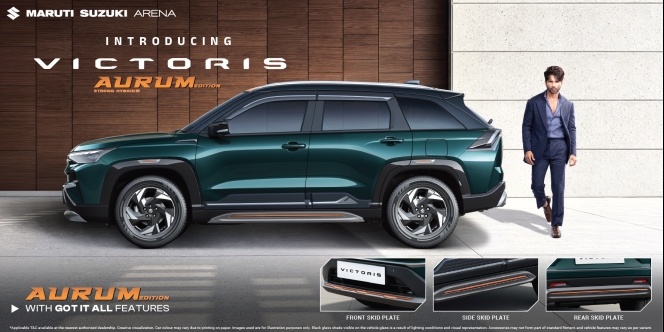
Maruti Suzuki India, the country’s largest carmaker, has introduced the Victoris Aurum Edition Strong Hybrid to mark the first anniversary of the Victoris SUV, featuring an accessory kit priced at INR 22,990.
The launch follows the model reaching sales of 100,000 and 150,000 units within its initial year of production. The Aurum Edition incorporates copper-coloured inserts on the front, side and rear skid plates, along with revised wheel arch trim.
On the outside, it gets chrome garnishes across the front grille, fenders, bumpers, body side mouldings and door visors. Interior additions comprise all-weather 3D cabin mats, a 3D boot mat and a trunk sill guard.
Furthermore, the company has partnered with actor Shahid Kapoor to lead the promotional campaign for the variant.
Partho Banerjee, Senior Executive Officer – Marketing and Sales, Maruti Suzuki India, said, "Conceptualised as a ‘Got it All’ SUV for today’s dynamic young go-getters who ‘want it all’, the Victoris has truly won the hearts of buyers. As we celebrate its first anniversary, it’s worth noting that the Victoris has become the fastest-selling PV to clock both the 150,000- and 100,000-unit sales milestones, going on to achieve the highest sales for any car in India during its 1st year of launch. Recognising these extraordinary achievements, we are introducing the Victoris Aurum Edition Strong Hybrid, with tasteful enhancements that are sure to grab eyeballs and make this festive season feel all the more special for our valuable customers. Our association with Shahid Kapoor, for the new Aurum Edition is also sure to complement the Victoris’ contemporary appeal."
Hyundai Bayon To Feature 69% High-Strength Steel Grade For Enhanced Safety
- By MT Bureau
- October 21, 2026
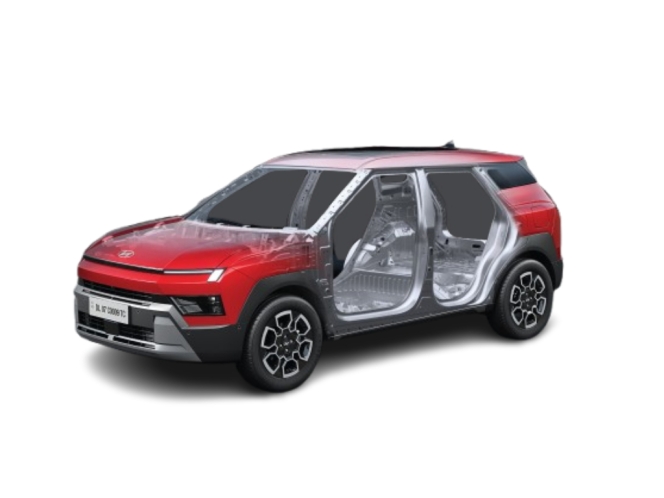
Hyundai Motor India, one of the leading passenger vehicle manufacturers, has detailed the safety specifications and platform architecture for its upcoming Bayon SUV model ahead of its official launch in India on 26 October 2026.
Built on the Global K Enhanced Platform, the Bayon utilises a body structure comprising of 69 percent high-strength steel grades, integrating hot-stamped components across the front apron, dashboard, rear floor and side reinforcements.
The vehicle incorporates Hyundai SmartSense Level 2 Pro ADAS, providing 23 driver assistance features supported by three radar units and 12 parking sensors. Over 35 safety features are fitted as standard across all variants, including six airbags, electronic stability control, hill-start assist control, a tyre pressure monitoring system (TPMS) and ISOFIX child seat anchors.
The Bayon will be powered by a 1.5-litre MPi four-cylinder petrol engine producing 84.4 kW (115 PS) and 143.8 Nm of torque, paired with a six-speed manual or an Intelligent Variable Transmission. Exterior options will span 10 colour configurations across monotone, dual-tone, and matte finishes.
Tarun Garg, Managing Director and Chief Executive Officer of Hyundai Motor India, said, "At Hyundai, we believe that true innovation is meaningful only when it enhances the everyday experiences of our customers. With the Hyundai BAYON, we have combined a robust body structure, advanced safety technologies, and intelligent driver assistance systems to deliver a comprehensive safety experience. From its reinforced chassis and high-strength steel construction to Hyundai SmartSense Level 2 Pro ADAS, the BAYON is engineered to inspire confidence not only in challenging situations, but throughout every journey. This reflects our commitment to delivering intelligent mobility solutions that are safe, connected, and progressive for modern India."


Comments (0)
ADD COMMENT